


TGL Curved Tooth Nylon Sleeve Coupling Factory Suppliers in China

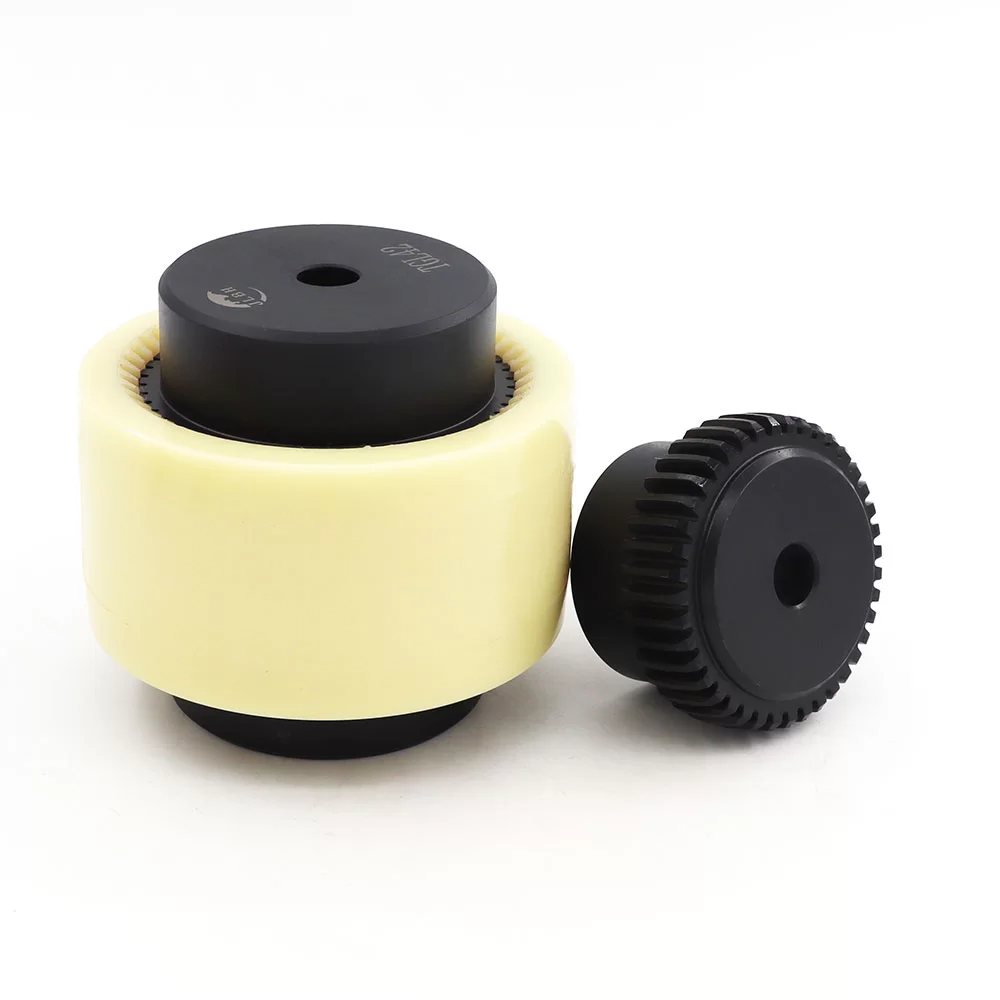
The TGL Curved Tooth Gear Nylon Sleeve Coupling is a high-performance transmission solution specifically engineered for industrial applications requiring zero lubrication and minimal maintenance. Featuring an innovative axial plug-in structure and an optimized drum-shaped tooth profile, this coupling significantly streamlines the installation process for critical equipment such as industrial fans and pumps, ensuring seamless power transmission with maximum reliability.
Designed for demanding environments in the light industry and textile machinery sectors, the TGL series excels in operating conditions ranging from 200 to 5,000Nm. By utilizing a self-lubricating nylon tooth surface, it effectively eliminates metal micro-motion wear and sustains an impressive service life of up to 100,000 start-stop cycles, making it the ideal choice for enterprises seeking to reduce operational downtime and enhance energy efficiency.
Detailed Parameters
| Working Torque | 200 - 5,000 Nm | Angular Deviation | ±1.5° Compensation |
|---|---|---|---|
| Radial Deviation | ±0.5 mm Compensation | Operating Noise | ≤ 65 dB (A) |
| External Material | 45# Forged Steel | Internal Material | High-Strength Nylon |
| Moment of Inertia | ≤ 0.5 kg·m² | Weight Reduction | 40% vs All-Metal |
| Service Life | 100,000 Start-Stop Cycles | Friction Coefficient | 0.1 - 0.3 |
Key Advantages
Lightweight & Low Inertia
Combining forged steel with nylon reduces weight by 40%, lowering motor starting loads and saving 5%-8% in energy costs.
Maintenance-Free Design
Lubrication-free operation eliminates grease contamination and reduces long-term O&M costs by more than 30%.
Silent Operation
Low friction nylon surfaces ensure noise levels ≤65dB, ideal for laboratories and noise-sensitive environments.
High Deviation Tolerance
The drum-shaped tooth profile compensates for ±1.5° angular and ±0.5mm radial deviation to protect bearings.
Extreme Corrosion Resistance
Nylon construction resists acids, alkalis, and moisture, ensuring longevity in chemical plants and marine settings.
Rapid Installation
The axial insertable design enables fast assembly and maintenance, significantly reducing labor expenditures.
Product Gallery


Management Platforms
Inventory Control
Real-time tracking of coupling components for streamlined supply chain management.
Performance Monitoring
Analyze torque efficiency and vibration levels to predict maintenance intervals.
Lifecycle Alerts
Automated notifications based on start-stop cycle counts to prevent unplanned failures.
Energy Optimization
Monitor power savings achieved through low-inertia design in frequent start-stop scenarios.
Logistics Integration
Seamless coordination between manufacturing and site delivery for rapid installation.
Quality Assurance
Digital traceability of material certificates for 45# forged steel and nylon inserts.
Investment Return Comparison
| Feature Comparison | Traditional Metal Coupling | TGL Nylon Sleeve Coupling |
|---|---|---|
| Maintenance Cost | High (Regular Lubrication) | Ultra-Low (Lubrication-Free) |
| Energy Consumption | Standard Baseline | 5%-8% Energy Reduction |
| Operational Noise | High (Metal-on-Metal) | Low (≤65 dB) |
| Installation Time | Complex Alignment | Rapid Axial Plug-in |
| Component Lifespan | Prone to Micro-wear | 100,000+ Cycles |
Frequently Asked Questions
The primary benefits include a 40% reduction in weight, a significant decrease in noise levels, and the elimination of the need for lubrication, which reduces O&M costs by over 30%.
Thanks to its optimized drum-shaped tooth profile, it can automatically compensate for angular deviations of up to ±1.5° and radial deviations of ±0.5mm.
Yes, the nylon material is inherently resistant to acids, alkalis, and moisture, making it highly durable for chemical and marine applications.
In typical industrial conditions such as textile machinery or lubricating pumps, it can withstand up to 100,000 start-stop cycles.
With a moment of inertia ≤0.5kg·m², it reduces the starting load on the motor, leading to smoother acceleration and a 5-8% reduction in energy consumption.
It is widely used in light industry, textile machinery, chemical processing, and any application involving pumps or fans where quiet, maintenance-free operation is required.
Ready to optimize your machinery transmission efficiency?
Contact Us


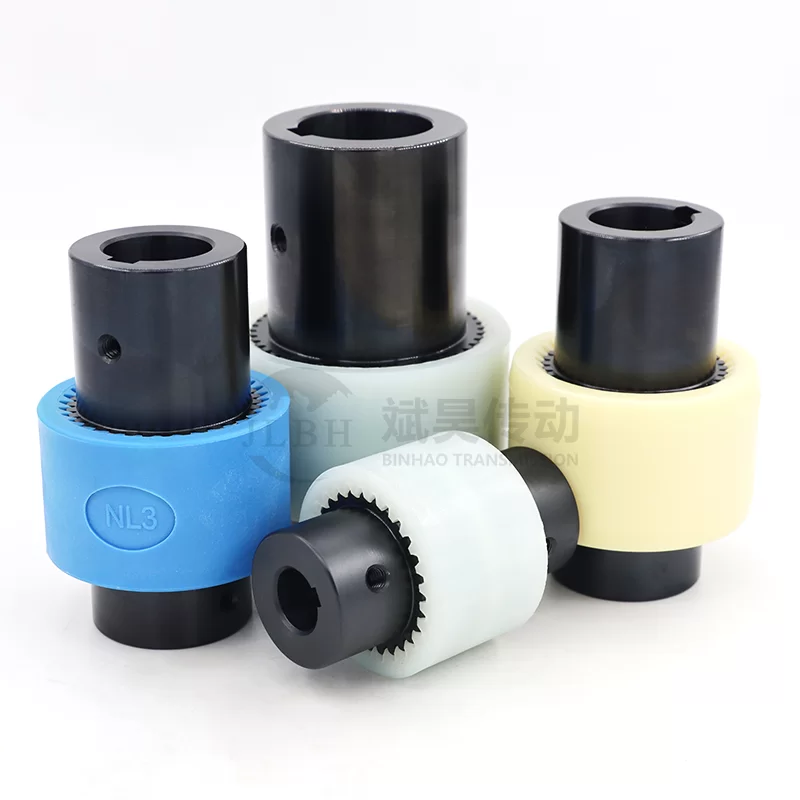


Precision in power transmission is the cornerstone of high-performance automation. When dealing with servo systems, CNC equipment, or 3D printing modules, the slightest rotational clearance can lead to significant positioning errors and accelerated component wear. The aluminum alloy double diaphragm coupling is engineered specifically to eliminate this backlash while compensating for critical alignment deviations. By leveraging the elastic deformation of stainless steel diaphragms, this component ensures a rigid yet flexible torque transfer that protects sensitive encoders and motors from axial and radial stress. For procurement managers and system engineers, selecting a reliable flexible coupling Factory means balancing torsional rigidity with lightweight construction.


