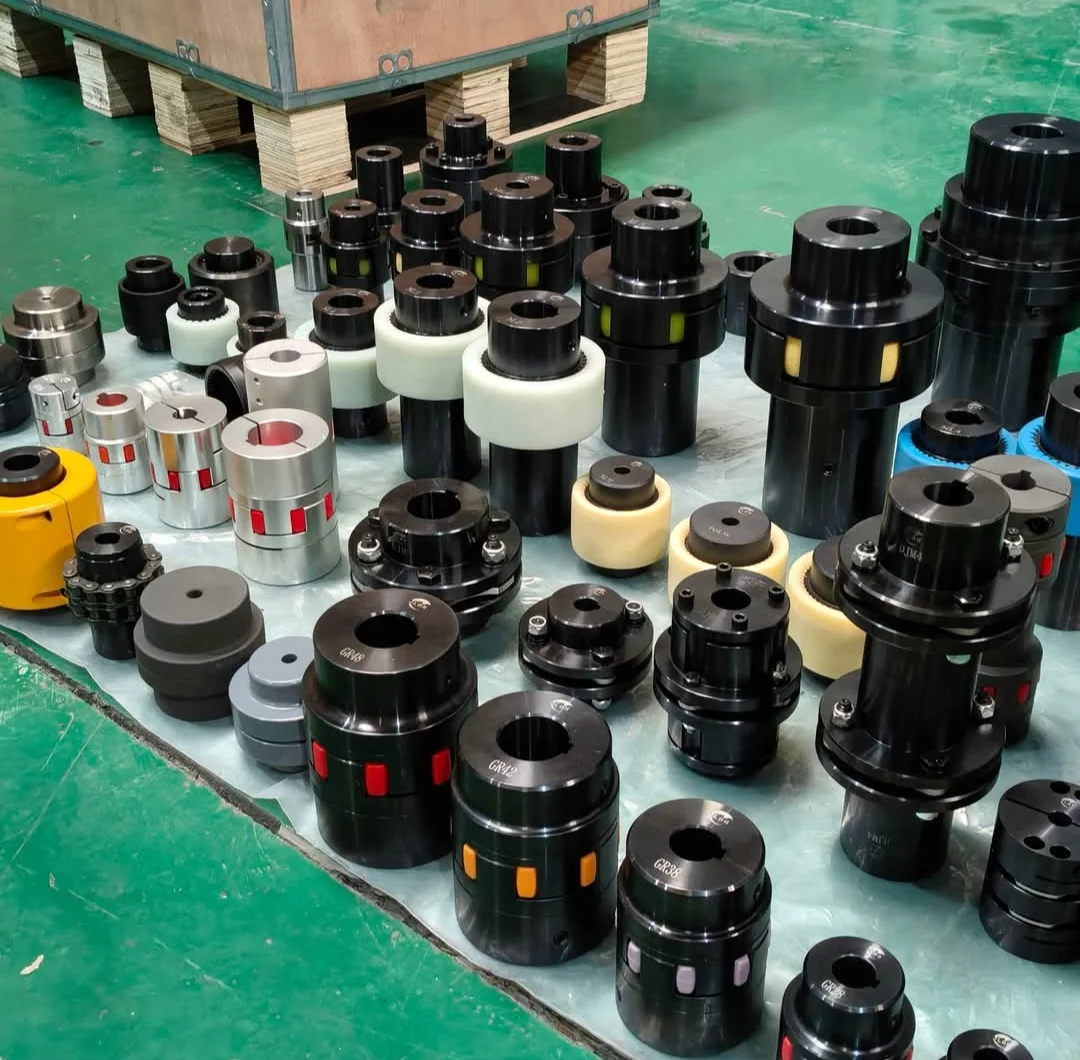
High Performance rotex AFN Aluminum Alloy Coupling Solutions
0%

Table of Contents

In the demanding world of precision machinery, the need for efficient power transmission components has led to the development of high-performance solutions like the rotex AFN. These components are essential for ensuring that rotational energy is transferred between shafts with minimal loss and maximum stability, directly impacting the longevity of industrial equipment.        

       The global shift toward miniaturization and high-speed automation has placed a premium on lightweight materials and flexible coupling designs. As industries strive for higher efficiency and reduced maintenance, the implementation of aluminum alloy couplings becomes a critical strategy for optimizing the moment of inertia and increasing system responsiveness.        

       By integrating advanced elastomer technology, the rotex AFN provides an ideal balance between rigidity and flexibility, allowing machines to operate smoothly even under challenging misalignment conditions.

rotex AFN    

Lightweight Design and Material Efficiency

rotex AFN            

The construction of the rotex AFN revolves around the use of high-strength aluminum alloy, which significantly reduces the overall weight of the coupling assembly. By minimizing the mass of the rotating components, the system experiences a lower moment of inertia, allowing for faster acceleration and deceleration cycles in precision equipment.            

           This focus on material efficiency doesn't just lower shipping costs; it fundamentally changes the dynamics of the machine. The lightweight nature of the aluminum alloy, combined with surface oxidation treatment, ensures that the component remains corrosion-resistant while providing a cost-effective alternative to heavier steel or diaphragm couplings.

Precision Compensation and Stability

One of the primary challenges in mechanical assembly is the inevitable presence of shaft misalignment. The rotex AFN addresses this by providing robust elastic compensation capabilities, which allow it to handle axial, radial, and angular deviations without compromising the integrity of the transmission.        

       Specifically, the coupling is engineered to support an angular displacement of up to ±1.5°. This capability is vital for protecting sensitive bearings and motors from premature wear, as the coupling absorbs the stress that would otherwise be transferred directly to the drive components.        

       Moreover, the gap-free transmission is achieved through the precise deformation of the internal elastomer. This ensures that there is zero rotation clearance, leading to more sensitive and responsive transmission of torque, which is essential for high-precision CNC operations.

Vibration Damping and Elastomer Performance

The integration of polyurethane elastomers within the rotex AFN structure serves as the primary mechanism for shock absorption. These elastomers are specifically chosen for their ability to dissipate kinetic energy and dampen high-frequency vibrations during operation.

By effectively absorbing the vibration and shock energy of the transmission system, the rotex AFN prevents resonance and reduces the noise levels of the machinery. This damping performance is critical in environments where stability and precision are non-negotiable, such as in robot joints.

Furthermore, these elastomers maintain their physical properties across a wide temperature range, from -40℃ to +120℃. This environmental adaptability ensures that the rotex AFN remains reliable whether it is operating in a freezing industrial warehouse or a high-heat manufacturing plant.

High-Speed Transmission Capabilities

When dealing with high-rpm applications, dynamic balance becomes the most critical factor to prevent catastrophic failure. The rotex AFN is designed to meet a dynamic balance grade of G2.5, ensuring smooth operation even at extreme speeds.        

       While typical loads are medium, the design allows for a maximum rotational speed that can reach up to 19,000 r/min. This makes it an exceptional choice for high-speed spindles and specialized centrifugal equipment where lightweighting and balance are paramount.

Comparative Performance Ratings of rotex AFN Variants

Industrial Application Scenarios

The versatility of the rotex AFN makes it a preferred solution in several cutting-edge sectors. In CNC machine tools, where precision and rapid movement are required, the low inertia and zero-backlash properties ensure that the tool head moves with absolute accuracy.        

       Additionally, it is widely adopted in robot joints and photovoltaic tracking systems. In these applications, the coupling must withstand environmental fluctuations and provide reliable torque transmission while remaining compact enough to fit into tight architectural spaces.

Maintenance and Installation Advantages

One of the most significant operational advantages of the rotex AFN is its maintenance-free design. Because it utilizes a high-performance elastomer and a smooth aluminum surface with a low coefficient of friction, it requires no regular lubrication, drastically reducing downtime and labor costs.        

       The installation process is further simplified by the clamping connection method. By utilizing a secure screw-fixed clamping system, technicians can achieve high disassembly and assembly efficiency, allowing for rapid replacements during scheduled maintenance windows.        

       This combination of economy and ease of use makes it a superior choice for small and medium-sized equipment operators who need a "fit and forget" solution that does not require specialized tooling for installation.

Technical Parameter Analysis

Analyzing the technical specifications of the rotex AFN reveals its suitability for a wide range of medium-load tasks. With a maximum torque capacity of 500N·m, it handles substantial power while remaining lightweight.        

       The thermal conductivity of the materials used also plays a role in high-speed transmission, helping to dissipate heat generated by the elastomer deformation during continuous operation.        

       When compared to other options like DJM diaphragm couplings, the rotex AFN offers a more economical profile and a lower overall weight, making it the pragmatic choice for engineers optimizing for both budget and performance.

Core Technical Specifications of rotex AFN

Performance MetricTechnical ValueOperational LimitIndustrial Grade
Max Torque500 N·mMedium LoadStandard
Max Rotational Speed19,000 rpmHigh SpeedG2.5 Balance
Angular Displacement±1.5°ElasticPrecision
Temperature Range-40℃ to +120℃Extreme EnvironmentAll-Weather
MaterialAluminum AlloyLightweightOxidized
Backlash0 ClearanceGap-freeHigh Sensitivity

FAQS

What makes the rotex AFN better than traditional steel couplings?

The rotex AFN uses high-strength aluminum alloy, which significantly reduces the moment of inertia compared to steel. This results in faster response times for the machine and lower energy consumption during acceleration. Additionally, its integrated elastomer provides vibration damping that rigid steel couplings lack, protecting the motor and bearings from mechanical shock.

How does the rotex AFN handle shaft misalignment?

It employs a specialized elastic compensation mechanism capable of managing radial, axial, and angular deviations. Specifically, it can accommodate an angular displacement of up to ±1.5°, meaning that small installation errors will not cause the system to vibrate or fail, ensuring a smooth transfer of torque.

Does the rotex AFN require regular lubrication?

No, the rotex AFN is designed to be lubrication-free. The smooth surface of the aluminum alloy and the polyurethane elastomer have a very low coefficient of friction, eliminating the need for grease or oil. This reduces maintenance costs and prevents contamination in clean-room environments like CNC machine tool areas.

What is the maximum speed the rotex AFN can safely operate at?

Depending on the specific configuration and load, the rotex AFN can reach rotational speeds of up to 19,000 r/min. This high-speed capability is supported by its G2.5 dynamic balance grade, which prevents the coupling from creating harmful centrifugal forces at high velocities.

Can it be used in outdoor environments with extreme temperatures?

Yes, the rotex AFN is highly adaptable. Its operating temperature range extends from -40℃ to +120℃, and the surface oxidation treatment provides excellent corrosion resistance. This makes it ideal for photovoltaic tracking systems and other outdoor industrial installations.

Is installation difficult for the rotex AFN?

Not at all. It features a clamping connection design fixed by screws, which is much simpler than keyed or splined connections. This allows for high efficiency during both initial assembly and subsequent disassembly, making it a preferred choice for technicians.

Conclusion

The rotex AFN represents a sophisticated intersection of material science and mechanical engineering, offering a lightweight yet powerful solution for modern power transmission. By combining the strength of aluminum alloy with the flexibility of polyurethane elastomers, it successfully resolves the conflict between high-speed performance and vibration damping. Its ability to compensate for misalignment and operate without lubrication makes it an invaluable component for enhancing the efficiency and lifespan of CNC tools, robotics, and renewable energy systems.        

       As industrial automation continues to move toward higher precision and faster cycle times, the adoption of components that minimize inertia and maintenance will be paramount. Investing in high-quality couplings like the rotex AFN is not just a matter of part replacement, but a strategic move toward systemic reliability and operational excellence. We encourage engineers and procurement specialists to evaluate their current transmission needs and consider the long-term value of aluminum alloy elastic solutions. Visit our website: www.binhaocoupling.com

Jasper Finch

Jasper Finch

Jasper Finch is a Design Engineer specializing in customized coupling solutions at Binhao Transmission Equipment. With a Master’s degree in Mechanical Design from Georgia Tech, Jasper excels at translating client specifications into detailed engineering drawings within 48 hours. He leverages advanced CAD software and a deep understanding of coupling principles to develop innovative and reliable solutions. He’s particularly adept at addressing complex application challenges and optimizing coupling performance for unique industrial environments. Jasper is a key contributor to our ongoing R&D efforts and is focused on expanding our portfolio of patented coupling technologies.
Previous Industrial Rotex Coupling for Torque Transfer and Vibration Damping
Next Industrial Power Transmission with rotex AH Elastic Coupling

If you are interested in our products, you can choose to leave your information here, and we will be in touch with you shortly.