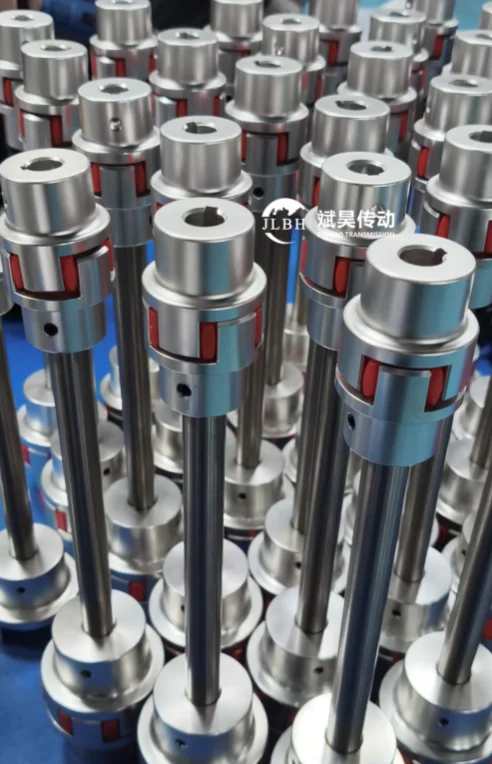
In the demanding landscape of modern industrial machinery, the precision of power transmission is paramount. Understanding the proper rubber jaw coupling Use and its high-performance alternatives is essential for engineers aiming to minimize downtime and maximize mechanical efficiency across diverse operational environments.
While traditional flexible couplings provide basic dampening, the evolution of precision engineering has led to the development of advanced diaphragm systems. These systems address the critical need for high torque capacity and zero-wear maintenance, ensuring that heavy-load working conditions do not compromise the integrity of the drive train.
By analyzing the operational requirements of high-speed servo systems and corrosive industrial zones, companies can optimize their equipment longevity. Transitioning from standard rubber jaw coupling Use to professional-grade diaphragm couplings allows for rotational speeds exceeding 10,000rpm and nearly perfect transmission efficiency.

High Torque Transmission and Efficiency
When comparing standard rubber jaw coupling Use to high-performance diaphragm groups, the difference in torque capacity is striking. Our diaphragm couplings utilize a seamless connection design featuring stainless steel diaphragm groups and expansion sleeves, specifically engineered to withstand the most grueling heavy-load working conditions without deformation.
This engineering approach results in a transmission efficiency as high as 99.86%. Unlike traditional elastic couplings that may lose energy through hysteresis, this system ensures that virtually all power is transferred from the driver to the driven component, making it the ideal choice for high-power power units.
Dynamic Balance and High-Speed Precision
In high-precision sectors, such as servo systems, the stability of the rotational axis is critical. While a typical rubber jaw coupling Use is suitable for low to medium speeds, the diaphragm coupling is designed for extreme performance, with rotational speeds capable of exceeding 10,000rpm.
The initial dynamic balance accuracy remains exceptionally stable even at these high velocities. This eliminates the risk of parasitic vibrations that often plague lesser coupling systems, ensuring that the machinery operates smoothly and without the intrusive noise typically associated with high-speed rotation.
For engineers managing precision instrumentation or high-frequency drive systems, this level of balance is not just a luxury but a requirement. By minimizing vibration, the system protects sensitive bearings and ensures the longevity of the entire mechanical assembly.
Advanced Deviation Compensation Capabilities
One of the most challenging aspects of shaft alignment is managing displacement. While traditional rubber jaw coupling Use provides basic flexibility, the professional diaphragm system offers a large eccentricity compensation range.
The system achieves an angular displacement compensation of up to ±1.5°. Because the radial displacement reaction force is kept small, it can simultaneously compensate for axial, radial, and angular deviations, allowing for seamless operation even in complex installation conditions.
This versatility reduces the stress on the motor and the driven equipment. By absorbing these deviations without transferring high loads back to the bearings, the coupling prevents premature wear and unexpected mechanical failures.
Maintenance-Free Design and Cost Reduction
The total cost of ownership for industrial components is heavily influenced by maintenance requirements. Unlike many systems that require periodic lubrication or the replacement of worn rubber inserts—common in standard rubber jaw coupling Use—our diaphragm couplings are designed for zero wear.
The maintenance-free design eliminates the need for lubricants, which not only reduces operational costs but also prevents contamination in clean-room or food-grade environments. Furthermore, the fault status of the coupling can be checked with the naked eye during scheduled machine stops, simplifying the inspection process.
Performance Rating: Diaphragm vs. Standard Coupling Use
Extreme Environmental Adaptability
Industrial environments are often hostile, featuring extreme temperatures and corrosive agents. While a standard rubber jaw coupling Use may degrade under UV exposure or chemical attack, the stainless steel construction of our diaphragm couplings provides unmatched resilience.
With an operating temperature range spanning from -80℃ to +300℃, these couplings are engineered for the most extreme climates. They are inherently resistant to acids, alkalis, and salt spray corrosion, making them the gold standard for shipping and chemical industry applications.
Industrial Application Case Studies
In the chemical processing industry, the combination of corrosive vapors and high-torque requirements makes coupling selection critical. By moving away from basic rubber jaw coupling Use toward diaphragm technology, plants have reported a significant decrease in unplanned shutdowns due to coupling failure.
Water pumps, fans, and compressors also benefit from the high transmission efficiency (99.86%) of these units. In large-scale centrifugal compressors, the ability to handle speeds over 10,000rpm while maintaining dynamic balance ensures that the equipment operates within its peak efficiency window.
Shipping applications provide another primary use case. The resistance to salt spray and the ability to operate in wide temperature fluctuations ensure that critical shaft transmissions in marine propulsion or auxiliary systems remain operational without requiring frequent onshore maintenance.
Comparative Analysis of Coupling Technologies
Choosing the right coupling requires a balance between cost, performance, and environmental conditions. While the rubber jaw coupling Use is cost-effective for light-duty, low-speed applications, it cannot compete with the precision and durability of diaphragm systems in heavy-industry settings.
The key differentiator lies in the "zero wear" characteristic. Diaphragm couplings do not rely on elastomeric inserts that perish over time; instead, they use the elastic deformation of stainless steel, which maintains its properties over millions of cycles.
Ultimately, the transition to advanced couplings is an investment in reliability. By reducing the need for lubrication and increasing the tolerance for misalignment, operators can significantly lower their overall maintenance budget.
Technical Comparison: Diaphragm vs. Conventional Elastic Couplings
| Performance Metric | Diaphragm Coupling | Standard Rubber Jaw | Industrial Impact |
|---|
| Max Speed | 10,000+ RPM | Low to Medium | High-Speed Stability |
| Efficiency | 99.86% | Variable/Lower | Energy Savings |
| Maintenance | Zero Wear/No Lube | Periodic Replacement | Reduced Downtime |
| Temp Range | -80℃ to +300℃ | Limited by Polymer | Extreme Environment |
| Deviation Comp. | ±1.5° Angular | Basic Flexibility | Bearing Protection |
| Corrosion Resist. | High (Stainless) | Moderate | Chemical Suitability |
FAQS
You should opt for a diaphragm coupling when your application requires speeds exceeding 10,000rpm, operates in temperatures beyond the range of polymers (-80℃ to +300℃), or demands a zero-wear, maintenance-free solution for heavy-load conditions with transmission efficiency near 100%.
It provides strong deviation compensation, including an angular displacement of ±1.5°. It simultaneously handles axial and radial deviations with a low reaction force, which protects the connected motor and bearings from premature wear.
No. One of the primary advantages of the diaphragm design is that it is entirely maintenance-free. There is no lubrication requirement and zero wear during operation, significantly reducing the total cost of ownership.
Yes, they are specifically designed for such environments. Made from stainless steel, they are resistant to acids, alkalis, and salt spray, making them ideal for chemical plants and shipping applications.
Our diaphragm couplings offer a transmission efficiency as high as 99.86%. This ensures minimal energy loss and is particularly beneficial for high-power units and precision servo systems.
Unlike enclosed systems, the fault status of our diaphragm couplings can be checked with the naked eye during machine downtime, allowing for quick and easy visual inspections without dismantling the entire drive train.
Conclusion
In summary, while the general rubber jaw coupling Use remains a viable option for simple, low-stress applications, the demands of modern high-precision industry require a more robust solution. Diaphragm couplings provide the necessary high torque capacity, extreme temperature resilience, and unparalleled transmission efficiency of 99.86%, all while remaining entirely maintenance-free.
For companies looking to future-proof their operations and reduce unplanned downtime, investing in high-speed, precision transmission components is a strategic necessity. We recommend evaluating your current shaft alignments and environmental stressors to determine where upgrading to a diaphragm system can yield the highest ROI. Visit our website for more information: www.binhaocoupling.com