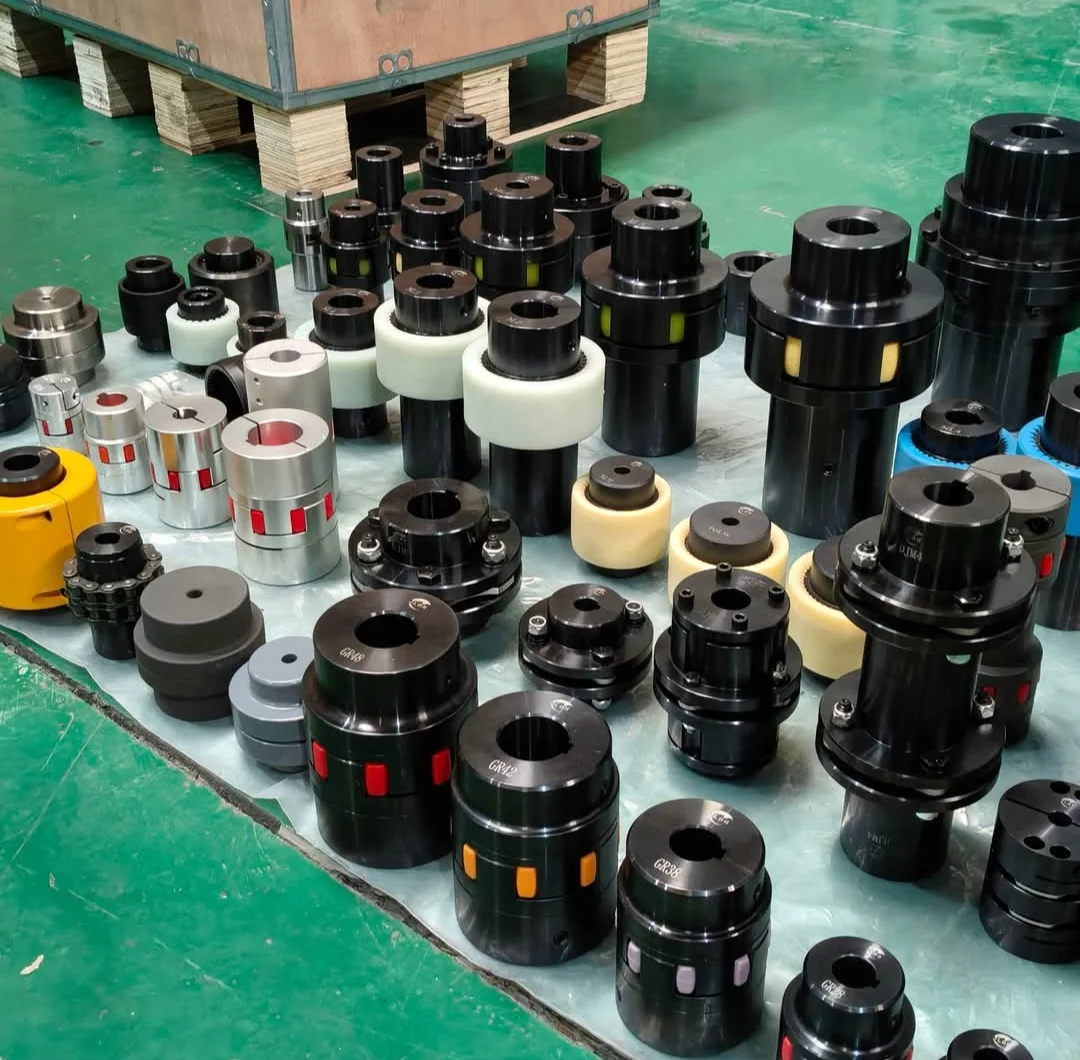
In the world of mechanical power transmission, selecting the right coupling is critical for ensuring operational longevity and efficiency. While many engineers search for rubber jaw coupling Uses to find vibration-damping solutions, it is essential to understand that different industrial needs require different mechanical architectures. For applications requiring high displacement compensation without the need for elastic buffering, the chain-based coupling emerges as a robust alternative.
Understanding the specific rubber jaw coupling Uses often leads professionals to realize that not every environment suits an elastomeric insert. In heavy-duty general machinery, the demand for a compact structure that can handle significant radial and angular misalignment without the risk of rubber degradation is paramount. This is where mechanical meshing systems provide a more durable, albeit unbuffered, solution.
By analyzing the practical rubber jaw coupling Uses alongside the capabilities of chain couplings, companies can optimize their maintenance cycles and reduce downtime. Whether driving a high-capacity fan or a complex conveyor system, the choice between an elastic jaw and a chain-driven coupling depends entirely on the specific torque requirements and the permissible level of vibration in the system.

Structural Composition and Mechanical Design
Unlike the typical elastomer-based designs found in rubber jaw coupling Uses, this coupling utilizes a purely mechanical approach. It consists of two half couplings—specifically sprocket hubs with precision-engineered tooth grooves—connected by a common double-row roller chain. To ensure the longevity of the system, a sealed outer cover is integrated to protect the chain and retain essential grease.
The transmission of torque is achieved through the direct meshing of the chain with the sprocket tooth grooves on both sides. This design eliminates the need for complex elastic components, resulting in a compact overall volume that is easy to integrate into existing equipment frameworks without requiring extensive space modifications.
Displacement Compensation Capabilities
One of the primary reasons engineers evaluate rubber jaw coupling Uses is to manage shaft misalignment. This chain-based coupling excels in this area, providing strong compensation for large radial, angular, and certain axial displacements. It allows the two connected shafts to operate with a degree of flexibility that prevents premature bearing wear.
Specifically, the radial compensation is highly effective, with the maximum radial deviation between the two shafts allowed to reach up to 1mm, depending on the specific model. Furthermore, it supports an axis deflection angle of ≤1°, making it ideal for systems where perfect alignment is difficult to achieve during the initial installation.
Axial compensation is also integrated into the design, allowing the coupling to adapt to the expansion and contraction of the shaft ends. This movement is typically around 1% of the shaft diameter, ensuring that thermal expansion in industrial environments does not lead to catastrophic mechanical failure.
Comparison of Vibration Handling and Buffering
When examining rubber jaw coupling Uses, the most significant advantage of the jaw type is its ability to absorb shock and dampen vibrations. In contrast, the chain coupling is a pure mechanical meshing structure, meaning it has no inherent vibration damping or buffering functions.
Because it lacks an elastic element, this coupling is not suitable for high-frequency impact loads or precision transmission scenarios where the equipment is sensitive to vibration. Users must be aware that while it handles displacement, it does not "soften" the torque delivery in the way that rubber jaw coupling Uses might in an application.
However, for applications where vibration is not a primary concern but durability and displacement compensation are, the mechanical nature of the chain coupling provides a level of reliability and strength that resists the wear-and-tear often seen in rubber components exposed to harsh chemicals or extreme temperatures.
Economic Efficiency and Installation Value
From a procurement perspective, the cost-benefit analysis often differs from rubber jaw coupling Uses. The chain coupling is highly economical due to its use of steel rims and standard roller chains. This lowers the initial material cost and makes the coupling an attractive option for small to medium-sized equipment projects with strict budget constraints.
Furthermore, the installation fault tolerance is exceptionally high. Because the alignment requirements for the shaft are relatively low, it reduces the time and labor costs associated with precision debugging, allowing for a faster setup process in the field compared to more rigid coupling types.
Performance Value Analysis for Industrial Coupling Uses
Industrial Application Scenarios
The practical application of this coupling is wide-ranging, covering medium and small power transmission across various general machinery. While rubber jaw coupling Uses are common in light-duty electronics, the chain coupling is the workhorse for pumps, fans, and compressors.
In conveyor systems, where radial displacement is common due to belt tension and load shifts, the chain coupling provides the necessary flexibility to maintain continuous operation. Its ability to function in medium to high-speed environments makes it a versatile choice for industrial zones where maintenance access might be limited but reliability is non-negotiable.
Maintenance Requirements and Lubrication
Unlike the "fit and forget" nature of some rubber jaw coupling Uses, the chain coupling requires a disciplined lubrication schedule. Because it relies on metal-to-metal contact between the chain and sprocket, regular lubrication with grease—such as lithium-based grease—is mandatory to reduce wear and prevent friction-induced failure.
The sealed outer cover plays a pivotal role here; it not only prevents environmental dust and contaminants from entering the mechanism but also helps retain the lubricating oil. This containment ensures that the chain remains coated, significantly extending the service life of the components.
Experts recommend a maintenance cycle where the lubrication condition is checked every 3 to 6 months. Depending on the severity of the working environment—such as high-dust textile mills or humid pumping stations—this interval may need to be shortened to ensure optimal performance.
Torque Adaptability and Performance Analysis
The versatility of this coupling lies in its wide torque adaptability. It is specifically designed to cover the medium and small torque range, bridging the gap between light-duty elastic couplings and heavy-duty gear couplings. This makes it an ideal candidate for general industrial equipment that requires a balance of strength and flexibility.
When compared to rubber jaw coupling Uses, the chain coupling offers a more predictable wear pattern. While a rubber insert might fail suddenly due to chemical degradation or overheating, a chain shows gradual wear that can be monitored and managed through the aforementioned lubrication cycles.
Ultimately, the performance of the coupling is defined by its simplicity. By reducing the number of parts and removing complex elastic components, it minimizes the points of failure, providing a dependable transmission link for the most common industrial machinery.
Comparison of Chain Coupling and Rubber Jaw Coupling Performance
| Feature |
Chain Coupling |
Rubber Jaw Coupling |
Impact on Use |
| Vibration Damping |
None |
High |
Critical for precision gear |
| Radial Compensation |
Up to 1mm |
Moderate |
Essential for shaft drift |
| Maintenance |
Regular Grease |
Insert Replacement |
Affects total cost of ownership |
| Structure |
Mechanical/Chain |
Elastomeric |
Determines heat resistance |
| Installation Ease |
Very High |
High |
Reduces commissioning time |
| Typical Use |
Pumps/Fans |
Electric Motors |
Industry-specific selection |
FAQS
The primary difference lies in the buffering capacity. While rubber jaw couplings use an elastomer to absorb shock and dampen vibration, the chain coupling uses a mechanical double-row roller chain. This makes the chain coupling superior for large radial displacement but unsuitable for applications requiring vibration absorption.
Yes. Because it is a metal-on-metal system, lubrication is critical to prevent excessive wear on the sprocket hubs and the roller chain. We recommend lithium-based grease every 3 to 6 months to ensure a long service life and smooth torque transmission.
No, it is not recommended for high-frequency impact loads or environments where vibration damping is a priority. Since it lacks an elastic element, all vibrations are transmitted through the shaft, which could damage sensitive precision equipment.
Depending on the specific model, it can typically handle a radial deviation of up to 1mm. It also supports angular deflections of up to 1°, providing significant installation flexibility compared to rigid couplings.
It is ideal for medium and small power transmission in general machinery, such as water pumps, industrial fans, air compressors, and conveyor belts where robustness and displacement compensation are more important than vibration damping.
The outer cover serves two main purposes: it keeps contaminants like dust and grit out of the chain mechanism and it seals in the lubricating grease. This dual action significantly reduces wear and extends the maintenance interval.
Conclusion
In summary, while rubber jaw coupling Uses are indispensable for vibration-sensitive applications, the chain-based coupling provides a high-strength, economical alternative for general industrial machinery. Its ability to compensate for significant radial and angular displacements, combined with a compact mechanical design, makes it an excellent choice for pumps, fans, and conveyors where durability is prioritized over damping.
For engineers and procurement managers, the key is to match the coupling's mechanical properties—such as the lack of buffering and the need for regular lubrication—with the actual demands of the equipment. By choosing the correct coupling architecture, companies can ensure higher operational uptime and lower long-term replacement costs. For more information on the best coupling for your specific application, visit our website: www.binhaocoupling.com