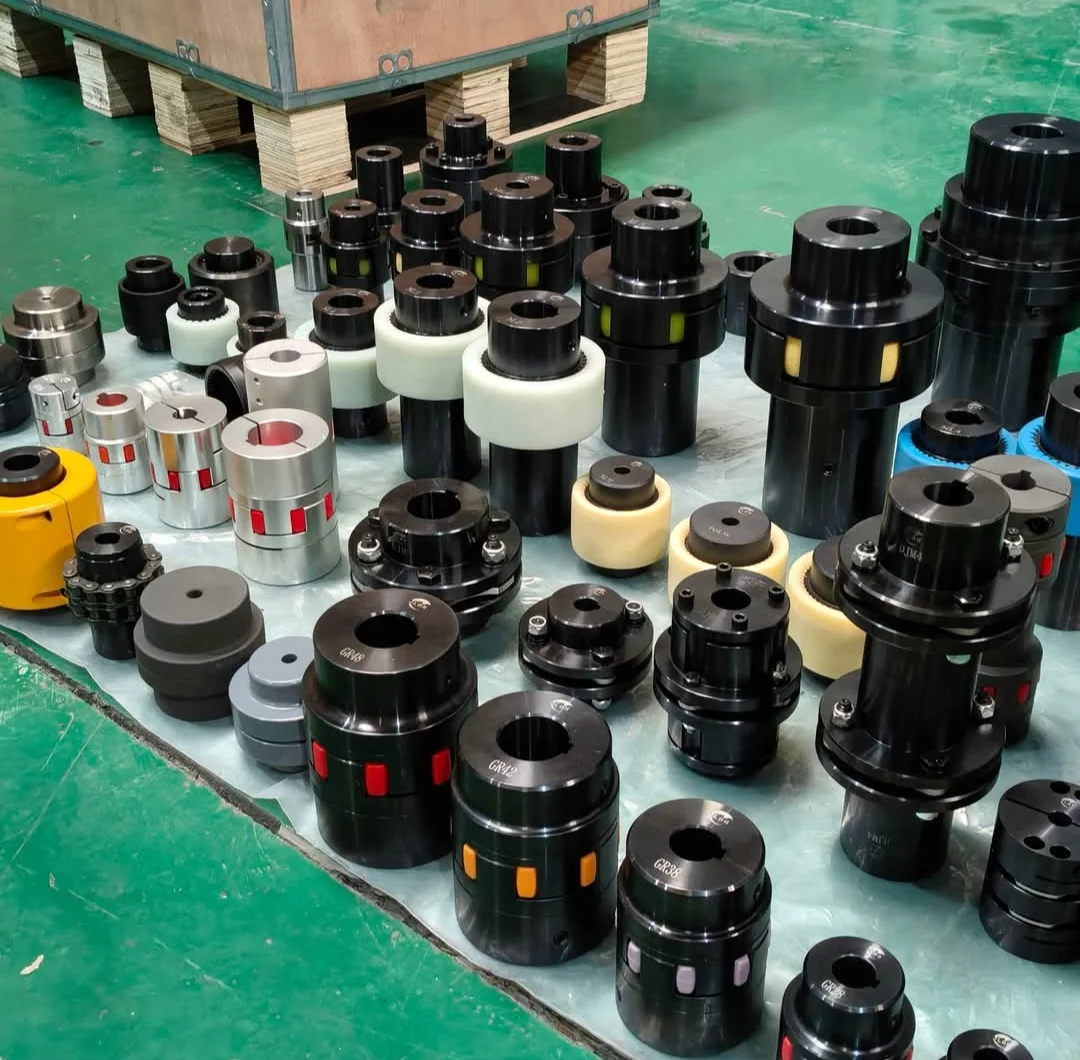
In the demanding landscape of industrial power transmission, the need for reliable torque transfer combined with vibration damping is paramount. A rotex coupling serves as a critical link in this chain, designed specifically to protect expensive machinery from the detrimental effects of misalignment and shock loads. By integrating elastic elements within a rigid framework, these couplings ensure that mechanical energy is transferred efficiently while isolating sensitive components from harmful oscillations.
The global manufacturing sector increasingly relies on standardized, high-performance components to reduce downtime and operational costs. The implementation of a rotex coupling allows engineers to compensate for unavoidable installation errors and thermal expansion, which are common in large-scale industrial setups. This versatility makes it an essential component for maintaining the longevity of motors, reducers, and driven equipment across various heavy-duty applications.
Understanding the technical nuances of the rotex coupling is key to optimizing system performance. From its high-strength cast iron construction to the strategic use of rubber elastic pads, every design element is engineered to balance torsional rigidity with flexibility. By selecting the right coupling, industries can significantly reduce noise pollution and prevent premature bearing failure.

Core Structural Design of Rotex Coupling
The architectural integrity of a rotex coupling is rooted in its simple yet highly effective three-piece design. The two half-couplings are meticulously crafted from high-strength cast iron, providing the necessary torsional rigidity to ensure that torque is transmitted without slippage. This rigid exterior ensures that the coupling can handle the demands of medium and small torque transmissions while maintaining a compact footprint.
At the heart of this assembly is the annular rubber elastic pad, which is embedded between the two cast iron halves. This core elastic element is the primary driver of the coupling's functionality, acting as the medium that absorbs energy and permits limited movement. The synergy between the rigid cast iron and the flexible rubber creates a balanced system capable of protecting connected devices from abrupt mechanical shocks.
Buffering and Vibration Reduction Mechanisms
One of the primary advantages of utilizing a rotex coupling is its superior ability to mitigate impact loads. In any mechanical drive system, the start-up and shut-down phases often generate peak torque loads that can stress the motor and the reducer. The rubber pad within the coupling undergoes elastic deformation during these events, effectively smoothing out the torque spikes and reducing the risk of fatigue failure in the drive shaft.
Beyond impact absorption, these couplings are highly effective at reducing operational noise. By interrupting the direct metal-to-metal contact between the driving and driven shafts, the elastic element dampens high-frequency vibrations that would otherwise resonate through the machine frame. This leads to a quieter working environment and a noticeable reduction in the acoustic footprint of industrial installations.
This protective mechanism extends the overall lifespan of connected machinery. By absorbing the energy from vibrations and shock, the rotex coupling prevents these forces from reaching the bearings and seals of the motor and gearbox. This proactive protection minimizes the frequency of unplanned outages and lowers the total cost of ownership for the entire mechanical system.
Displacement Compensation Capabilities
Perfect alignment between two shafts is nearly impossible to achieve and maintain in real-world industrial environments. The rotex coupling is engineered specifically to address this challenge by providing integrated displacement compensation. This allows the system to operate smoothly even when there are minor installation errors or structural shifts.
Specifically, the rotex coupling can compensate for angular deviations of up to 1°, ensuring that the torque transmission remains efficient despite a slight tilt in the shaft axis. Additionally, it handles radial deviations of approximately 0.5mm, which accommodates parallel offsets that often occur during the mounting of pumps or fans.
Furthermore, the elastic nature of the rubber pad allows for a small amount of axial expansion and contraction. This is critical in systems where thermal expansion occurs during operation, as it prevents the shafts from exerting excessive axial force on the bearings, thereby maintaining the stability of the entire drive train.
Cost Performance and Economic Value
When evaluating the economic viability of power transmission components, the rotex coupling stands out due to its high cost-performance ratio. The use of cast iron for the main bodies keeps the initial procurement costs low without sacrificing the necessary structural strength for medium-torque applications. This makes it an attractive option for budget-conscious projects that still require industrial-grade reliability.
The long-term value is further enhanced by the simplicity of the design. Because the rubber pad is the only wear part, the cost of consumables is minimal. When compared to complex gear couplings or expensive diaphragm systems, the rotex coupling provides a pragmatic balance between performance and price, ensuring a fast return on investment through reduced maintenance costs.
Performance Metrics of Rotex Coupling Variants
Maintenance and Operational Longevity
Maintenance of a rotex coupling is remarkably straightforward, which is a significant advantage in fast-paced industrial settings. One of the most lauded features of this design is that the rubber gasket can be replaced without the need to move or dismantle the main bodies of the connected equipment. This drastically reduces the time and labor required for routine servicing.
To perform a replacement, technicians simply need to remove the bolts holding the coupling together, swap out the worn rubber pad for a new one, and re-tighten the assembly. This "plug-and-play" approach to maintenance minimizes downtime and ensures that the system returns to peak operational efficiency with minimal disruption to production schedules.
Ideal Industrial Application Scenarios
The rotex coupling is most effective when deployed in scenarios involving medium and small torque transmission. Its design is particularly well-suited for equipment that experiences intermittent loading or requires a degree of vibration isolation. Common applications include the drive systems for industrial fans and water pumps, where steady torque transfer and noise reduction are critical for long-term stability.
In chemical and food processing industries, these couplings are frequently found in stirring equipment and mixers. The ability to absorb the shock loads generated by varying fluid viscosities prevents the motor from experiencing excessive stress. This makes the coupling an ideal choice for any application where the load is not perfectly constant.
Additionally, conveyor belt systems benefit significantly from the use of these couplings. The inherent ability to compensate for misalignment and absorb the impact of starting a heavily loaded belt protects the gearbox and motor from premature wear. This versatility ensures that the rotex coupling remains a staple in diverse manufacturing environments globally.
Technical Limitations and Environmental Constraints
While highly versatile, the rotex coupling has specific operational boundaries that must be respected to ensure safety and performance. The most critical constraint is temperature; the long-term working temperature should not exceed 80°C. Exceeding this threshold accelerates the aging process of the rubber pad, leading to hardening, cracking, and eventual failure of the elastic element.
Furthermore, this coupling is not intended for high-torque or extreme high-speed applications. The cast iron components and rubber element are optimized for medium-range duties. Attempting to use them in heavy-duty mining equipment or ultra-high-speed turbines would likely result in rapid wear or catastrophic failure due to centrifugal forces and excessive heat generation.
Regular inspection is also mandatory for the longevity of the system. Because the rubber pad is the primary sacrificial element, it must be checked periodically for signs of deformation or wear. By adhering to a strict inspection schedule and respecting the thermal limits, operators can maximize the reliability of their power transmission systems.
Analysis of Rotex Coupling Operational Limits
| Constraint Factor |
Safe Operating Range |
Risk of Exceeding |
Recommended Action |
| Temperature |
≤ 80°C |
Rubber Aging/Cracking |
Install Cooling/Heat Shield |
| Angular Offset |
≤ 1° |
Excessive Wear on Pad |
Re-align Shafts |
| Radial Deviation |
≈ 0.5mm |
Vibration Increase |
Precision Mounting |
| Torque Load |
Medium/Small |
Structural Fracture |
Upgrade to Gear Coupling |
| Maintenance Cycle |
Periodic/Scheduled |
Unplanned Downtime |
Implement PM Schedule |
| Rotational Speed |
Standard Industrial |
Centrifugal Deformation |
Verify RPM Limits |
FAQS
The rubber pad serves as the core elastic element. Its primary functions are to provide buffering and vibration reduction by absorbing impact loads during transmission, and to compensate for minor shaft misalignments, including angular and radial deviations, thereby protecting the motor and reducer from damage.
Replacement intervals vary based on load and environment, but regular inspections are essential. You should replace the rubber pad when signs of aging, such as hardening or visible cracks, appear, or if vibration levels increase. Typically, this is part of a quarterly or semi-annual preventive maintenance check.
It is not recommended for long-term use above 80°C. High temperatures accelerate the chemical degradation of the rubber, leading to rapid aging and loss of elasticity. For extreme temperature environments, you should consider alternative coupling materials or implement active cooling solutions to protect the elastic element.
No, one of the biggest advantages of the rotex coupling is its ease of maintenance. You can replace the rubber gasket simply by removing the bolts and swapping the part; there is no need to move the main body of the equipment or the connected shafts, significantly reducing downtime.
If the angular deviation exceeds the 1° limit, the rubber pad will experience uneven stress and accelerated wear. This often leads to increased vibration, noise, and a shorter lifespan for the coupling. In such cases, it is critical to re-align the shafts to bring the deviation back within the specified tolerance.
Industries utilizing pumps, fans, mixers, and conveyor systems benefit the most. These applications typically involve medium torque and require vibration damping to ensure the longevity of the drive train, making the rotex coupling an ideal and cost-effective solution for these scenarios.
Conclusion
In summary, the rotex coupling provides a highly efficient and economical solution for torque transmission in medium-duty industrial applications. By leveraging the combined strength of cast iron and the flexibility of rubber, it effectively manages vibration, compensates for shaft misalignment, and protects critical machinery from shock loads. Its simple design not only reduces the initial cost but also ensures that maintenance is fast and uncomplicated.
Looking forward, as industrial automation continues to evolve, the demand for reliable, low-maintenance components will only grow. Investing in high-quality couplings and adhering to strict thermal and alignment guidelines will ensure operational stability and minimize unplanned downtime. For those seeking to optimize their mechanical drive systems, we invite you to explore our full range of professional solutions. Visit our website: www.binhaocoupling.com