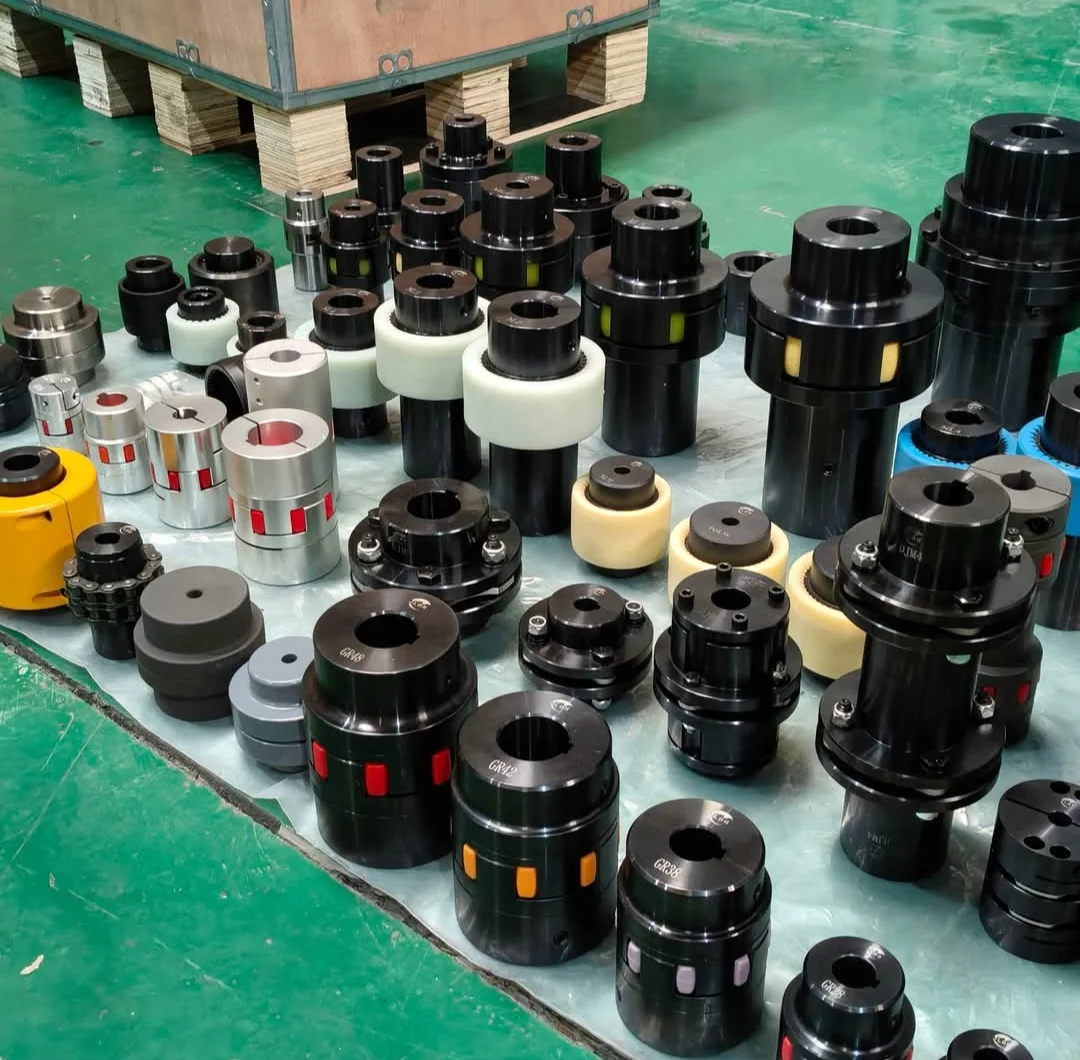
The selection of high-performance power transmission components is critical for maintaining industrial uptime and operational efficiency. Among the various solutions available, the GS coupling represents a pragmatic approach to connecting shafts while accommodating the inevitable misalignments that occur in heavy-duty machinery. By focusing on mechanical reliability and ease of installation, these components ensure that energy is transferred smoothly from the motor to the driven equipment.
In the modern manufacturing landscape, the demand for components that balance cost-effectiveness with high fault tolerance has grown. Industries ranging from water treatment to material handling require a robust method to handle radial and angular displacements without the need for expensive, high-precision laser alignments. This is where the strategic implementation of a GS coupling becomes invaluable, offering a durable bridge between power sources and industrial loads.
Whether you are optimizing a new conveyor system or replacing an aged drive line, understanding the mechanical advantages of the GS coupling is essential for reducing total cost of ownership. By utilizing a double-row roller chain and precision-machined sprocket hubs, this solution provides a stable, high-torque transmission path that excels in diverse and demanding environments.

Global Relevance of GS Coupling in Industry
On a global scale, the reliability of power transmission is a cornerstone of industrial productivity. According to international engineering standards, mechanical failures due to shaft misalignment are among the leading causes of unplanned downtime in pump and compressor stations. The GS coupling addresses this challenge by providing a flexible yet strong connection that absorbs structural stresses, thereby protecting expensive bearings and motors from premature wear.
In emerging industrial zones and large-scale infrastructure projects, the need for "low-maintenance, high-reliability" components is paramount. The ability of a GS coupling to operate efficiently across medium to high speeds while requiring only basic lithium-based grease lubrication makes it a preferred choice for operators who lack the resources for constant, high-precision monitoring but cannot afford system failure.
Defining the GS Coupling Architecture
In simple technical terms, the GS coupling (specifically the KC series architecture) is a mechanical power transmission device consisting of two precision-machined sprocket hubs linked by a robust double-row roller chain. Unlike elastic couplings that rely on rubber or plastic inserts, this design uses the physical meshing of steel components to transfer torque, ensuring there is no slip during operation.
This architecture is specifically engineered to solve the problem of shaft displacement. By leveraging the inherent flexibility of the chain, the coupling can compensate for radial deviations up to 1mm, angular deflections up to 1 degree, and axial movements of approximately 1% of the shaft diameter. This flexibility is critical in environments where thermal expansion or foundation settling occurs.
Beyond its physical structure, the integration of a sealed protective cover is a defining feature. This cover serves a dual purpose: it keeps the internal lubrication contained to minimize friction and blocks external contaminants like dust and grit from entering the chain links, which is essential for maintaining operational stability in harsh industrial settings.
Core Components and Design Factors
The effectiveness of a GS coupling is rooted in its high-quality material selection. The steel rims and standard roller chains are manufactured to rigorous quality control standards, ensuring that the tooth grooves are precisely aligned for seamless meshing. This precision reduces the impact of torque spikes and ensures efficient energy transfer between the driving and driven shafts.
One of the most significant design factors of the GS coupling is its "High Fault Tolerance." Because the chain drive does not require the strict, micron-level alignment that precision disc couplings demand, installation time is drastically reduced. This makes the coupling an ideal choice for rapid deployment in field environments or during emergency repairs.
Maintenance is another core pillar of its design. By utilizing lithium-based grease and a structured maintenance cycle of every 3 to 6 months, the GS coupling ensures a long service life. This predictable maintenance schedule allows facility managers to plan downtime effectively, preventing the catastrophic failures associated with neglected lubrication.
Practical Applications and Use Cases
The GS coupling is most effective in applications where medium to small power transmission is required and where the environment may be unpredictable. In water treatment plants, for instance, it is frequently used to connect pumps to electric motors, where it can handle the slight vibrations and misalignments common in large-scale piping systems.
Similarly, in industrial ventilation and air compression, the coupling's ability to handle medium to high-speed operation makes it a staple for exhaust fans and compressors. In conveyor systems used in mining or logistics, the mechanical strength of the double-row chain ensures that heavy loads are moved consistently without the risk of coupling failure.
GS Coupling Performance Comparison by Application
Long-Term Value and Economic Advantages
From a financial perspective, the GS coupling offers a significantly lower Total Cost of Ownership (TCO) compared to precision elastic couplings. The initial acquisition cost is very low due to the use of standard, economical materials, and because the installation requires less precision, labor costs during setup are minimized.
Beyond the initial purchase, the long-term value is found in the simplicity of replacement parts. Since the coupling utilizes standard chain components, replacement is rapid and does not require specialized tools or extensive technical training. This ensures that downtime is kept to an absolute minimum, maximizing the return on investment for the end-user.
Future Trends in Transmission Technology
As industry 4.0 continues to evolve, we are seeing a trend toward "smart" maintenance. While the GS coupling is a purely mechanical device, the integration of external vibration sensors and AI-driven lubrication alerts is becoming more common. This allows operators to move from a fixed 3-6 month maintenance cycle to a condition-based maintenance model, further extending the life of the chain.
There is also a growing emphasis on sustainability and material efficiency. Future iterations of the GS coupling may incorporate advanced surface treatments or self-lubricating materials to reduce the reliance on external grease, aligning the product with global "green" manufacturing initiatives and reducing the environmental footprint of industrial plants.
Furthermore, the rise of automation in modular equipment design means that components must be easier to integrate. The compact structure of the GS coupling makes it perfectly suited for the increasingly tight footprints of modern automated machinery, ensuring that power can be delivered reliably without occupying excessive space.
Overcoming Implementation Challenges
Despite its many advantages, users must be aware of the inherent limitations of a mechanical chain drive. One common challenge is the lack of vibration damping. Because the GS coupling utilizes pure mechanical meshing, it cannot absorb high-frequency impact loads or dampen oscillations. For applications requiring shock absorption, a different coupling type may be necessary.
Another potential issue is the risk of wear if lubrication schedules are ignored. To overcome this, we recommend implementing a strict lubrication log and using high-quality lithium-based grease. Ensuring that the sealed cover remains intact is also crucial to prevent the ingress of abrasives that could accelerate chain wear.
Finally, while the coupling handles misalignment well, extreme deviations can still lead to premature failure. Periodic alignment monitoring is recommended to ensure that the radial and angular displacements remain within the specified limits (e.g., ≤ 1° deflection), thereby maximizing the operational lifespan of the system.
Comparative Analysis of GS Coupling vs. Precision Elastic Alternatives
| Metric | GS Coupling (Chain Type) | Precision Elastic Coupling | Impact on TCO |
|---|
| Initial Cost | Very Low | High | Lower Upfront CapEx |
| Installation Time | Short (High Tolerance) | Long (Strict Alignment) | Reduced Labor Cost |
| Maintenance | Simple Lubrication | Complex Element Replacement | Lower OpEx |
| Misalignment Handling | Excellent (Radial/Angular) | Moderate to Low | Less frequent repairs |
| Vibration Damping | None (Pure Mechanical) | Excellent | Higher stress on shafts |
| Durability | High (Steel Construction) | Medium (Polymer Wear) | Longer replacement cycle |
FAQS
The GS coupling (KC series) is ideal for general industrial equipment such as water pumps, exhaust fans, air compressors, and conveyors. It is specifically designed for scenarios where medium to small power transmission is required and where the system can benefit from high fault tolerance regarding shaft alignment.
No, the GS coupling utilizes a pure mechanical meshing structure consisting of steel sprockets and a roller chain. Consequently, it does not have buffering or vibration absorption capabilities. It is not recommended for applications subject to high-frequency impact loads or where vibration damping is a critical requirement.
To maintain a long service life and prevent premature chain wear, it is recommended to check and apply lithium-based grease every 3 to 6 months. The frequency may increase depending on the severity of the working conditions, such as exposure to extreme temperatures or high-dust environments.
Typically, the GS coupling can compensate for radial deviations up to 1mm, angular deflections of ≤ 1°, and axial displacements of approximately 1% of the shaft diameter. This makes it far more forgiving during installation than high-precision disc or diaphragm couplings.
The sealed outer cover serves two critical functions: first, it protects the internal chain and sprockets from dust, moisture, and other contaminants that could cause abrasion; second, it retains the lithium-based lubricant, reducing the frequency of grease application and ensuring a smooth transmission.
While it is exceptionally reliable for general power transmission, it is not designed for high-precision scenarios that are sensitive to minute vibrations. Due to the mechanical nature of the chain drive, it is best suited for industrial stability rather than precision instrumentation.
Conclusion
In summary, the GS coupling provides a robust and economically viable solution for industrial power transmission, bridging the gap between high-cost precision components and the need for operational reliability. Its ability to handle radial, angular, and axial misalignments, combined with a simple maintenance profile and high fault tolerance, makes it an essential tool for maintaining efficiency in pumps, fans, and conveyor systems.
Looking forward, the integration of smart monitoring and sustainable materials will only enhance the value proposition of this mechanical solution. For engineers and facility managers seeking to reduce downtime and lower their total cost of ownership, investing in a well-maintained GS coupling system is a strategic move toward industrial stability. Visit our website for more information: www.binhaocoupling.com