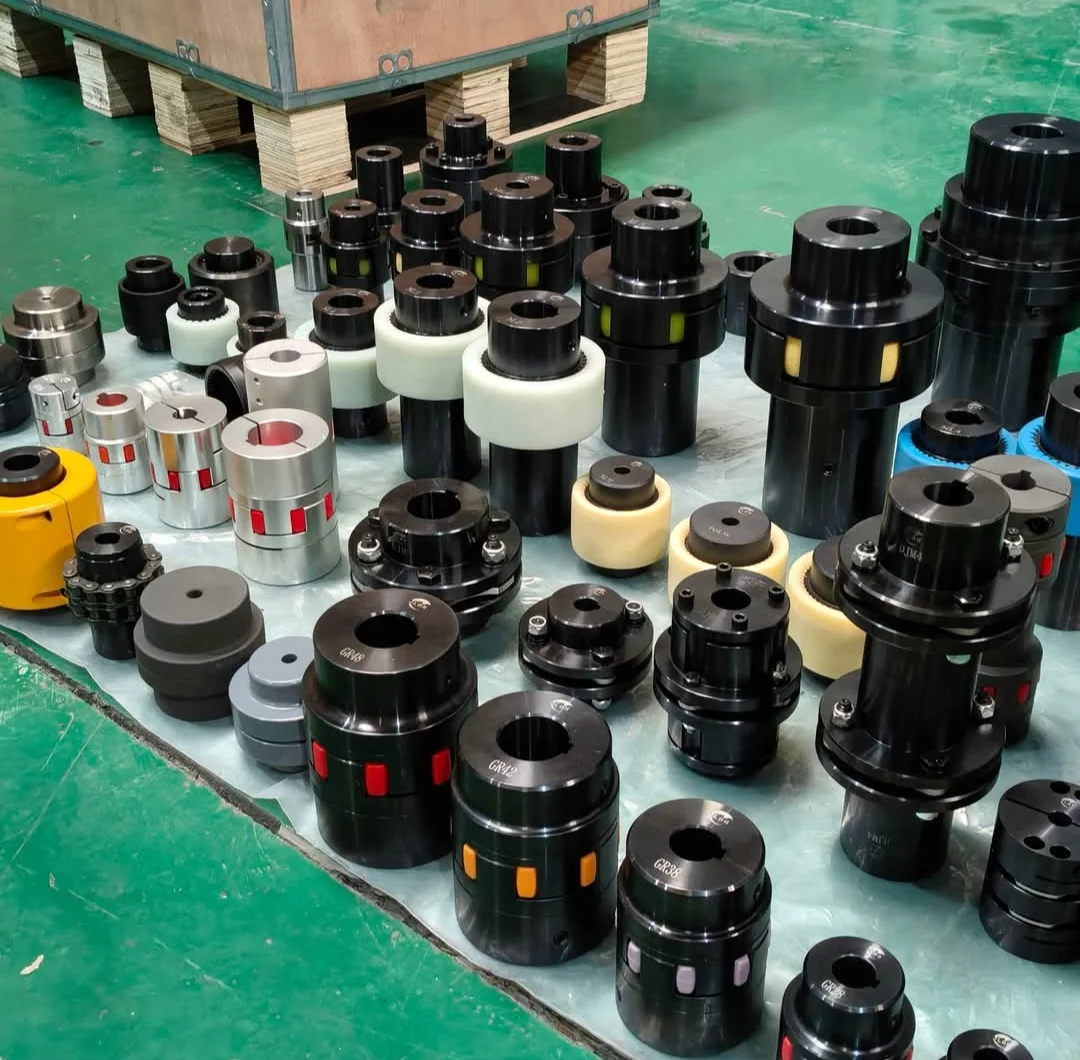
In the world of high-precision machinery, the transmission of torque between shafts requires a balance of strength and flexibility. A disc coupling serves as a critical component in this ecosystem, utilizing a series of thin, flexible stainless steel discs to transmit power while accommodating misalignment. By eliminating the need for lubrication and reducing wear, these components ensure that industrial systems operate with maximum efficiency and minimal downtime.
Across global manufacturing sectors, the demand for high-speed stability and zero-backlash performance has pushed the industry toward more advanced coupling solutions. Whether it is in the chemical processing plant or a high-tech servo system, the ability to maintain a transmission efficiency of up to 99.86% is not just a technical advantage but a financial necessity. Modern engineering now prioritizes components that can withstand extreme temperatures and corrosive environments without compromising structural integrity.
Understanding the operational nuances of a disc coupling allows engineers to optimize equipment lifespan and reduce maintenance overhead. By focusing on high torque capacity and superior dynamic balance, these couplings solve the age-old problem of vibrational wear and energy loss. This guide explores how these precision-engineered components drive the modern industrial landscape.

High Torque Transmission and Efficiency
The primary strength of a disc coupling lies in its seamless connection design. By utilizing stainless steel diaphragm groups and expansion sleeves, these couplings are engineered to withstand heavy-load working conditions without slipping or failing. This structural integrity allows for the safe transmission of immense power, making them the ideal choice for high-power units where reliability is non-negotiable.
Efficiency is another cornerstone of this design. With a transmission efficiency reaching as high as 99.86%, energy loss is virtually eliminated. This ensures that the power generated by the motor is delivered almost entirely to the driven equipment, reducing operational costs and minimizing heat generation during continuous high-load cycles.
Dynamic Balance for High-Speed Precision
In high-speed applications, even the slightest imbalance can lead to catastrophic vibration and premature bearing failure. A disc coupling is specifically designed to maintain an outstanding dynamic balance, supporting rotational speeds that can exceed 10,000rpm. This precision ensures that the initial balance remains stable throughout the operational life of the component.
The absence of operating noise is a direct result of this balanced architecture. When used in servo systems or precision instruments, the coupling prevents the transmission of harmonic vibrations, ensuring a smooth and quiet operation. This makes it an essential component for industries where noise pollution must be minimized and precision is the top priority.
By maintaining strict tolerances during the manufacturing of the diaphragm group, the coupling avoids the centrifugal instabilities common in lower-grade alternatives. This stability allows for higher throughput in production lines and increased reliability in critical high-speed shaft transmissions.
Advanced Deviation Compensation Capabilities
Shaft misalignment is an inevitable challenge in industrial installation. The disc coupling addresses this by offering a strong deviation compensation capability. It can simultaneously manage axial, radial, and angular deviations, allowing it to adapt to complex installation environments where perfect alignment is physically impossible.
Specifically, the angular displacement compensation reaches up to ±1.5°. This flexibility is achieved without sacrificing torque capacity, ensuring that the disc coupling can absorb shocks and misalignments while keeping the radial displacement reaction force small, which protects the connected bearings from excessive stress.
This ability to compensate for deviations makes the coupling an ideal choice for equipment that undergoes thermal expansion or contraction. By absorbing these movements, the coupling prevents the stress from transferring to the motor or the pump, thereby extending the service life of the entire drivetrain.
Maintenance-Free Design and Long-Term Value
One of the most significant operational advantages of the disc coupling is its maintenance-free architecture. Unlike gear couplings that require regular lubrication, these diaphragm-based systems require no grease or oil. This eliminates the risk of lubrication failure and removes the cost and labor associated with periodic maintenance schedules.
Furthermore, the "zero wear" characteristic of the stainless steel discs ensures an exceptionally long service life. Maintenance teams can perform visual inspections when the machine is stopped to check the fault status with the naked eye, significantly reducing the time required for diagnostic checks and minimizing unplanned downtime.
Performance Comparison of Coupling Methods
Environmental Adaptability in Harsh Conditions
Industrial environments are often hostile, featuring extreme temperatures and corrosive agents. The disc coupling is engineered to excel in these conditions, with an operating temperature range spanning from -80℃ to +300℃. This makes it suitable for everything from cryogenic applications to high-heat industrial furnaces.
Beyond temperature, the use of high-grade stainless steel ensures that the coupling is resistant to acids, alkalis, and salt spray corrosion. This environmental robustness is critical for sectors such as the chemical industry and shipping, where exposure to saline air and corrosive chemicals would quickly degrade standard steel components.
Global Industrial Applications and Use Cases
The versatility of the disc coupling allows it to be deployed across a wide array of global industries. In water treatment plants and power stations, it is frequently used for the shaft transmission of large-scale water pumps and fans, where high torque and reliability are paramount to prevent service interruptions.
In the automotive and aerospace sectors, these couplings are integrated into high-precision servo systems. Their ability to handle speeds over 10,000rpm without vibration ensures that robotic arms and precision CNC machinery operate with micrometer accuracy.
Additionally, in the shipping and offshore oil industry, the corrosion-resistant nature of the diaphragm structure ensures that propulsion and pumping systems remain operational despite constant exposure to seawater. This reliability reduces the frequency of costly offshore maintenance missions.
Future Trends in Coupling Technology
As industry 4.0 continues to unfold, the integration of smart monitoring into the disc coupling ecosystem is becoming a reality. Future iterations may include embedded sensors to monitor fatigue and angular displacement in real-time, allowing for predictive maintenance rather than just visual inspections.
Sustainability is also driving innovation. The move toward "zero-lubrication" designs is reducing the environmental impact of industrial lubricants, aligning with global green energy goals. The use of advanced alloys will likely further increase the torque-to-weight ratio, allowing for smaller, more efficient couplings.
Digital transformation is also influencing the design phase. Generative design and 3D simulation are now used to optimize the geometry of the diaphragm groups, ensuring that each disc coupling is tailored for specific load profiles, further pushing the boundaries of transmission efficiency.
Technical Performance Analysis of Disc Coupling Variations
| Coupling Structure | Torque Capacity | Max Speed (RPM) | Environmental Rating |
|---|
| Connecting Rod Type | Very High | 8,000 | High |
| Integral Type | High | 12,000 | Excellent |
| Standard Diaphragm | Medium-High | 10,000 | High |
| High-Temp Alloy | High | 9,000 | Superior |
| Corrosion-Resistant | Medium-High | 10,000 | Maximum |
| Compact Precision | Medium | 15,000 | Medium-High |
FAQS
A disc coupling offers superior dynamic balance and operates without the need for lubrication. While gear couplings can handle immense torque, they often introduce noise and wear over time due to friction. In contrast, the disc coupling's stainless steel diaphragm provides a zero-wear solution that can maintain stability at speeds exceeding 10,000rpm, making it far more suitable for precision servo systems.
Yes, these couplings are designed for extreme environments. Depending on the materials used, they can operate in a range from -80℃ to +300℃. This flexibility is due to the properties of the stainless steel diaphragm groups, which do not become brittle in extreme cold or lose structural integrity in high heat, unlike rubber or plastic-based elastic couplings.
A high-quality disc coupling can handle angular displacement of up to ±1.5°. It is designed to simultaneously compensate for axial, radial, and angular deviations. This is particularly useful in heavy industrial equipment where thermal expansion can shift the shafts during operation, preventing the coupling from transferring harmful reaction forces to the motor bearings.
Correct. Because they rely on the elastic deformation of metal discs rather than sliding or rolling contact, there is no friction that requires lubrication. This makes them ideal for "clean" environments like the chemical or pharmaceutical industries, where oil leaks would contaminate the product and where maintenance access is limited.
They are most commonly found in high-speed precision transmissions, such as servo systems, and heavy-duty equipment including water pumps, industrial fans, and compressors. They are also widely used in corrosive environments, such as shipping and chemical plants, due to their stainless steel construction.
One of the key benefits is the ease of inspection. When the machine is stopped, the fault status of the diaphragm groups can be checked with the naked eye. You simply look for any signs of fatigue or cracking in the stainless steel discs. This simplifies the diagnostic process and reduces the need for complex disassembly during routine checks.
Conclusion
The disc coupling represents a pinnacle of mechanical engineering, blending high torque capacity with exceptional precision and environmental resilience. By delivering a transmission efficiency of 99.86% and eliminating the need for lubrication, it addresses the core challenges of modern industrial drives—reducing maintenance costs while increasing system reliability and lifespan.
As industries move toward greater automation and more extreme operating conditions, the role of high-performance coupling technology will only grow. Investing in a maintenance-free, zero-wear solution is not just a technical upgrade but a strategic move toward sustainable and efficient production. For those seeking to optimize their drivetrain performance, exploring these precision solutions is the first step toward operational excellence. Visit our website: www.binhaocoupling.com