
- russian
- italian
- japanese
- korean
- latin
- latvian
- lithuanian
- malay
- norwegian
- persian
- polish
- portuguese
- romanian
- irish
- sanskrit
- slovak
- spanish
- swahili
- swedish
- tamil
- thai
- turkish
- ukrainian
- urdu
- vietnamese
- welsh
- english
- arabic
- armenian
- basque
- belarusian
- bengali
- bulgarian
- burmese
- croatian
- czech
- danish
- deutsch
- dutch
- albanian
- estonian
- filipino
- finnish
- french
- georgian
- greek
- hebrew
- hindi
- hungarian
- icelandic
- indonesian
Disc coupling types represent a crucial component in modern power transmission systems, offering a reliable and efficient method for connecting rotating shafts. Their ability to transmit torque while accommodating misalignment makes them indispensable across numerous industries. Understanding the nuances of different disc coupling types is paramount for engineers and professionals seeking optimized performance, reduced downtime, and enhanced system longevity. This knowledge is not merely technical; it translates to cost savings, improved safety, and ultimately, a competitive edge in today’s demanding manufacturing landscape.
Globally, the demand for robust and adaptable coupling solutions is steadily increasing, driven by advancements in automation, the growth of industrial sectors in emerging economies, and a heightened focus on operational efficiency. According to reports from the International Organization for Standardization (ISO), precision engineering components like couplings are witnessing significant growth, particularly in Asia-Pacific and North America. These trends highlight the critical role that disc couplings play in supporting industrial infrastructure and driving economic development.
However, selecting the optimal disc coupling type requires a deep understanding of application-specific requirements, including torque levels, speed, misalignment characteristics, and environmental conditions. The prevalence of incorrect coupling selection can lead to premature failure, increased maintenance costs, and potential safety hazards.
The Core Principles of Disc Coupling Types

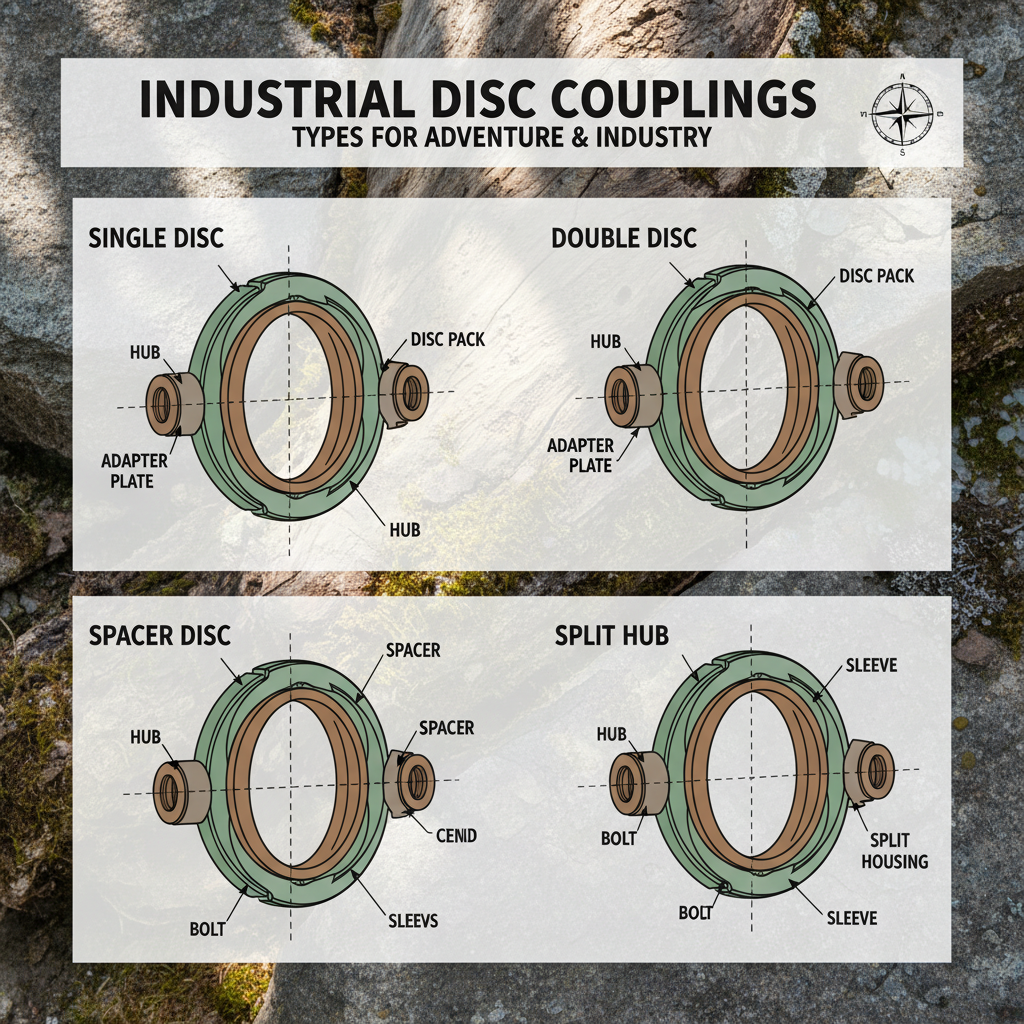
Disc couplings operate on the principle of transmitting torque through a series of flexible discs, typically made of spring steel or composite materials. These discs are connected to the driving and driven shafts via flanged hubs, allowing for a degree of misalignment – angular, parallel, and axial – without inducing excessive stress on the connected equipment. This inherent flexibility is a key advantage, minimizing vibrations and reducing bearing loads.
The design of a disc coupling directly influences its torque capacity, stiffness, and ability to accommodate misalignment. Different disc geometries, materials, and the number of discs used all contribute to the overall performance characteristics. Selecting the correct disc coupling type is critical for ensuring reliable operation and preventing premature failure.
FAQS
Single disc couplings are generally used for applications with lower torque requirements and smaller misalignment capacities. They offer a simpler, more cost-effective design. Double disc couplings, on the other hand, provide higher torque capacity and can accommodate greater misalignment. They utilize two sets of flexible discs, resulting in increased performance and durability.
Disc couplings inherently accommodate a degree of axial misalignment due to the flexibility of the discs. The discs can compress and expand slightly to accommodate movement along the shaft axis. However, the axial misalignment capacity is limited and should be considered during the coupling selection process to avoid overstressing the discs.
Yes, disc couplings are well-suited for high-speed applications. Their balanced design and lack of moving parts minimize vibration and ensure smooth operation at high rotational speeds. However, it's crucial to select a coupling with an appropriate speed rating for the specific application to prevent premature failure.
One of the significant advantages of disc couplings is their minimal maintenance requirements. Unlike some other coupling types, they generally do not require lubrication. Regular visual inspections to check for signs of wear or damage are recommended, but typically, no other maintenance is needed.
Disc couplings are commonly manufactured from spring steel, known for its flexibility and resilience. However, stainless steel and composite materials are also used in specific applications requiring corrosion resistance or lightweight designs. The choice of material depends on the operating environment and performance requirements.
Extreme temperatures can impact the performance of disc couplings. High temperatures can reduce the material strength of the discs, while low temperatures can make them more brittle. It’s essential to select a coupling made from materials suitable for the expected operating temperature range and to consult manufacturer guidelines for specific temperature limitations.
Conclusion
In conclusion, disc coupling types represent a cornerstone of modern power transmission, offering a versatile, reliable, and cost-effective solution for connecting rotating shafts. Their ability to accommodate misalignment, transmit torque efficiently, and operate with minimal maintenance makes them invaluable across a wide range of industries. Understanding the nuances of different disc coupling types and their application-specific requirements is crucial for optimizing performance, extending equipment lifespan, and ensuring operational safety.
Looking ahead, continued innovation in materials, sensor technology, and digital integration will further enhance the capabilities of disc couplings, solidifying their position as a critical component in the evolving landscape of industrial automation and power transmission. For optimal performance and long-term reliability, we encourage you to explore our comprehensive range of disc coupling solutions. Visit our website today: disc coupling types.
Related Posts
-

Exploring Jaw Coupling Companies Applications and Future Industry Trends
-
Navigating the Dynamic Landscape of Plum Coupling Manufacturers and Solutions
-

Reliable Spider Coupling Suppliers for Industrial Power Transmission Solutions
-

Essential Guide to Global shaft coupling Factories and Industrial Power Transmission