In the demanding world of industrial power transmission, selecting the right coupling is critical to maintaining machinery health and operational uptime. Understanding the various elastomeric coupling types is essential for engineers and maintenance managers who seek to eliminate vibration, compensate for misalignment, and protect expensive motors from shock loads.
Unlike rigid couplings, elastomeric versions utilize flexible polymer or rubber elements to absorb energy and dampen oscillations. This flexibility not only extends the lifespan of bearings and seals but also enhances the overall safety of the mechanical system by preventing catastrophic failure during sudden torque spikes.
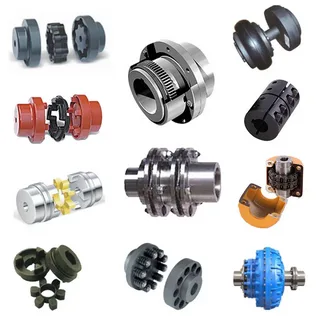
From simple jaw designs to complex tire and gear-elastic configurations, the diversity of elastomeric coupling types allows for precise matching between the drive source and the driven load. By analyzing torque requirements, environmental conditions, and misalignment tolerances, companies can significantly reduce maintenance costs and improve energy efficiency across their production lines.
Global Relevance of Elastomeric Coupling Types
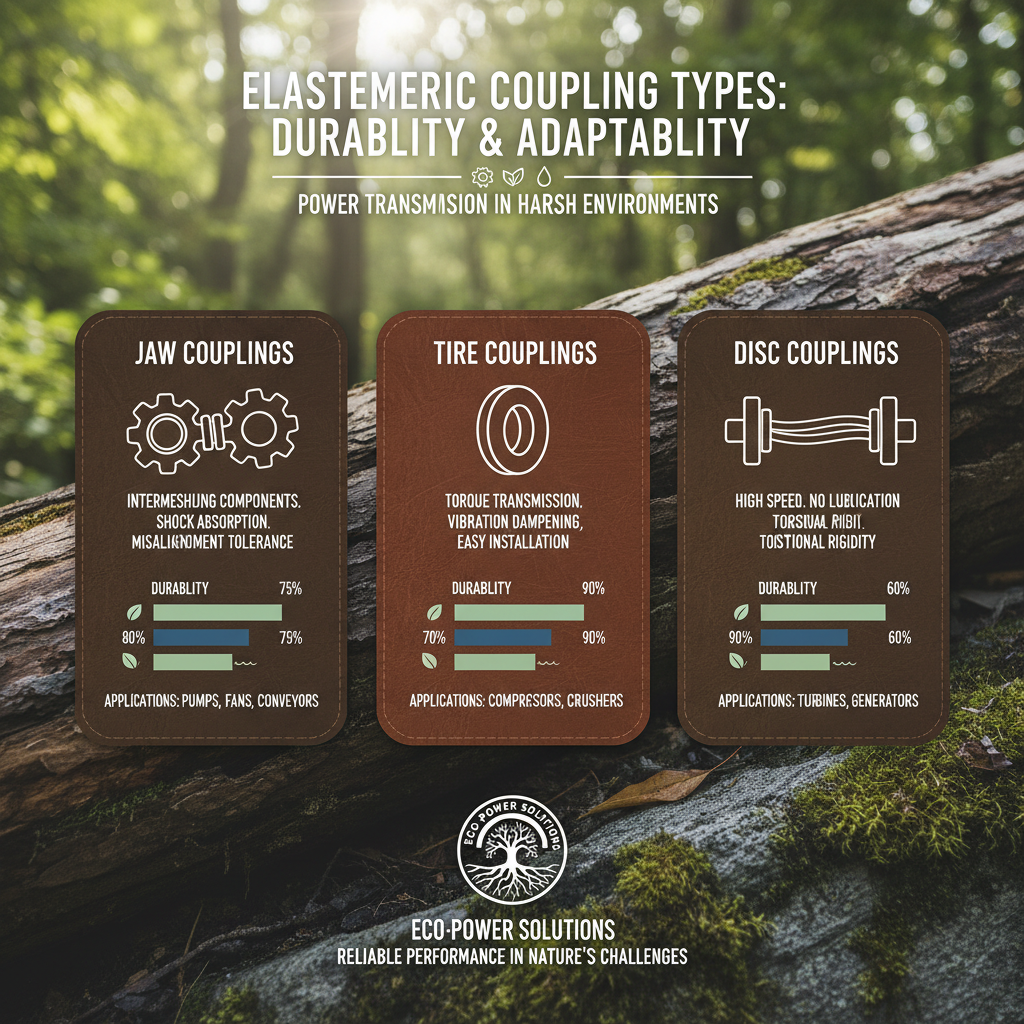
On a global scale, the demand for high-efficiency power transmission has surged as industries move toward Automation 4.0. The integration of elastomeric coupling types has become a standard requirement in ISO-certified manufacturing plants, where minimizing downtime is tied directly to profitability. According to industrial efficiency benchmarks, improper coupling selection can lead to a 15-20% increase in premature bearing failure.
The challenge lies in the volatility of modern industrial environments—varying temperatures, chemical exposure, and extreme vibrations. By deploying a wide array of elastomeric solutions, such as the L Series Elastic Jaw or NL Gear Elastic Coupling, global operators can ensure that their equipment remains resilient against the physical stresses of continuous 24/7 operation.
Defining the Mechanics of Elastomeric Couplings
At its core, an elastomeric coupling is a mechanical device used to connect two shafts, designed to transmit torque while providing a degree of flexibility. Unlike rigid couplings that require perfect alignment, these flexible systems utilize an "elastic" element—usually made of rubber, polyurethane, or specialized polymers—to accommodate angular, parallel, and axial misalignment.
In the context of modern industry, this flexibility is not just a convenience but a necessity. For instance, in heavy-duty pump systems or conveyors, thermal expansion of the shafts can cause misalignment that would snap a rigid connection. Elastomeric coupling types act as a mechanical fuse, absorbing these shifts and preventing the transfer of harmful vibrations to the motor.
The connection to humanitarian and infrastructure needs is equally strong. In water treatment plants or remote energy grids, where specialized maintenance crews may be hours away, the "fail-safe" nature of a flexible coupling ensures that a minor alignment error doesn't result in a total system blackout, maintaining essential services for local populations.
Core Performance Factors for Selection
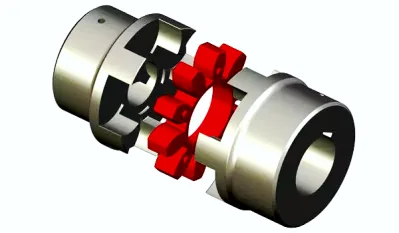
When evaluating different elastomeric coupling types, durability is the primary metric. The material of the spider or insert must be compatible with the ambient environment; for example, Nitrile rubber is preferred for oil resistance, while Hytrel is used for high-torque, high-temperature applications.
Scalability and versatility are also key. Whether using a compact ML Plum Blossom Coupling for small precision motors or a heavy-duty NL Gear Elastic Coupling for mining machinery, the ability to scale the torque capacity without redesigning the entire drivetrain is a massive operational advantage.
Finally, cost-efficiency is measured not by the initial purchase price, but by the Total Cost of Ownership (TCO). An elastomeric coupling that is easy to replace—such as the L Series Jaw Coupling, where the insert can be swapped without moving the motor—saves hundreds of man-hours in maintenance over the equipment's lifecycle.
Industrial Applications and Global Use Cases
The application of various elastomeric coupling types spans across nearly every sector of the global economy. In the petrochemical industry of the Middle East, high-torque gear elastic couplings are used to drive massive compressors, where they mitigate the impact of sudden pressure surges. In the precision electronics factories of East Asia, clamping couplings provide the zero-backlash performance required for robotic arms.
Beyond traditional factories, these components are vital in remote industrial zones. For example, in hydroelectric plants located in mountainous regions, elastomeric couplings compensate for the slight shifting of concrete foundations over time, ensuring that the turbines continue to rotate smoothly without stressing the generator shafts.
Performance Comparison of Elastomeric Coupling Types
Long-term Value and Operational Advantages
The adoption of optimized elastomeric coupling types translates directly into increased machine reliability. By isolating the drive end from the driven end, these couplings protect the most expensive components—the motor and the gearbox—from the destructive effects of resonance and shock loads, which are the primary causes of unplanned downtime in heavy industry.
From a sustainability perspective, the use of high-grade elastomeric materials reduces energy waste. A poorly aligned shaft in a rigid system creates friction and heat, wasting electricity and increasing the carbon footprint of the plant. Flexible couplings ensure a more efficient transfer of torque, aligning with global green energy initiatives to optimize industrial energy consumption.
Future Innovations in Flexible Coupling Materials
The future of elastomeric coupling types is being shaped by material science. We are seeing a shift toward "smart elastomers" that can withstand extreme temperature fluctuations (-60°C to +200°C) without losing their elastic properties. These advancements are crucial for the aerospace and cryogenic industries, where standard rubber would either shatter or melt.
Digital transformation is also making its mark. The integration of embedded sensors within the elastomeric element is currently in development. These "intelligent couplings" will be able to signal the maintenance team via IoT when the elastomer has reached 80% of its fatigue life, transitioning the industry from reactive to predictive maintenance.
Furthermore, the push for sustainability is driving the development of biodegradable and recyclable polymers. As companies strive to meet ESG (Environmental, Social, and Governance) targets, the move toward eco-friendly elastomeric materials will reduce the industrial waste generated by the millions of coupling inserts replaced annually worldwide.
Overcoming Common Implementation Challenges
Despite their benefits, implementing elastomeric coupling types is not without challenges. The most common issue is "over-reliance on flexibility," where engineers use a flexible coupling to mask severe misalignment. This puts excessive stress on the elastomer, leading to premature failure and frequent replacements.
Another challenge is chemical degradation. In environments with high concentrations of ozone or aggressive solvents, standard elastomeric elements can swell or crack. The solution lies in precise material matching—switching from a standard NBR (Nitrile) to an FKM (Viton) or specialized polyurethane based on the chemical profile of the workspace.
To overcome these hurdles, we recommend a comprehensive drivetrain audit. By using laser alignment tools in conjunction with the right flexible coupling, plants can achieve a "synergistic alignment" where the coupling handles the unavoidable micro-shifts, while the overall system remains within tight tolerances for maximum efficiency.
Comparative Analysis of Common Elastomeric Coupling Configurations
| Coupling Model |
Damping Capacity |
Torque Density |
Typical Application |
| L Series Jaw |
High (8/10) |
Medium |
General Machinery |
| NL Gear Elastic |
Medium (6/10) |
Very High |
Heavy Industrial Drive |
| ML Plum Blossom |
Very High (9/10) |
Low-Medium |
Precision Equipment |
| TL Pin Coupling |
Medium (7/10) |
High |
Pump & Fan Drives |
| XL Spider Coupling |
High (8/10) |
Medium |
Servo Motor Systems |
| KC Chain Elastic |
Low (5/10) |
High |
Agricultural Machinery |
FAQS
For high-vibration environments, the ML Plum Blossom and L Series Jaw couplings are generally superior due to their high damping coefficients. These types use a flexible elastomer spider that effectively absorbs shocks and isolates the motor from the drive load, significantly reducing the risk of resonance-induced failure.
Visual inspection is the first step; look for "dusting" (small particles of rubber) around the coupling or visible cracks in the spider. Additionally, an increase in vibration levels or abnormal noise during operation typically indicates that the elastomer has lost its elasticity or is partially disintegrated.
While standard jaw couplings are for light-to-medium loads, specific elastomeric coupling types like the NL Gear Elastic Coupling are designed specifically for high torque. These combine the strength of gear teeth with an elastomeric sleeve to provide both the high power transmission of a gear coupling and the shock absorption of an elastic one.
It depends on the material. Standard rubber fails at high temperatures. However, using elastomeric coupling types with Hytrel, Viton, or specialized high-temp polymers allows them to function in extreme heat. Always verify the temperature rating of the elastomer insert before installation.
Yes, certain types like the XL Aluminum Clamping Coupling use a friction-based clamping mechanism instead of a traditional keyway. These are ideal for high-precision, low-torque applications where zero-backlash is required and shaft damage must be avoided.
While both use a spider, the plum blossom design typically features a more complex curved profile on the hubs, allowing for greater angular misalignment and better shock absorption compared to the standard straight-faced jaw coupling, making it better for precision machinery.
Conclusion
Selecting the appropriate elastomeric coupling types is a fundamental decision that impacts the reliability, efficiency, and lifespan of any industrial drivetrain. By balancing the needs for torque transmission, misalignment compensation, and vibration damping, operators can move away from the cycle of frequent repairs toward a state of optimized, continuous operation.
As we look toward a future of smarter, greener manufacturing, the evolution of flexible coupling materials and integrated sensing will further revolutionize how we maintain mechanical power. We encourage engineers to prioritize material compatibility and precision alignment to unlock the full potential of their equipment. For more information on selecting the right coupling for your application, visit our website: www.binhaocoupling.com.