Industrial Jaw Coupling Guide for Mechanical Power Transmission
0%

Table of Contents

In the intricate world of mechanical power transmission, the jaw coupling serves as a fundamental component that ensures the seamless transfer of torque between two shafts while mitigating the destructive effects of misalignment. By utilizing a flexible spider element, these couplings provide a critical buffer that protects expensive motors and gearboxes from premature wear and catastrophic failure.

Globally, the demand for reliable coupling solutions has surged as industrial automation and precision manufacturing become the standard across the automotive, textile, and packaging sectors. Understanding the nuances of jaw coupling technology is not merely a technical requirement but a strategic advantage for engineers seeking to maximize uptime and reduce maintenance overhead in high-throughput environments.

Whether integrated into a simple pump system or a complex robotic assembly, the choice of a jaw coupling directly impacts the energy efficiency and operational lifespan of the machinery. This guide explores the technical depth, application versatility, and future innovations of these indispensable mechanical links.
jaw coupling

Global Industry Relevance of Jaw Coupling

jaw coupling

On a global scale, the reliance on jaw coupling systems is underscored by the rigid standards set by ISO and other international engineering bodies to reduce industrial waste. As manufacturers strive for "Zero Downtime," the ability of a jaw coupling to absorb shock loads and compensate for parallel or angular misalignment has become a cornerstone of mechanical reliability in factories across Asia, Europe, and North America.

The challenge remains that even a fraction of a millimeter of shaft misalignment can lead to exponential increases in vibration and heat, potentially causing millions of dollars in lost productivity. By implementing high-grade jaw couplings, industries can mitigate these risks, ensuring that power transmission remains fluid and consistent despite the inherent imperfections of large-scale industrial installations.

Defining the Mechanics of Jaw Coupling

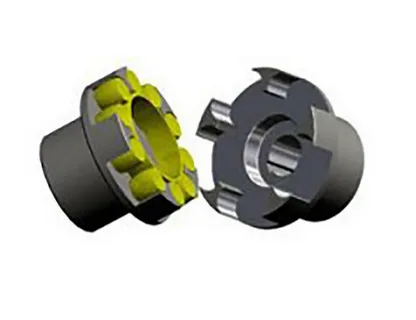
At its most basic level, a jaw coupling consists of two interlocking hubs and a flexible elastomeric "spider" that sits between them. This design allows the hubs to grip the spider, transferring torque through compression of the elastomer rather than metal-on-metal contact, which effectively isolates the driving and driven components from harmful vibrations.

In the context of modern industry, this simplicity is its greatest strength. Unlike complex gear couplings, the jaw variety provides a "fail-safe" mechanism; in many designs, if the spider fails, the interlocking metal jaws can still maintain a limited connection to prevent a complete system crash, allowing for a controlled shutdown.

From a humanitarian and infrastructure perspective, the ease of installation and lack of required lubrication make these couplings ideal for remote industrial zones or disaster-relief water pumping stations where technical expertise and maintenance resources are scarce.

Core Components for Maximum Performance

The durability of a jaw coupling is primarily determined by the material science behind its hubs. High-strength aluminum or cast iron hubs ensure that the coupling can handle significant torque loads without deformation, providing the structural rigidity necessary for heavy-duty machinery.

The most critical variable is the spider material. Depending on the application, a jaw coupling might utilize NBR (Nitrile Butadiene Rubber) for general purposes, Urethane for higher torque and abrasion resistance, or Hytrel for extreme temperature environments. Selecting the correct elastomer is the difference between a component that lasts ten years and one that fails in ten days.

Cost efficiency and scalability are also key factors. Because the jaw coupling is modular, operators can often replace only the spider element without having to remove the hubs from the shafts, drastically reducing the Mean Time To Repair (MTTR) and overall operational costs.

Performance Metrics and Efficiency Analysis

Evaluating the efficiency of a jaw coupling requires a look at how different spider materials handle dampening and torque capacity. While a softer spider provides superior vibration isolation, it may sacrifice some torque rigidity, creating a trade-off that engineers must balance based on the specific needs of the drive train.

To visualize this, we compare various jaw coupling configurations across key performance indicators such as dampening capacity, torque transmission, and longevity. These metrics help in selecting the right series, whether it be the L Series Elastic Jaw Coupling or more specialized variants.

Performance Comparison of Jaw Coupling Variants

Global Applications and Industrial Use Cases

The versatility of the jaw coupling allows it to be deployed in an array of critical environments. In the pharmaceutical industry, for instance, where cleanliness and precision are paramount, these couplings are used in centrifugal pumps and mixers to ensure smooth operation without the risk of lubricant leakage contaminating the product.

In more rugged settings, such as remote mining operations in South America or oil fields in the Middle East, the jaw coupling's ability to withstand harsh environmental conditions while providing necessary shaft flexibility makes it the preferred choice for driving conveyors and heavy-duty compressors.

Long-Term Value and Sustainability Benefits

Investing in a high-quality jaw coupling provides tangible long-term value by extending the life of the entire powertrain. By absorbing the "shocks" of start-stop cycles, the coupling prevents the transmission of fatigue loads to the bearings and seals of the connected machinery, effectively lowering the Total Cost of Ownership (TCO).

From a sustainability perspective, reducing the frequency of part replacements means less industrial waste. Because only the spider element typically requires replacement, the metal hubs can remain in service for decades, aligning with circular economy principles and reducing the carbon footprint associated with manufacturing new steel components.

Ultimately, the reliability of these components fosters trust in the system's safety. In critical infrastructure, the peace of mind knowing that a coupling will dampen vibration and prevent catastrophic shaft shear is an invaluable emotional and logical benefit for plant managers.

Future Innovations in Coupling Technology

The future of jaw coupling is being shaped by the digital transformation of industry. We are seeing the emergence of "smart couplings" embedded with miniature sensors that can monitor vibration patterns and temperature in real-time, alerting maintenance teams via IoT protocols before a spider failure occurs.

Material science is also evolving, with the introduction of bio-based polymers and advanced composites that offer higher torque density and better thermal stability than traditional NBR. These green materials are designed to perform in extreme environments while being fully recyclable at the end of their lifecycle.

As automation reaches new heights, the integration of jaw couplings into modular, plug-and-play robotic joints is becoming more common, allowing for rapid reconfiguration of assembly lines without the need for extensive realignment processes.

Analysis of Jaw Coupling Material and Application Suitability

Spider Material Torque Capacity Dampening Level Primary Application
NBR Rubber Low to Medium Very High General Purpose Pumps
Urethane High Medium Heavy Industrial Mixers
Hytrel Very High Low to Medium High-Temp Compressors
Special Alloy Extreme Very Low Precision Tooling
Silicone Low Extreme High Medical Grade Equipment
Recycled Poly Medium Medium Eco-friendly Conveyors

FAQS

How often should I replace the spider in a jaw coupling?

Replacement frequency depends on the duty cycle and environmental conditions. In standard industrial use, spiders should be inspected every 6-12 months. If you notice increased vibration, visible wear on the elastomer edges, or a drop in torque efficiency, it is time for a replacement. Using a higher-grade material like Urethane can extend this interval significantly compared to NBR.

Can a jaw coupling handle angular misalignment?

Yes, the jaw coupling is specifically designed to handle small amounts of parallel and angular misalignment. The flexibility of the spider allows the shafts to operate at a slight angle without inducing bending stresses on the bearings, though exceeding the manufacturer's specified angular limit will accelerate spider wear.

What is the difference between a jaw coupling and a gear coupling?

The primary difference lies in torque capacity and lubrication. Gear couplings use interlocking metal teeth and require lubrication to function, making them suitable for extremely high torque. Jaw couplings use an elastomeric spider, require no lubrication, and offer superior vibration dampening, making them more cost-effective and easier to maintain for medium-duty applications.

Is a jaw coupling suitable for high-temperature environments?

It depends on the spider material. Standard NBR spiders may degrade at high temperatures. However, by selecting a spider made of Hytrel or specialized high-temp polymers, jaw couplings can operate effectively in heat-intensive environments. Always verify the temperature rating of the elastomeric element against your operating environment.

Does a jaw coupling require precise alignment during installation?

While they are more forgiving than rigid couplings, precise alignment is still recommended to maximize the lifespan of the spider. Excessive misalignment will lead to uneven loading of the jaws, causing the spider to wear out prematurely on one side. Using a dial indicator or laser alignment tool ensures optimal performance.

Can I use a jaw coupling for high-speed applications?

Yes, but you must consider the balance and the centrifugal force on the spider. For very high-speed applications, aluminum hubs are preferred over cast iron to reduce rotational inertia. Ensure the coupling is dynamically balanced to avoid introducing new vibrations into the system at high RPMs.

Conclusion

The jaw coupling stands as a masterpiece of pragmatic engineering, balancing the need for rigid torque transmission with the necessity of flexible vibration dampening. By meticulously selecting the right combination of hub materials and spider elastomers, industries can ensure their machinery operates with maximum efficiency, minimal wear, and enhanced safety.

As we move toward an era of Industry 4.0, the evolution of these components into smart, sensor-enabled devices will further revolutionize predictive maintenance. For any facility looking to optimize its powertrain reliability, investing in high-quality jaw coupling solutions is not just a maintenance choice, but a commitment to operational excellence. Visit our website for more technical specifications: www.binhaocoupling.com

Caleb Harrison

Caleb Harrison

Caleb Harrison is a Quality Control Engineer at Binhao Transmission Equipment. He plays a vital role in maintaining the high standards of quality that define the ‘Binhao’ brand. Caleb is responsible for overseeing testing procedures, analyzing inspection data, and ensuring full traceability throughout the manufacturing process. He has a strong background in materials science and a meticulous approach to quality assurance. He works closely with the production team to identify and address potential issues before they impact product performance. Caleb earned his degree in Industrial Engineering from the University of Michigan, and holds Six Sigma Green Belt certification.
Previous Industrial Guide to Different Elastomeric Coupling Types
Next Industrial Shaft Coupling Solutions for Power Transmission Efficiency

If you are interested in our products, you can choose to leave your information here, and we will be in touch with you shortly.