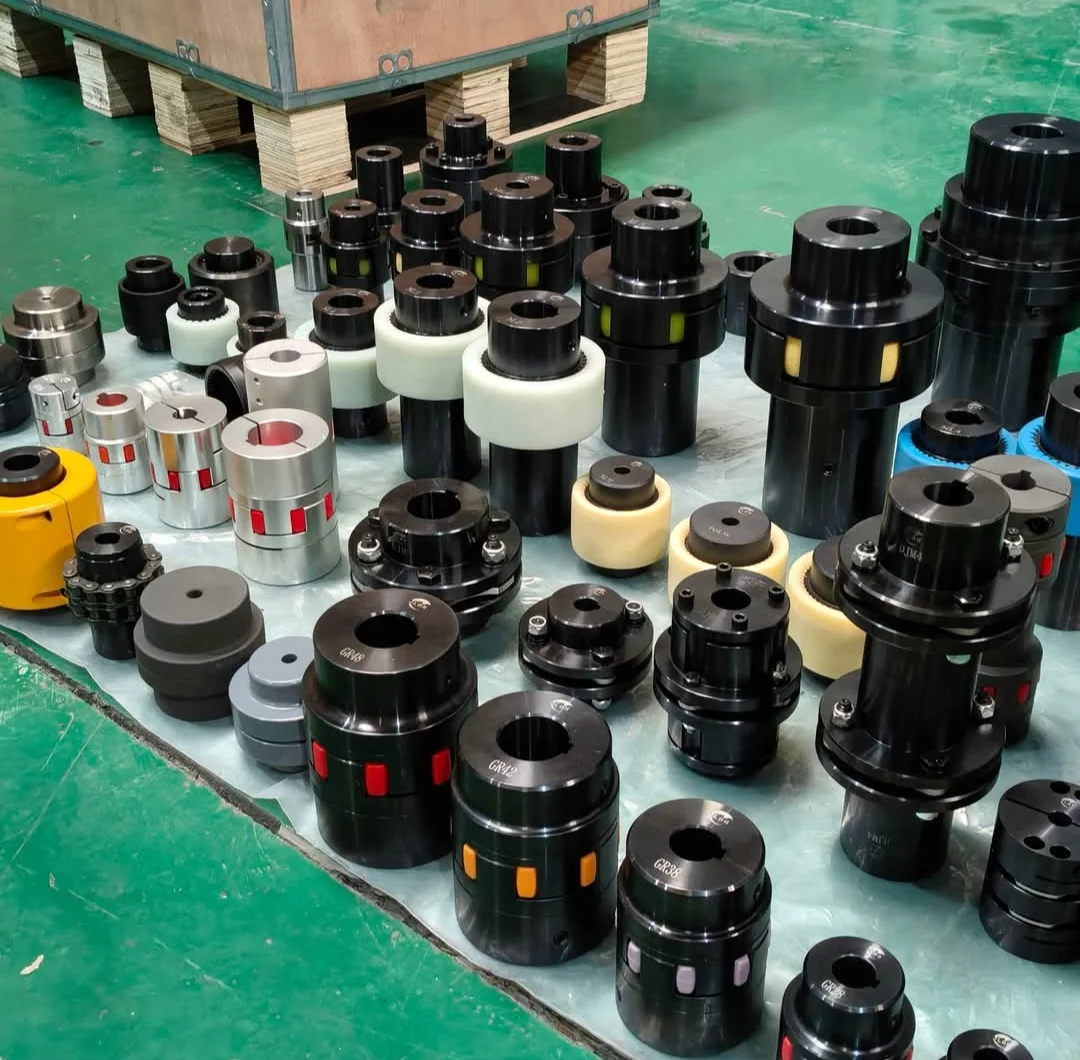
In the complex world of industrial power transmission, ensuring a stable and efficient connection between shafts is critical for operational longevity. A flex disc coupling serves as a vital intermediary, designed to transmit torque while absorbing the inherent shocks and vibrations that occur during high-stress mechanical operations. By mitigating these forces, these couplings protect expensive machinery from premature wear and catastrophic failure.
Across global manufacturing sectors, the demand for reliability in medium and low-speed transmissions has led to the widespread adoption of elastic solutions. The ability to compensate for axial, radial, and angular misalignments is not merely a convenience but a necessity in environments where thermal expansion or installation tolerances can lead to shaft deviation. Without such flexibility, the resulting stress could lead to bearing failure or shaft breakage.
Understanding the nuances of a flex disc coupling allows engineers to optimize the balance between vibration suppression and economic viability. By utilizing specialized polyurethane elastic sleeves, these components provide a maintenance-free alternative to traditional lubricated couplings, ensuring that productivity remains high even in the most demanding industrial settings.

The Mechanics of Elastic Shock Absorption
The core functionality of a flex disc coupling relies on the integration of polyurethane elastic sleeves wrapped around the pin bolts. This specific design allows the coupling to act as a mechanical filter; when torque is transmitted, the compressive deformation of the polyurethane material absorbs sudden impacts and attenuates high-frequency vibrations.
By reducing the noise levels and protecting the connecting components from jarring forces, this elastic mechanism significantly extends the mean time between failures (MTBF) for the entire drive train. This is particularly crucial in machinery where start-stop cycles are frequent, creating intermittent stress peaks.
Displacement Compensation in Industrial Shafts
One of the primary challenges in mechanical installation is achieving perfect alignment between the driving and driven shafts. In real-world scenarios, slight errors are inevitable due to machining tolerances or the settling of equipment foundations. A flex disc coupling addresses this by providing inherent flexibility that accommodates these minor deviations.
Specifically, the coupling can automatically compensate for deviations in three critical dimensions: axial, radial, and angular. This multi-directional adaptability ensures that the torque is transmitted smoothly without inducing bending moments or excessive radial loads on the bearings of the motor or the driven equipment.
This capacity for compensation eliminates the need for extremely costly and time-consuming precision alignment procedures during initial setup. By adapting to slight shaft errors, the coupling ensures that the system remains balanced, preventing the erratic oscillations that often lead to premature component fatigue.
Structural Simplicity and Compact Design
The architecture of a flex disc coupling is intentionally streamlined to maximize reliability while minimizing footprint. It consists of only three primary components: two half couplings, a set of pin groups, and the polyurethane elastic sleeves. This minimalist approach reduces the number of potential failure points within the assembly.
Because the design is so compact, the flex disc coupling requires very little installation space. This makes it an ideal choice for tight machine housings or modular equipment where space is at a premium and reducing the overall weight of the assembly is a priority for the engineering team.
Furthermore, the absence of complex internal gears or hydraulic elements means that the coupling is lightweight and easy to handle during installation. This simplicity ensures that the transition from the warehouse to the assembly line is seamless, lowering the labor cost associated with system integration.
Maintenance Efficiency and Operational Costs
Operational expenditure is often driven by the need for lubrication and the complexity of part replacement. The flex disc coupling provides a significant advantage here as it is entirely lubrication-free. By removing the need for grease or oil, companies avoid the risks of oil contamination in the work environment and eliminate the labor associated with periodic lubrication schedules.
Maintenance is further simplified because the elastic sleeve is the only vulnerable part of the system. When the polyurethane wears down over time, only these sleeves need to be replaced. Crucially, this process can be performed without disassembling the main shaft of the equipment, dramatically reducing downtime.
Performance Metrics of Flex Disc Coupling Variants
Corrosion Resistance and Electrical Insulation
In many industrial environments, moisture, acids, and alkalis can rapidly degrade metal components. The use of high-grade polyurethane in the flex disc coupling provides a natural defense against these corrosive elements. The material is specifically engineered to be oil-resistant and chemically stable, making it suitable for damp or chemically aggressive environments where standard metal-to-metal couplings would fail.
Beyond chemical resistance, the polyurethane sleeves offer critical electrical insulation properties. In systems where it is necessary to isolate the motor from the driven equipment to prevent stray currents or grounding issues, this coupling acts as a dielectric barrier. This prevents electrical erosion of the bearings and enhances the overall safety of the electrical installation.
Practical Applications in Medium-Load Scenarios
The flex disc coupling is engineered for versatility, particularly in scenarios characterized by medium and low speeds combined with medium and small loads. This makes it the primary choice for a wide array of utility equipment where a balance between high-end performance and budget-friendly implementation is required.
Common applications include water pumps and industrial fans, where constant torque is required but vibration must be kept to a minimum to avoid acoustic pollution and mechanical fatigue. In these settings, the coupling ensures that the fluid or air movement remains steady by absorbing the parasitic vibrations of the motor.
Similarly, conveyor belts in logistics and manufacturing plants rely on these couplings to handle the fluctuating loads that occur when items are placed on the belt. The elastic nature of the coupling prevents the sudden "jerking" motion, protecting the motor from torque spikes and ensuring a smoother flow of materials.
Comparative Value Analysis of Elastic Couplings
When analyzing the total cost of ownership (TCO), the flex disc coupling consistently outperforms rigid or complex gear couplings in low-to-medium load applications. The initial manufacturing cost is low, and the lack of required lubricants removes a recurring operational expense, making it a highly economical solution for mass-market industrial equipment.
From a sustainability perspective, the ability to replace only the polyurethane sleeves rather than the entire coupling assembly reduces industrial waste. This modularity allows operators to maintain peak efficiency without scrapping large amounts of steel, aligning with modern "green" manufacturing principles.
Ultimately, the value lies in the intersection of reliability and simplicity. By offering a solution that is corrosion-resistant, easy to maintain, and capable of handling alignment errors, it provides a level of operational security that justifies its use across diverse global industries.
Comparison of Flex Disc Coupling Operational Efficiency Across Scenarios
| Application Scenario | Vibration Damping | Maintenance Ease | Cost-Efficiency |
|---|
| Water Pump Systems | High | Excellent | 9/10 |
| Industrial Ventilation | Very High | Very Good | 8/10 |
| Conveyor Belts | Medium | Excellent | 10/10 |
| Chemical Mixers | High | Good | 7/10 |
| HVAC Blowers | High | Excellent | 9/10 |
| Small Scale Generators | Medium | Very Good | 8/10 |
FAQS
Unlike rigid couplings, a flex disc coupling can absorb shocks and compensate for axial, radial, and angular misalignments. This prevents excessive stress on the motor bearings and shafts, reducing the likelihood of mechanical failure and eliminating the need for perfect precision alignment during installation.
Replacement intervals depend on the load and operating environment. However, because the sleeve is the only wearing part, maintenance is simple. Signs of wear include increased vibration or visible degradation of the polyurethane. The replacement process is quick and does not require moving the main shaft of the equipment.
Yes, the polyurethane material used in the elastic sleeves is naturally resistant to oils, acids, and alkalis. This makes the flex disc coupling highly suitable for damp environments, chemical processing plants, or any area where standard steel components would be prone to corrosion.
No, these couplings are completely maintenance-free regarding lubrication. The design eliminates the need for grease or oil, which not only reduces labor costs but also prevents the risk of lubricant leaking into the machinery or the surrounding environment.
The ideal use cases include water pumps, industrial fans, and conveyor systems. In these applications, the loads are typically medium to small, and the priority is vibration damping and cost-effective reliability rather than extreme high-torque transmission.
Yes, the polyurethane elastic sleeves provide electrical insulation between the two connecting shafts. This is particularly useful for preventing electrical currents from passing through the mechanical drive train, thereby protecting bearings from electrical pitting and improving overall system safety.
Conclusion
In summary, the flex disc coupling represents a sophisticated yet simple solution for industrial power transmission. By leveraging the properties of polyurethane elastic sleeves, it successfully addresses the critical challenges of vibration damping, displacement compensation, and environmental resistance. Its ability to reduce maintenance downtime and operational costs makes it an indispensable component for medium and low-load applications such as pumps and conveyors.
As industrial automation continues to evolve, the move toward sustainable, lubrication-free, and modular components will only increase. Investing in high-quality elastic coupling solutions ensures not only the longevity of the equipment but also the safety and efficiency of the entire production line. For those seeking a balance between economy and high-performance vibration suppression, this coupling remains the optimal choice. Visit our website: www.binhaocoupling.com