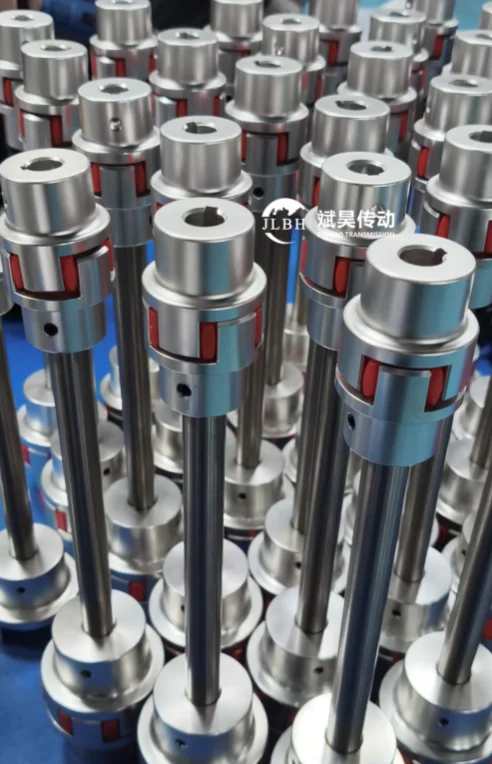
In the demanding world of industrial machinery, the precision of torque transmission is the cornerstone of operational efficiency. The cd coupling emerges as a critical solution for engineers seeking a rigid, high-torque connection that simplifies maintenance without compromising on structural integrity. By utilizing a sophisticated clamping mechanism, this component ensures that power is transferred seamlessly between shafts, reducing the risk of slippage in critical applications.
Across global manufacturing sectors, from wastewater treatment plants to automotive assembly lines, the need for compact and reliable coupling solutions has never been greater. Traditional coupling methods often require significant equipment movement for disassembly, leading to costly downtime and labor-intensive maintenance cycles. The adoption of the cd coupling addresses these challenges by allowing for axial disassembly without shifting the connected machinery, thereby optimizing the uptime of essential systems.
Understanding the technical nuances of this clamping system is essential for maximizing the lifespan of pumps, fans, and agitators. By integrating a design that prioritizes high torsional rigidity and ease of installation, the cd coupling provides a strategic advantage in environments where space is limited and precision is non-negotiable. This guide explores the engineering principles, practical applications, and long-term value of this indispensable industrial component.

Clamping Structure and Design Principles
The core of the cd coupling lies in its symmetrical engineering. It is composed of two identical steel semi-cylindrical clamps that wrap around the shaft ends. These components are secured using high-strength bolts along the axial direction, creating a powerful 360-degree clamping force that firmly grips the shaft, ensuring that torque is transmitted through friction and mechanical pressure rather than relying on keys or splines.
One of the most significant advantages of this design is the ability to perform disassembly and assembly without any axial movement of the equipment. This makes the cd coupling ideal for confined industrial environments where moving a heavy motor or pump would be impractical or impossible, significantly streamlining the workflow for maintenance teams.
Rigid Transmission and Zero Backlash
Unlike elastic couplings that use rubber or plastic inserts to dampen vibration, the cd coupling is designed for rigid transmission. Because it consists of metal-to-metal contact, there are no elastic elements to compress or wear down over time. This lack of elasticity results in a "zero backlash" environment, which is critical for applications requiring high-precision synchronous transmission.
In high-precision machinery, even a fraction of a degree of torsional gap can lead to synchronization errors or increased wear on the drive system. By eliminating the torsional gap, this coupling ensures that the input shaft and output shaft move in absolute unison. This makes it a preferred choice for specialized industrial equipment where timing and precision are the primary operational requirements.
However, the rigidity of the cd coupling means it does not provide the shock absorption found in other models. It is most effective in systems with low vibration and steady load profiles, where the priority is a direct, uncompromising transfer of energy from the power source to the driven component.
Compact Architecture and Space Efficiency
When designing industrial layouts, every millimeter of space counts. The cd coupling is engineered with a compact structure that occupies significantly less volume than an elastic coupling capable of handling the same amount of torque. This reduction in size allows engineers to place components closer together, reducing the overall footprint of the machinery.
The compact nature of the cd coupling is particularly beneficial for small to medium-sized equipment such as centrifugal pumps and industrial fans. By minimizing the distance between the motor and the driven shaft, the system gains inherent stability and reduces the need for oversized support bearings.
Beyond physical size, the simplicity of the design reduces the number of parts required for installation. The cd coupling effectively combines the functions of a connector and a clamp, eliminating the need for separate locking collars or complex keyway machining in many instances.
Torque Range and Load Capacity
Versatility in load handling is a hallmark of the cd coupling. Depending on the materials used and the diameter of the clamps, this coupling can accommodate a vast range of torque requirements, starting from light-duty applications at 10Nm up to heavy-industrial demands reaching 15,000 Nm. This broad spectrum ensures that a single design philosophy can be applied across various equipment scales.
The ability to scale torque capacity while maintaining the same clamping logic allows facilities to standardize their spare parts inventory. Whether managing a small agitator or a large-scale conveyor belt, the operational logic of the cd coupling remains consistent, ensuring that maintenance personnel are familiar with the hardware regardless of the load size.
Performance Comparison of Coupling Load Capacities
Ease of Maintenance and Downtime Reduction
In industrial operations, downtime is often the most significant hidden cost. The cd coupling is specifically engineered to minimize this risk. Because it only requires the loosening and tightening of high-strength bolts for replacement, the process is remarkably efficient. In many cases, a single technician can complete the disassembly and assembly process within 10 minutes.
Furthermore, the maintenance-free nature of the cd coupling eliminates the need for regular lubrication, which is a common requirement for gear or grid couplings. This not only reduces long-term operational costs but also eliminates the risk of contamination in sensitive environments, such as food processing or pharmaceutical manufacturing.
Material Selection and Durability
The longevity of a cd coupling depends heavily on the materials used in its construction. Most are manufactured from high-grade steel or aluminum alloys. Steel provides the necessary strength for heavy-duty torque transmission (up to 15,000 Nm), while aluminum alloy is often utilized for lighter loads where weight reduction and corrosion resistance are more critical.
Durability is further enhanced by the precision machining of the semi-cylindrical clamps. By ensuring a perfectly symmetrical fit, the clamping force is distributed evenly across the shaft surface. This prevents localized stress concentrations that could otherwise lead to shaft deformation or fatigue failure over thousands of cycles of operation.
Because the cd coupling lacks perishable elastic elements, its wear profile is significantly lower than that of spider or jaw couplings. The primary wear point is the contact surface between the clamp and the shaft, which, under proper alignment, remains stable for years of continuous service.
Alignment Requirements and Installation Tips
While the cd coupling offers numerous advantages, its rigid nature imposes strict requirements on shaft alignment. Since there are no elastic components to absorb radial or angular misalignment, the two connected shafts must be perfectly aligned. Failure to ensure precision alignment can lead to excessive vibration and premature wear on the bearings of the connected equipment.
To achieve the best results, it is recommended to use laser alignment tools during the installation of the cd coupling. This ensures that the axial and radial displacement is kept within the tight tolerances required for rigid transmission. Proper torque application to the clamping bolts is also essential to prevent the coupling from slipping under peak load conditions.
In summary, the cd coupling is a high-performance tool when paired with professional installation. By focusing on alignment accuracy and utilizing the correct bolt torque, operators can enjoy the full benefits of zero-backlash transmission and rapid maintenance.
Analysis of CD Coupling Material and Performance Metrics
| Material Type |
Max Torque Capacity |
Maintenance Level |
Rigidity Score (1-10) |
| Carbon Steel |
Up to 15,000 Nm |
Zero Lubrication |
10 |
| Aluminum Alloy |
Up to 2,000 Nm |
Zero Lubrication |
8 |
| Stainless Steel |
Up to 5,000 Nm |
Zero Lubrication |
9 |
| Alloy Steel |
Up to 12,000 Nm |
Zero Lubrication |
10 |
| Hardened Steel |
Up to 15,000 Nm |
Zero Lubrication |
10 |
| Composite Steel |
Up to 8,000 Nm |
Zero Lubrication |
9 |
FAQS
The primary advantage is the clamping mechanism. Unlike keyed couplings that require precise machining of keyways into the shaft, the cd coupling uses a 360-degree wrap-around clamp. This prevents shaft weakening and allows for much faster installation and disassembly without moving the surrounding equipment.
No, the cd coupling is a rigid transmission component and does not contain elastic elements. Therefore, it has very limited ability to compensate for radial or angular displacement. Strict alignment accuracy is required during installation to prevent vibration and bearing wear.
No, the cd coupling features a maintenance-free design. Because it relies on a rigid metal-to-metal clamping force rather than rolling or sliding elements, no lubrication is necessary throughout its operational lifespan, reducing both cost and contamination risk.
The torque range is quite broad to accommodate various industrial needs, generally covering from 10Nm for light-duty applications up to 15,000 Nm for heavy-duty industrial loads, depending on the size and material of the coupling.
Due to its simple bolt-on design, a single technician can typically disassemble and replace the coupling in under 10 minutes. This is significantly faster than traditional couplings that may require sliding the entire assembly off the shaft.
The most common materials are high-strength steel and aluminum alloy. Steel is used for maximum torque and durability, while aluminum is preferred for weight-sensitive or corrosion-prone environments where torque demands are lower.
Conclusion
The cd coupling stands as a pinnacle of efficient industrial design, balancing the need for extreme rigidity with the practical requirement for rapid maintenance. By eliminating the need for axial equipment movement and removing the burden of regular lubrication, it directly addresses the most common pain points in machinery upkeep. Its ability to handle torque from 10Nm to 15,000 Nm ensures its relevance across a vast array of applications, from simple fans to heavy-duty conveyor systems.
As industries move toward greater automation and reduced downtime, the shift toward maintenance-free, high-precision components like the cd coupling becomes inevitable. We recommend that engineers prioritize alignment precision during installation to fully leverage the zero-backlash benefits of this system. For those looking to optimize their operational efficiency and reduce long-term O&M costs, integrating this clamping solution is a strategic investment. Visit our website: www.binhaocoupling.com