
Material Selection Guide for XL GR GS Jaw Coupling Spider Elastomers
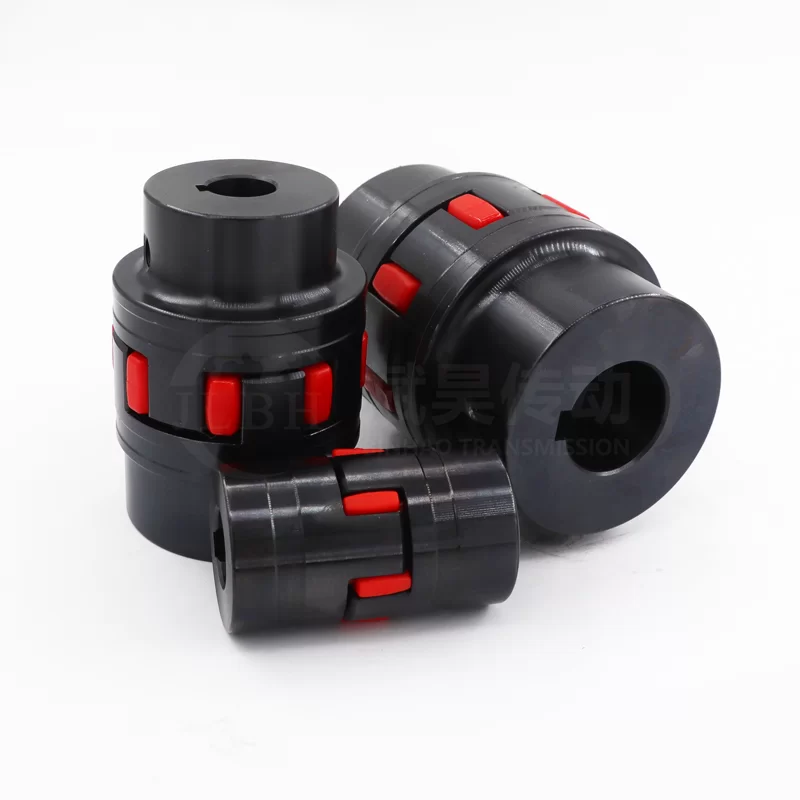
MRO procurement managers and mechanical maintenance engineers frequently evaluate replacement components to sustain continuous-duty industrial drives. These assemblies operate under persistent torsional stress and dynamic misalignment, where elastomer behavior dictates overall driveline reliability.
Assessing whether the polyurethane GR elastomer material profile aligns with specific operating requirements prevents premature mechanical failure. Procurement decisions in this domain rely directly on balancing material compliance against mechanical load parameters.
Core Function of Polyurethane GR Elastomer in Torque Transmission
Jaw-type mechanical power transmission configurations rely directly on resilient insert elements to transfer rotational force between driving and driven hubs. The product is manufactured from Polyurethane GR elastomer, which functions as the primary compliant medium situated between interlocking metallic claws. Maintenance engineers evaluating continuous-duty rotating equipment specify these components to maintain uninterrupted torque delivery while simultaneously mitigating operational shock loads.
Energy transfer through the coupling assembly occurs as the metallic jaws compress the compliant lobes of the insert during rotation. This geometry permits smooth operational transients by absorbing peak torque spikes that originate from cyclic machinery or erratic prime movers. The inherent molecular composition of the elastomer dictates how efficiently the insert manages dynamic stress without transferring destructive vibrations further down the driveline.

Material Characteristics and Shock Mitigation
Elastic deformation under load enables the insert to cushion sudden impact forces that could otherwise compromise connected shafts or bearing assemblies. The elastomer absorbs kinetic energy during high-torque startup sequences and converts a portion of that energy into controlled thermal dissipation.
Damping capacity within industrial drives depends on the ability of the insert material to recover rapidly after compression cycles. Vibration isolation properties minimize the propagation of harmonic oscillations across connected machinery sectors, protecting sensitive instrumentation and reducing overall noise generation during operation.
Mechanical Properties and Material Boundaries
Evaluating the suitability of the elastomer insert requires a careful review of operating variables such as rotational speed, ambient conditions, and cyclic load profiles. Specific performance metrics regarding mechanical limits remain subject to operational parameters, and exact engineering values are to be confirmed with the supplier prior to final part selection.
Procurement teams must ensure that replacement components align precisely with existing mechanical envelopes to prevent premature deformation or mechanical binding. Reviewing environmental exposure factors alongside dynamic load requirements ensures that the selected elastomer profile maintains structural integrity throughout its intended service cycle.
Balancing Torsional Rigidity Against Misalignment Accommodation
Mechanical power transmission loops require a continuous assessment of how elastomeric drive components handle competing mechanical forces. Maintaining torsional rigidity is essential when exact rotational positioning is specified, yet rigid connections exacerbate wear if angular, parallel, or axial shaft offsets are present.
The polyurethane GR elastomer chosen for the insert deforms elastically to compensate for shaft displacement without generating excessive reaction forces on adjacent bearings. When rotating shafts experience angular misalignment, the compressed lobes of the spider absorb the eccentric load cycle repeatedly.

Evaluating Parallel and Axial Offsets
Parallel shaft deviations subject the elastomer to continuous shear stress during each rotation cycle. Under parallel and axial displacements, the resilience of the insert permits smooth relative movement between the driving and driven hubs while isolating high-frequency harmonic vibrations.
Engineering teams must evaluate drive dynamics to ensure that combined misalignments do not exceed the operational envelope supported by the elastomer material profile. To verify compatibility against specific drive layouts, contact the supplier to obtain the files.
Consumable Lifespan Variables in Continuous-Duty MRO Environments
Polyurethane spider components function as consumable MRO items whose service longevity depends directly on operational variables. Replacement schedules cannot be standardized through fixed calendar intervals because mechanical wear accumulates at variable rates across different industrial environments. Procurement teams that treat these components as permanent machine fixtures risk unexpected driveline downtime.
Continuous load cycles accelerate mechanical fatigue within the elastomer matrix. Ambient temperature extremes alter material flexibility, while elevated humidity levels introduce degradation risks depending on the specific operating environment. Friction-generated heat combined with high rotational speeds shortens the effective service window of the insert.

Facility maintenance logs indicate that physical degradation manifests as surface cracking, permanent compression set, or material shedding. Operating humidity interacts with continuous thermal cycling to soften the elastomer matrix prematurely. Maintenance engineers must evaluate these environmental stressors continuously to prevent unexpected mechanical failure in heavy-duty machinery.
Interchangeability and Seamless Replacement Within Standard Industrial Footprints
Operational Advantages of Standardized Footprints
Downtime in continuous-duty facilities is minimized when replacement components fit existing hardware without requiring custom machining. Standardized dimensions allow engineering teams to execute scheduled overhauls rapidly because matching components slip straight into operational positions without clearance adjustments.
Maintaining geometric uniformity across machinery tiers prevents the accumulation of obsolete inventory. Facilities running mixed-manufacturer gearsets benefit from shared component envelopes that simplify stockrooms.

Streamlining MRO Sourcing and Installation
Purchasing agents avoid costly delays by sourcing inserts designed to match established industry footprints. Installation proceeds directly on-site, as maintenance crews pull worn elastomer elements and press fresh Polyurethane GR elastomer components straight into place between active metallic hubs.
- Hub removal requirements are eliminated during routine elastomer swaps.
- Alignment tolerances remain unchanged when utilizing dimensionally compliant replacements.
- Inventory SKU counts drop as universal profiles service multiple legacy drives.
Because the replacement timeline depends directly on the specific machinery configuration and shipping destination, lead times are calculated individually for each bulk MRO order.
Matching Elastomer Profiles to Specific Operating Environments
Evaluating Operating Parameters Against Elastomer Capabilities
Maintenance engineers determine replacement intervals by auditing specific thermal and mechanical conditions within each drive housing. Continuous-duty machinery generates localized heat that directly alters the physical properties of polymer components during operation.
Key Environmental Factors for MRO Reviews
Thermal extremes and excessive humidity accelerate polymer aging and reduce elasticity across the drive assembly. Facility audit protocols must record operating temperatures and ambient moisture levels before technicians install replacement parts in high-demand industrial units. Unprotected outdoor installations require rigorous checks because moisture accumulation interacts with dynamic stress factors, whereas enclosed gearboxes demand verification of internal ventilation limits.

Chemical exposure profiles remain critical when reviewing operating environments in chemical processing or heavy manufacturing facilities. Direct contact with industrial solvents or specialized lubricants changes elastomer flexibility and shortens component lifespans. Operational audits must catalog all nearby fluid contaminants prior to selecting replacement components for rotating machinery.
Procurement Strategy and Sourcing Replacement Jaw Coupling Spiders
Large-Scale Sourcing Parameters for MRO Spiders
Procuring bulk quantities of mechanical power transmission components requires strict adherence to standardized material classifications and precise engineering data.
Bulk purchasing frameworks for elastomer components depend heavily on projected annual consumption rates across multi-facility operations. MRO procurement managers must analyze historical failure frequencies to determine optimal batch sizes, ensuring uninterrupted plant operations while avoiding excessive inventory carrying costs.
Verifying Footprint Compatibility Before Purchase
Dimensional verification must occur prior to finalizing bulk acquisition orders to prevent costly assembly mismatches on existing industrial drives. Maintenance teams verify bore diameters, outer dimensions, and claw configurations against established machinery layouts.
Operational integration relies on exact geometric alignment between metallic drive hubs and the incoming Polyurethane GR elastomer inserts. Sourcing decisions integrate long-term maintenance scheduling by aligning replacement cycles with scheduled plant turnaround windows, optimizing both inventory turnover and machinery reliability.
Frequently Asked Questions
The polyurethane GR elastomer functions as the central compliant medium positioned between interlocking metallic claws to facilitate rotational force transfer. Its elastic deformation characteristics cushion sudden impact forces during startup sequences while absorbing kinetic energy and converting a portion of it into controlled thermal dissipation. This behavior protects connected shafts and bearing assemblies from destructive vibrations and peak torque spikes.
Service longevity for these components depends directly on operational stress factors such as ambient temperature extremes, relative humidity levels, and the frequency of cyclic load reversals. Operating machinery beyond standard thermal or mechanical limits accelerates wear rates on the compliant lobes. Maintenance teams must evaluate these site-specific conditions against the inherent capabilities of the elastomer profile during routine inspections.
Dimensional interchangeability with standard industrial footprints allows maintenance personnel to swap worn inserts directly into existing metallic hub assemblies without requiring hardware modifications. This standardized sizing preserves equipment architecture and significantly reduces both replacement downtime and spare parts inventory complexity. Procurement teams can source these components knowing they fit established mechanical interfaces.
Facility operators need to review prevailing ambient temperatures, exposure to moisture or chemical agents, and continuous-duty load cycles before approving replacement components. These environmental conditions directly influence material stability and mechanical wear patterns over extended operational periods. Assessing these variables prevents premature component degradation in demanding industrial settings.
Bulk purchasing decisions hinge on balancing inventory carrying costs against projected replacement schedules for continuous-duty drives. Procurement managers must verify dimensional compatibility and footprint matching prior to issuing volume purchase orders to eliminate installation delays. Order sizes and batch quantities are ultimately determined by operational consumption rates and facility storage capacities.
Utilizing a uniform elastomer material profile across plant assets simplifies inventory management and speeds up routine maintenance interventions. Technicians can replace worn inserts quickly using standardized procedures, which minimizes prolonged production outages. This predictable maintenance workflow directly supports higher overall equipment availability and operational continuity.
Conclusion
Facility maintenance teams must verify prevailing thermal ranges, peak dynamic load profiles, and chemical exposure levels across active production lines before replacing worn components. Cross-referencing current operational metrics against precise material thresholds ensures that installed Polyurethane GR elastomer inserts deliver predictable service intervals without unexpected mechanical degradation.
Dimensional verification remains equally critical for successful field retrofits. Maintenance supervisors need to physically measure existing hub inner diameters, claw widths, and overall depth tolerances using precision calipers. Comparing these physical measurements directly against XL GR GS elastomer replacement specifications prevents installation delays and eliminates improper fitment issues during scheduled downtime windows.
Testing physical samples under actual load conditions validates elastomer performance before committing to bulk inventory purchases for continuous-duty machinery.


