


XL Aluminum Alloy Clamping Coupling China Factory and Leading Suppliers

The XL Aluminum Alloy Clamping Coupling is a high-performance power transmission solution engineered for industrial precision and maximum operational efficiency. Crafted from high-strength aluminum alloy, this coupling features an ultra-lightweight design that significantly reduces the moment of inertia, making it the ideal choice for high-speed applications where rapid acceleration and responsiveness are critical.
Equipped with a unique clamping mechanism, the XL series ensures zero rotational clearance, providing sensitive and precise transmission for critical movements. Its advanced polyurethane elastomer core offers superior vibration damping, while the integrated surface oxidation treatment guarantees long-term corrosion resistance in demanding environments such as CNC machine tools and robotics.
Detailed Parameters
| Material | High-Strength Aluminum Alloy | Max Torque | 500 N·m |
|---|---|---|---|
| Max Speed | 19,000 rpm | Angular Displacement | ±1.5° |
| Dynamic Balance | Grade G2.5 | Operating Temp | -40℃ to +120℃ |
| Connection Type | Clamping (Screw Fixed) | Lubrication | Maintenance-Free |
| Compensation | Axial, Radial, Angular | Surface Treatment | Oxidation Process |
Key Advantages
Ultra-Lightweight
High-strength aluminum construction reduces overall weight and inertia for faster acceleration and efficiency.
Zero Backlash
The precision clamping design eliminates rotational clearance, ensuring highly sensitive power transmission.
Deviation Compensation
Automatically corrects radial, axial, and angular installation errors to prevent shaft wear and extend life.
Superior Damping
High-performance polyurethane elastomers effectively absorb vibration and shock energy from the system.
Maintenance-Free
Low friction coefficient surfaces require no regular lubrication, significantly reducing OPEX costs.
High Adaptability
Compact footprint makes it perfect for miniaturized high-precision equipment and industrial robotics.
Product Gallery


Management Platforms
Inventory Control
Optimized for rapid deployment in CNC and robotics warehouses for minimized downtime.
Precision Fitting
Seamless integration with high-precision shafting standards for effortless installation.
Wear Monitoring
Predictable elastomer life cycles allowing for scheduled maintenance and proactive replacement.
Thermal Stability
Consistent performance across extreme temperature ranges from -40℃ to +120℃.
Compact Logistics
Reduced volume and weight lead to lower shipping costs and easier handling during transit.
Quality Assurance
G2.5 dynamic balance grade ensuring low vibration and high stability at extreme speeds.
Investment Return Comparison
| Comparison Metric | GS Aluminum Coupling | DJM Diaphragm Coupling |
|---|---|---|
| Unit Weight | Ultra-Lightweight | Standard Weight |
| Initial Cost | Economical | Higher Investment |
| Installation | Simple Clamping | Complex Assembly |
| Maintenance | Zero Lubrication | Periodical Check |
| Best Use Case | CNC/Robotics/PV | Heavy-Duty Industrial |
Frequently Asked Questions
The primary advantages are its lightweight aluminum alloy construction and zero-backlash clamping design, providing superior sensitivity and reduced inertia compared to heavier steel couplings.
Yes, the XL series is specifically designed for high-speed transmission, supporting rotational speeds up to 19,000 r/min, backed by a G2.5 dynamic balance grade.
It utilizes a high-performance polyurethane elastomer that compensates for axial, radial, and angular deviations, with an angular displacement capacity of ±1.5°.
No, the XL Aluminum Alloy Coupling is completely maintenance-free. Its materials have a low coefficient of friction, eliminating the need for regular lubrication.
It is highly effective in CNC machine tools, robotic joints, and photovoltaic tracking systems where lightweight design and high environmental adaptability are required.
The coupling operates reliably in temperatures ranging from -40℃ to +120℃, making it suitable for both extreme cold and high-heat industrial environments.
Ready to Optimize Your Power Transmission?
Contact Us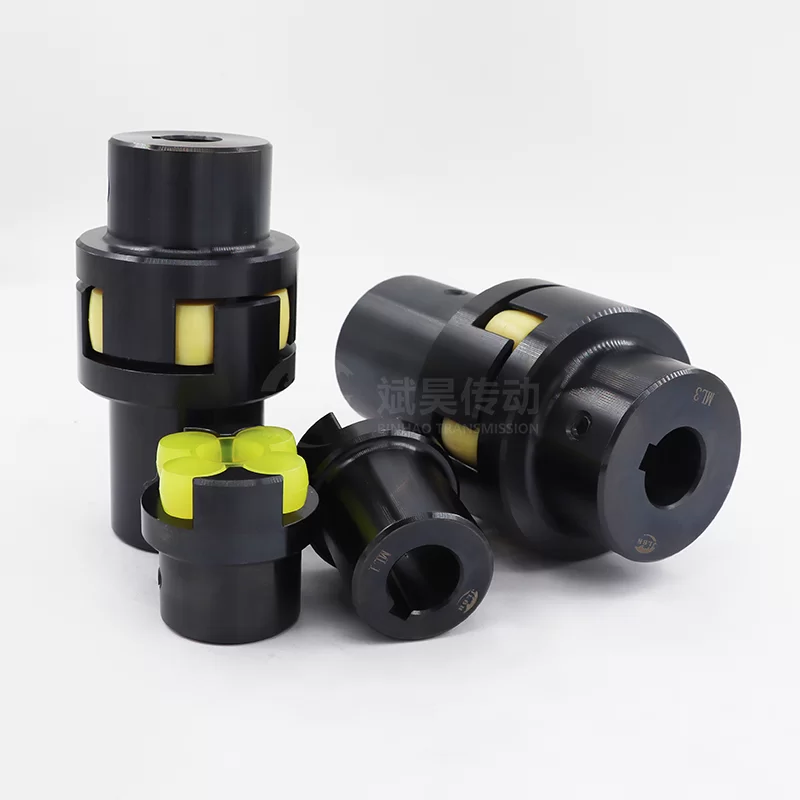


Precision in power transmission is the cornerstone of high-performance automation. When dealing with servo systems, CNC equipment, or 3D printing modules, the slightest rotational clearance can lead to significant positioning errors and accelerated component wear. The aluminum alloy double diaphragm coupling is engineered specifically to eliminate this backlash while compensating for critical alignment deviations. By leveraging the elastic deformation of stainless steel diaphragms, this component ensures a rigid yet flexible torque transfer that protects sensitive encoders and motors from axial and radial stress. For procurement managers and system engineers, selecting a reliable flexible coupling Factory means balancing torsional rigidity with lightweight construction.


