
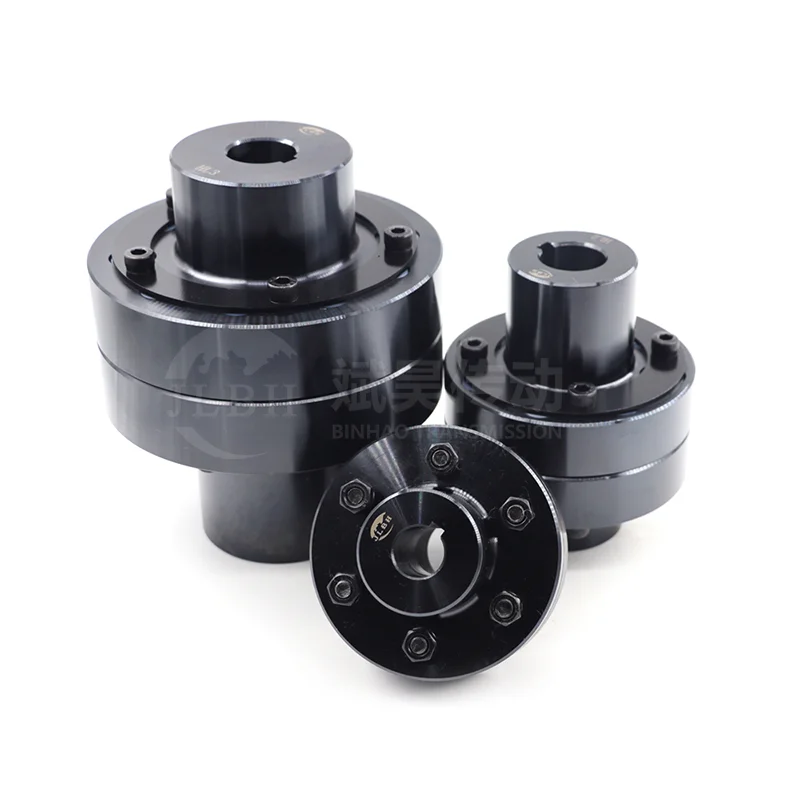
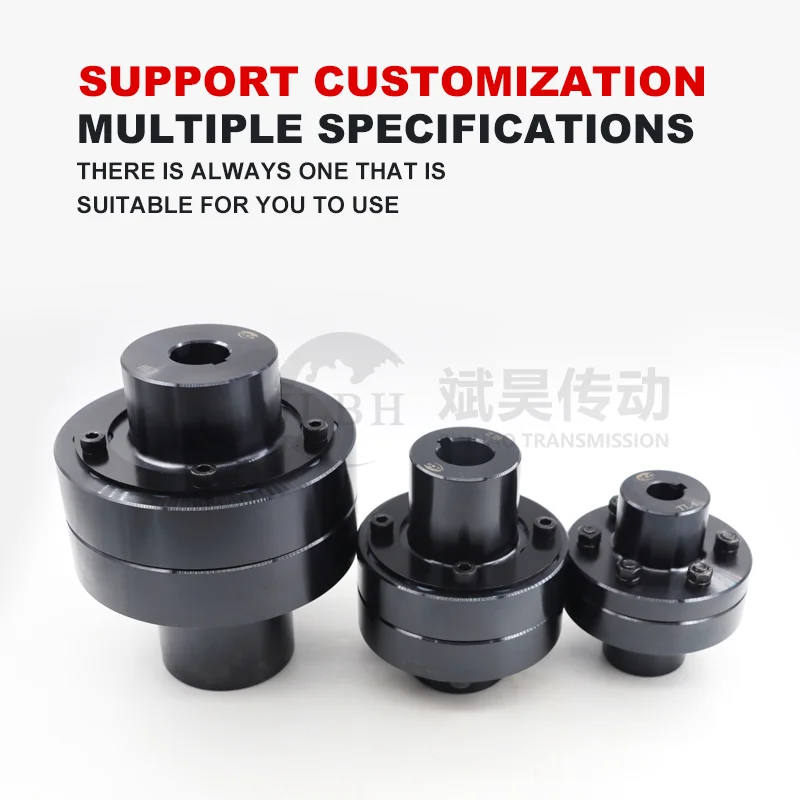
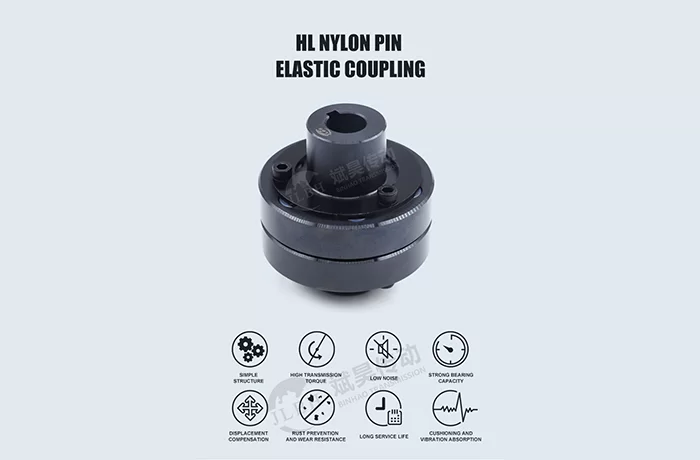
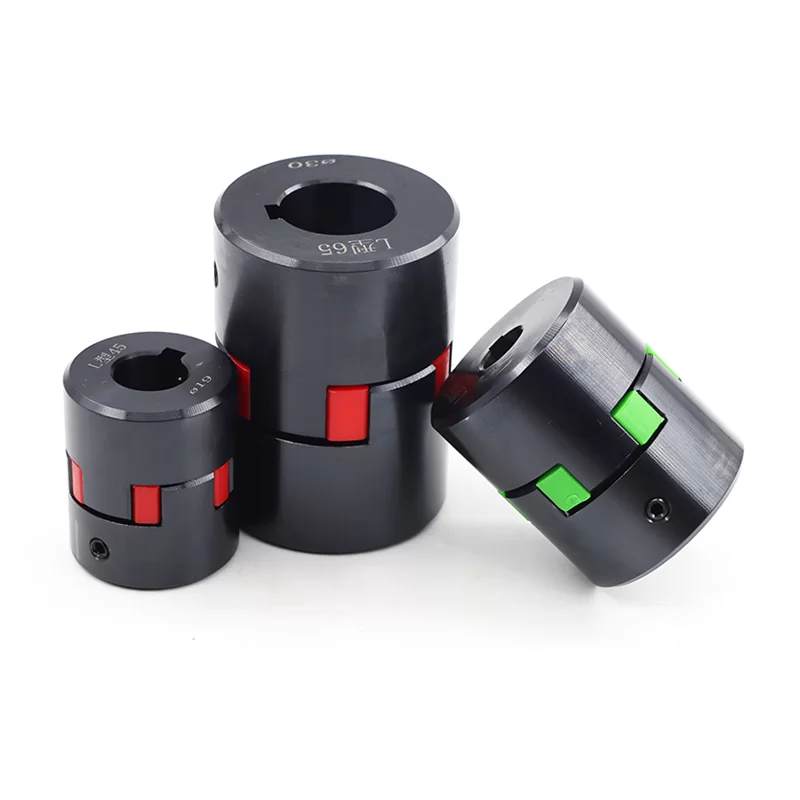
HL Type Elastic Nylon Pin Coupling

Video
Description
For example: fans, water pumps, light industrial machinery, textile machinery, conveying equipment, agricultural machinery, connections between small motors and reducers, etc. However, in situations requiring high torque, high speed, high temperature, large displacement compensation or extremely high alignment accuracy, other more suitable types of couplings need to be selected.
Product Features
1.Two-axis displacement compensation
It can compensate for certain radial displacement, angular displacement and axial displacement between the two shafts generated during installation and operation.
The specific compensation amount depends on the size of the coupling specification, but generally, its compensation capacity lies between that of rigid couplings and couplings with larger flexible elements. This is very practical in situations where high-precision alignment cannot be achieved.
2.Simple structure, easy to assemble and maintain
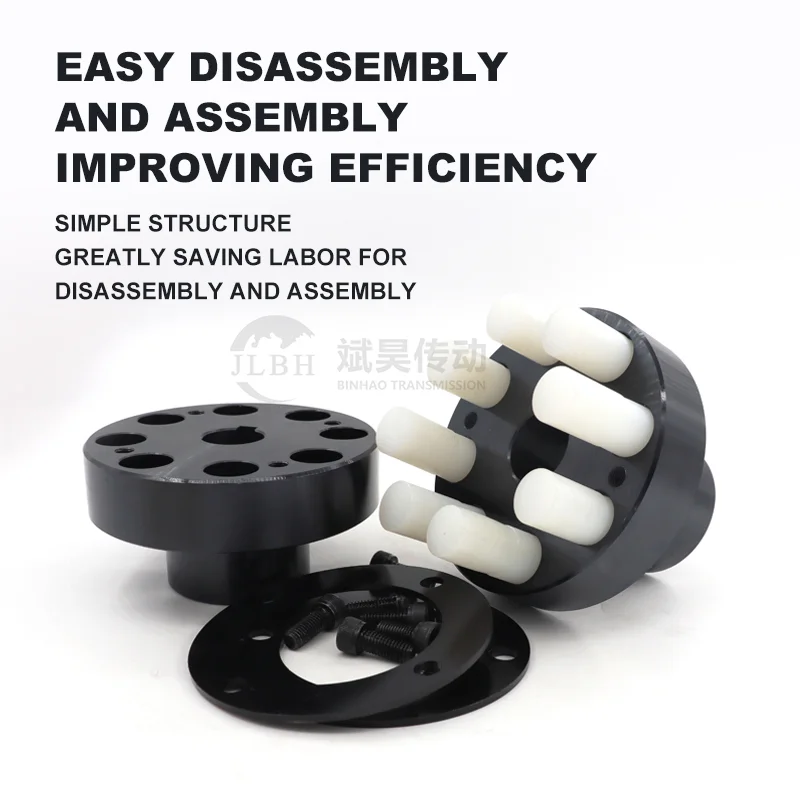
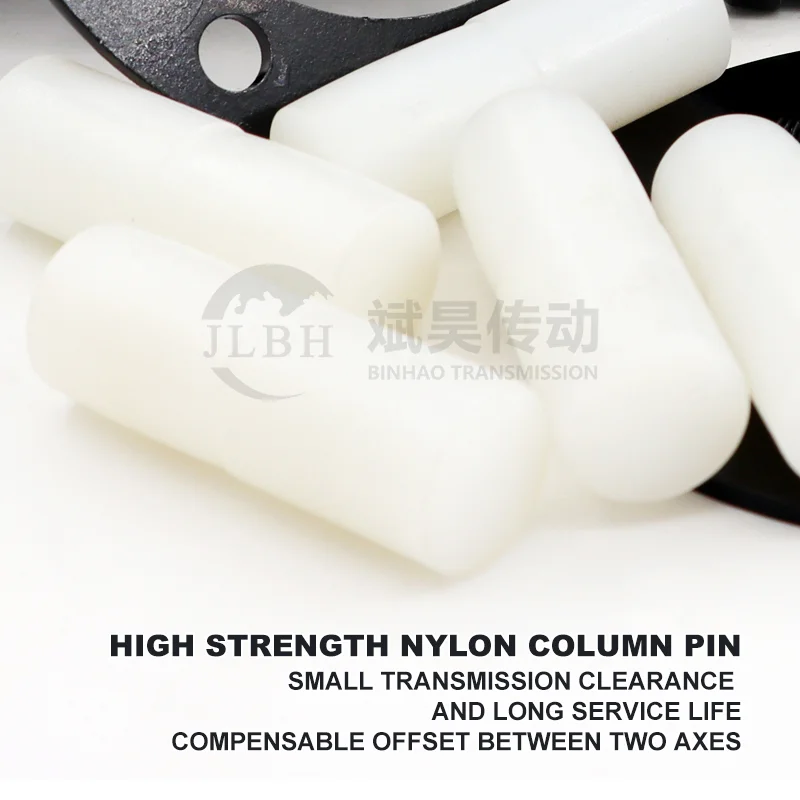
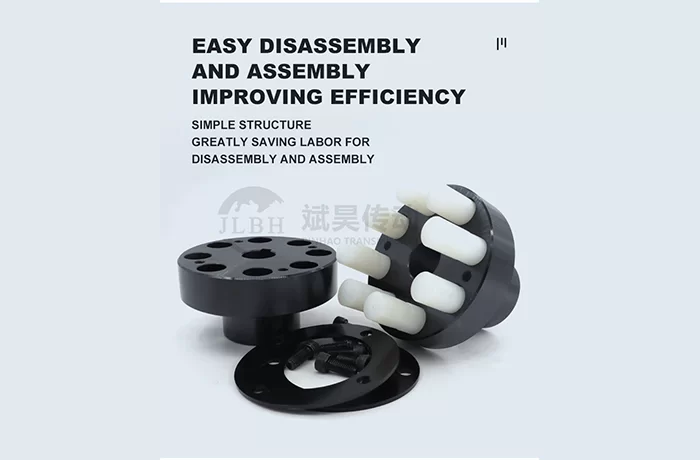
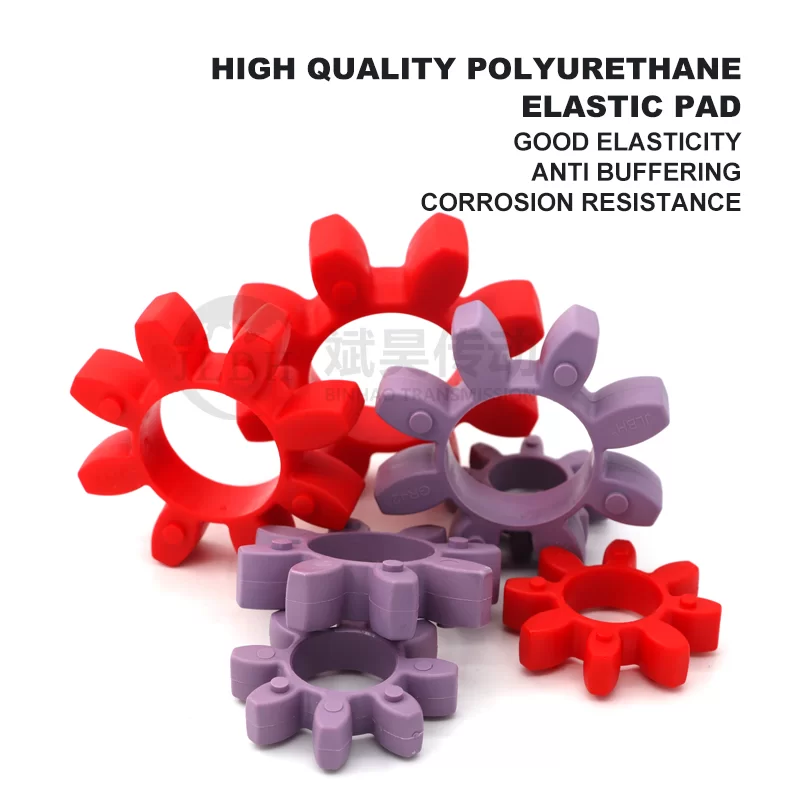
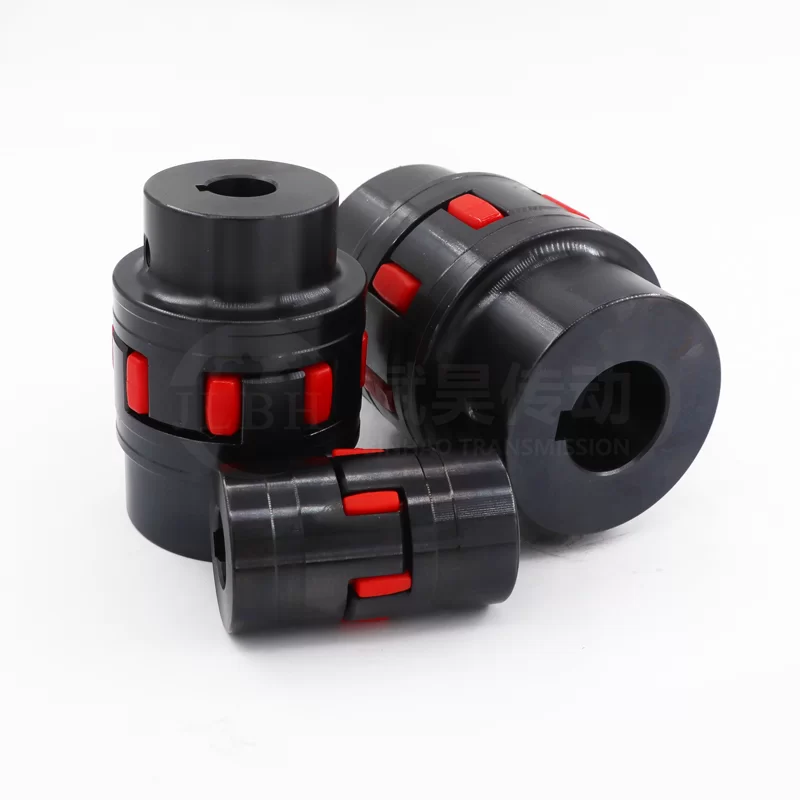
It is composed of two half couplings with flanges, several nylon pins and retaining rings (pressure plates). Compact structure with few components.
When installing, simply attach the two half couplings to the driving shaft and the driven shaft respectively, then insert the nylon pins and fix them with retaining rings to prevent axial detachment.
It is very convenient to disassemble and replace the nylon pins, with low maintenance costs and short downtime.
3.No lubrication required, easy to maintain
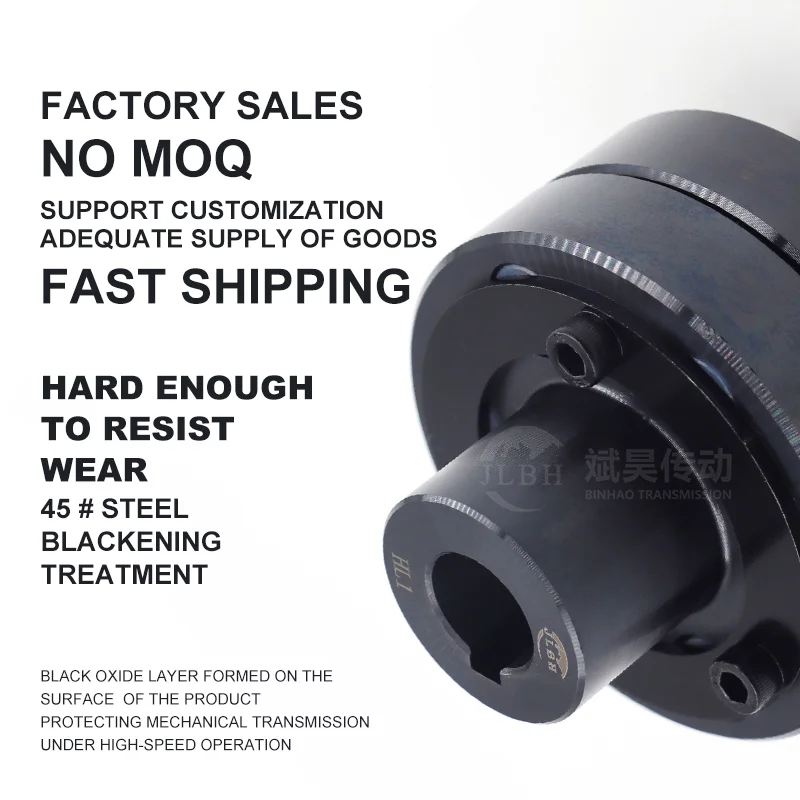
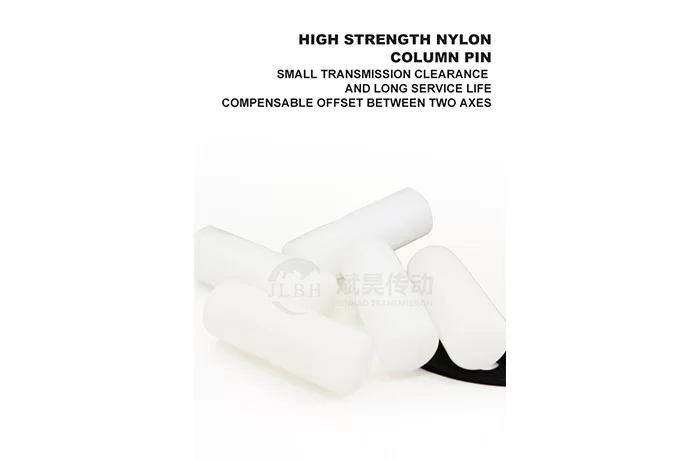
Nylon material itself has self-lubricating properties, wear resistance and certain corrosion resistance. No additional lubricating oil or grease needs to be added during operation , avoiding the problem of oil leakage.
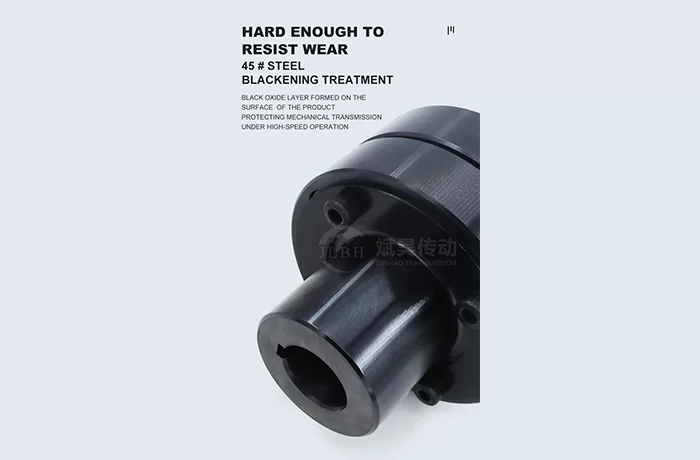
4.Moderate load-bearing capacity and low cost
Compared with metal elastic element couplings, the torque transmitted is relatively limited and they are suitable for medium and small power transmission. However, its manufacturing cost is much lower than that of high-performance flexible couplings, offering high cost performance.
5.The torque transmission is limited
Due to the limitations of the strength of nylon material and the structural dimensions of the pins, HL couplings are mainly suitable for applications with medium and low torque and medium and low speed. It is not suitable for transmission with high power, high torque or extremely severe impact.
6.Limited high-temperature resistance
The long-term working temperature of nylon material is generally between -20℃ and +80℃ (and can reach around +100℃ for short periods). In high-temperature environments, nylon will soften and age, with a sharp decline in strength and elastic modulus, leading to the failure of couplings. For high-temperature working conditions, the selection of couplings should be made with caution or other types should be considered.
7.The compensation capacity is relatively limited
Although it can compensate for displacement, its compensation amount is less than that of couplings such as plum blossom-shaped elastic couplings, tire couplings, universal joints or membrane couplings. The requirement for installation alignment accuracy is higher than that of these couplings.

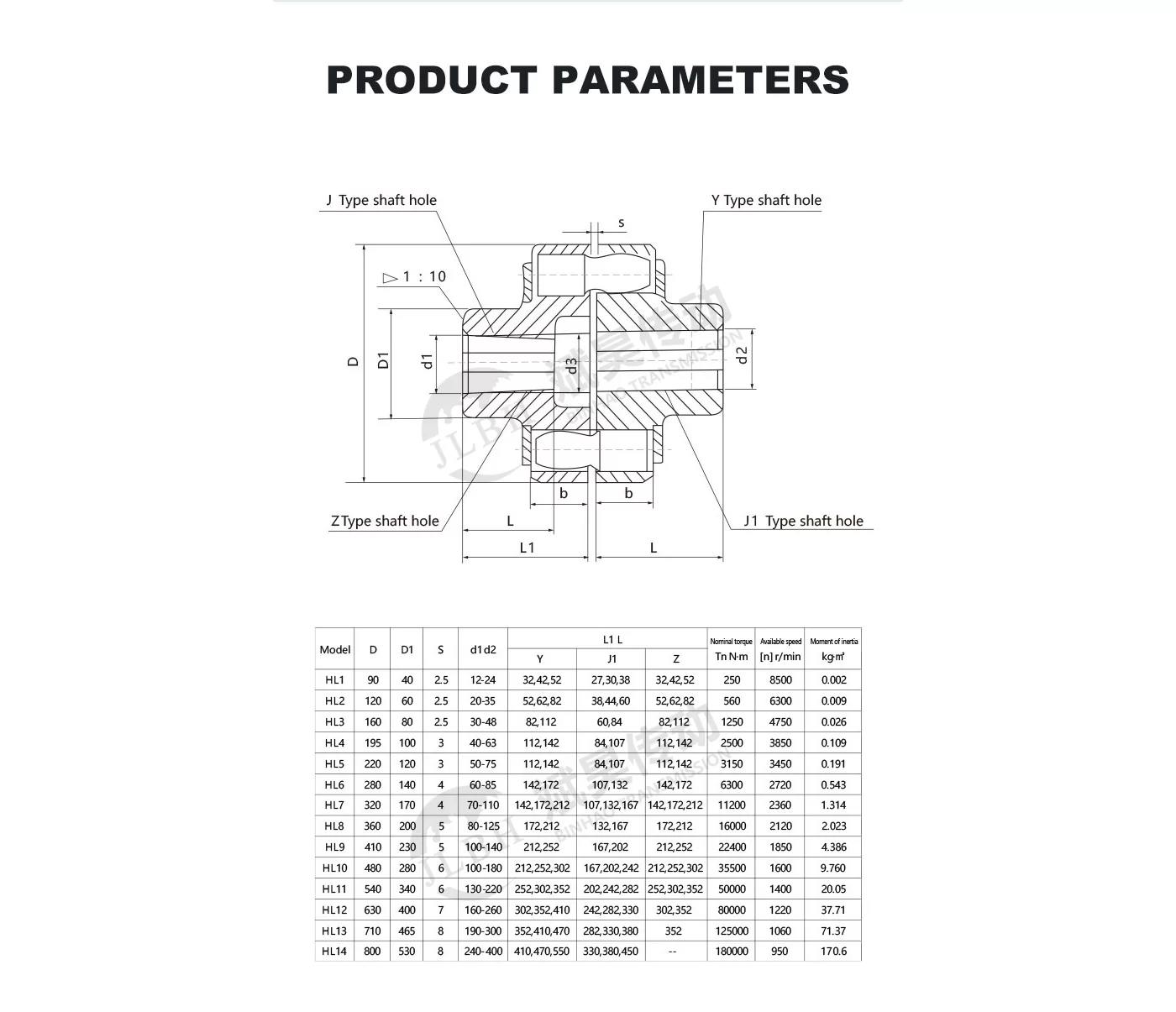
Product Parameters
May 22, 26
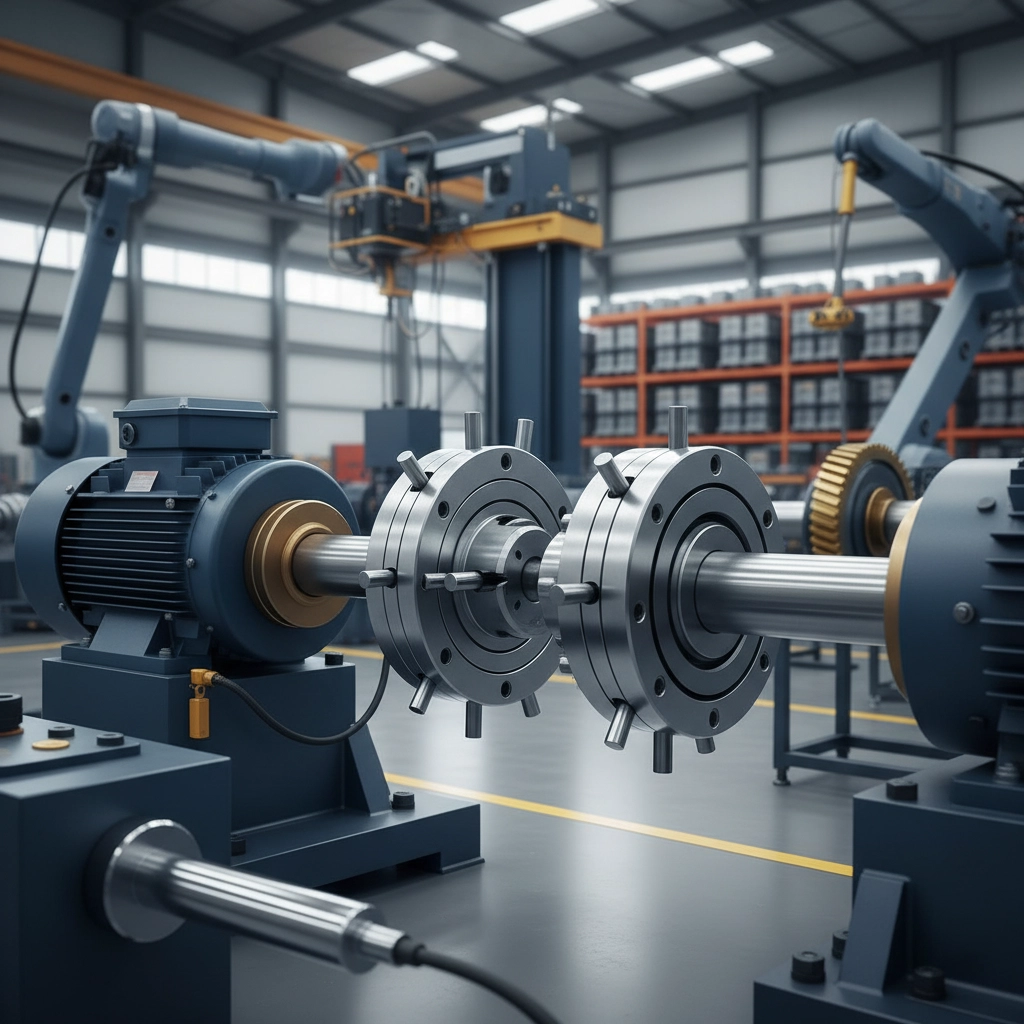
Industrial Safety coupling for Mechanical Overload Protection
In the high-stakes environment of modern industrial machinery, the prevention of catastrophic mechanical failure is not just a matter of efficiency, but a critical safety mandate. A Safety coupling serves as the primary line of defense, acting as a mechanical fuse that protects expensive drive trains and personnel from the devastating effects of torque overloads. By strategically sacrificing a specific component to break the power flow during a jam or surge, these devices prevent the ripple effect of destruction that often leads to prolonged downtime and costly repairs. Across global manufacturing sectors, the integration of a robust Safety coupling system is essential
May 20, 26
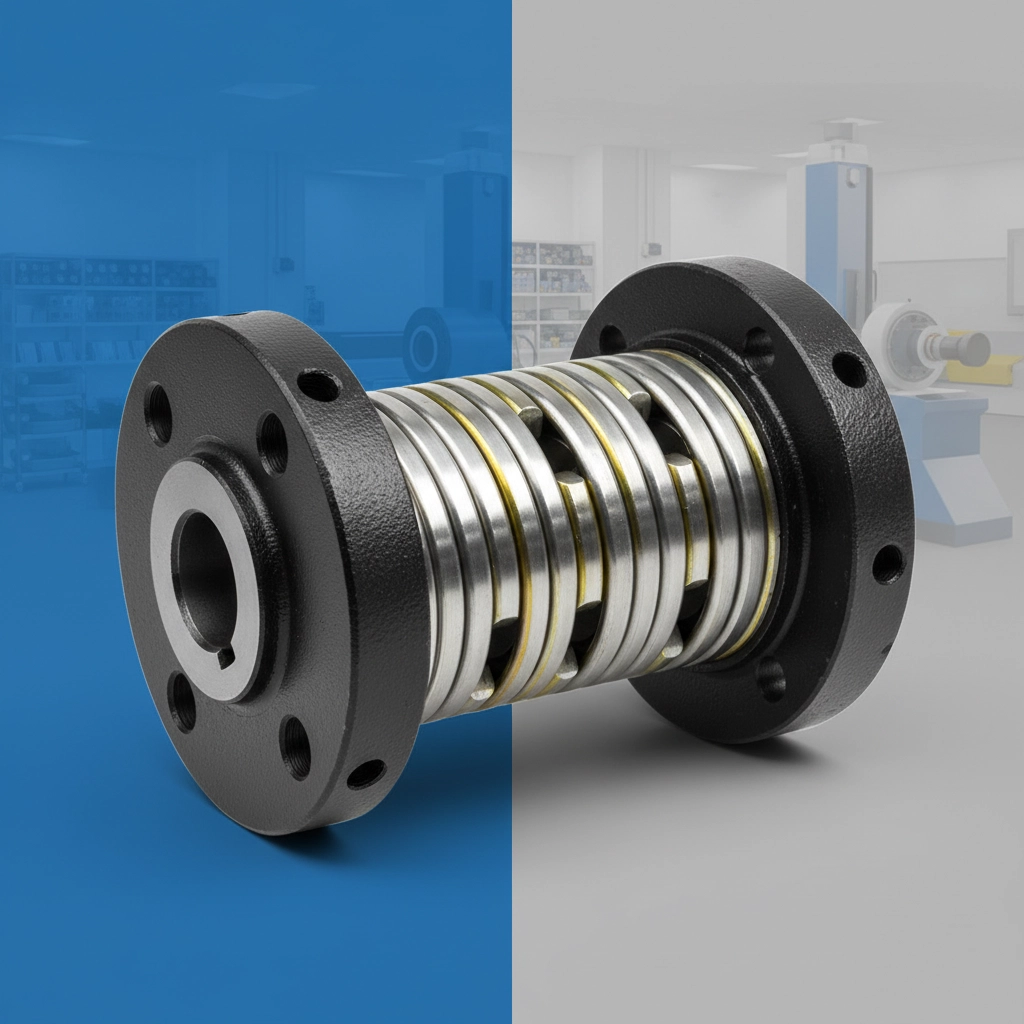
Industrial Grid Coupling for Mechanical Reliability and Torque
In the demanding world of industrial power transmission, the Grid coupling stands as a cornerstone of mechanical reliability. These specialized components are engineered to connect two shafts, transmitting torque while simultaneously absorbing the violent shocks and vibrations that can otherwise lead to catastrophic machine failure. By utilizing a flexible grid element, these couplings protect expensive gearboxes and motors from the stresses of misalignment and sudden load spikes. Understanding the mechanics of a Grid coupling is essential for engineers seeking to maximize uptime and reduce maintenance costs. In an era where industrial efficiency is measured by the second, the ability of a coupling
May 18, 26
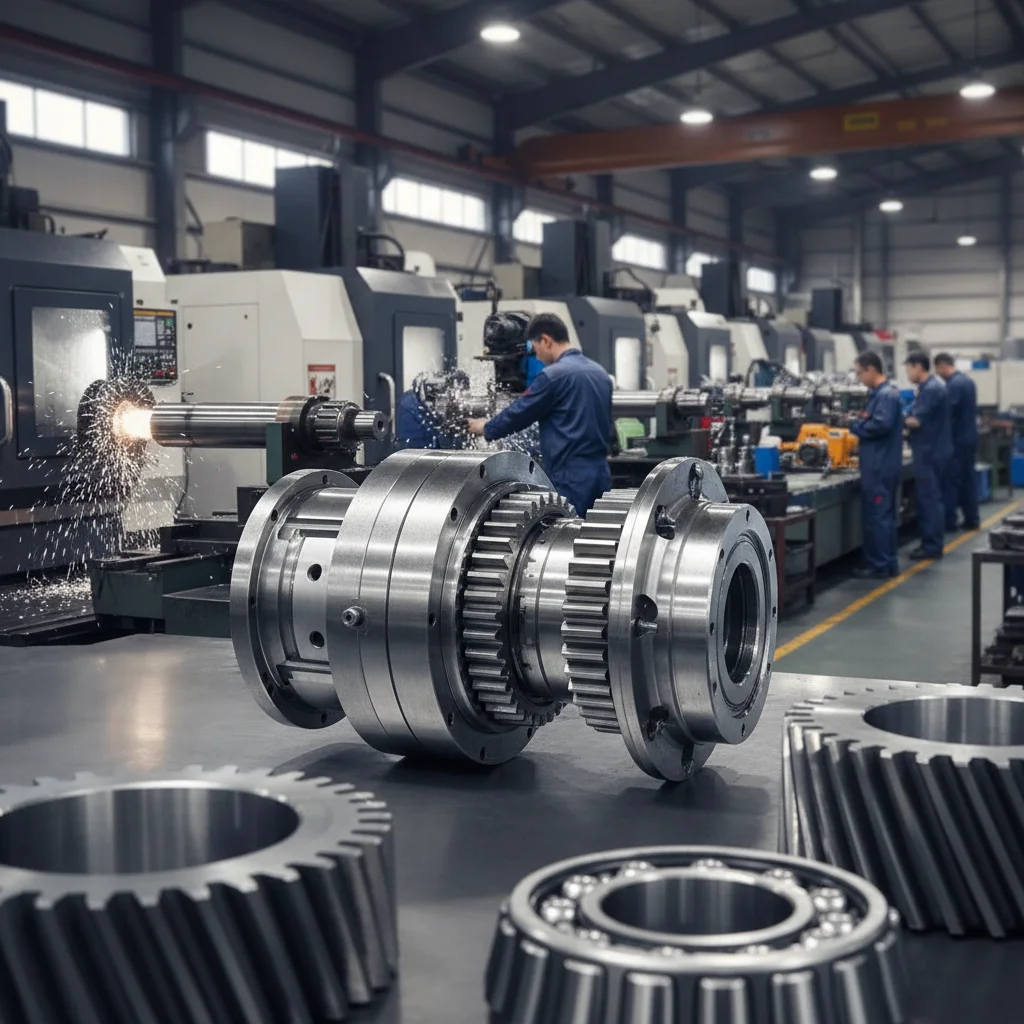
Industrial Hydraulic coupling for Efficient Power Transmission
In the high-stakes world of industrial power transmission, the Hydraulic coupling stands as a critical component designed to manage the transfer of energy between a prime mover and a driven machine. Unlike rigid connections, these fluid couplings provide a flexible interface that absorbs shock loads and allows for smooth starts, which is essential for maintaining the longevity of expensive machinery in heavy-duty environments. Globally, the demand for efficient torque transmission has led to the widespread adoption of fluid-based systems. By utilizing the kinetic energy of a liquidtypically oila Hydraulic coupling eliminates the need for direct mechanical contact between the input and output shafts


