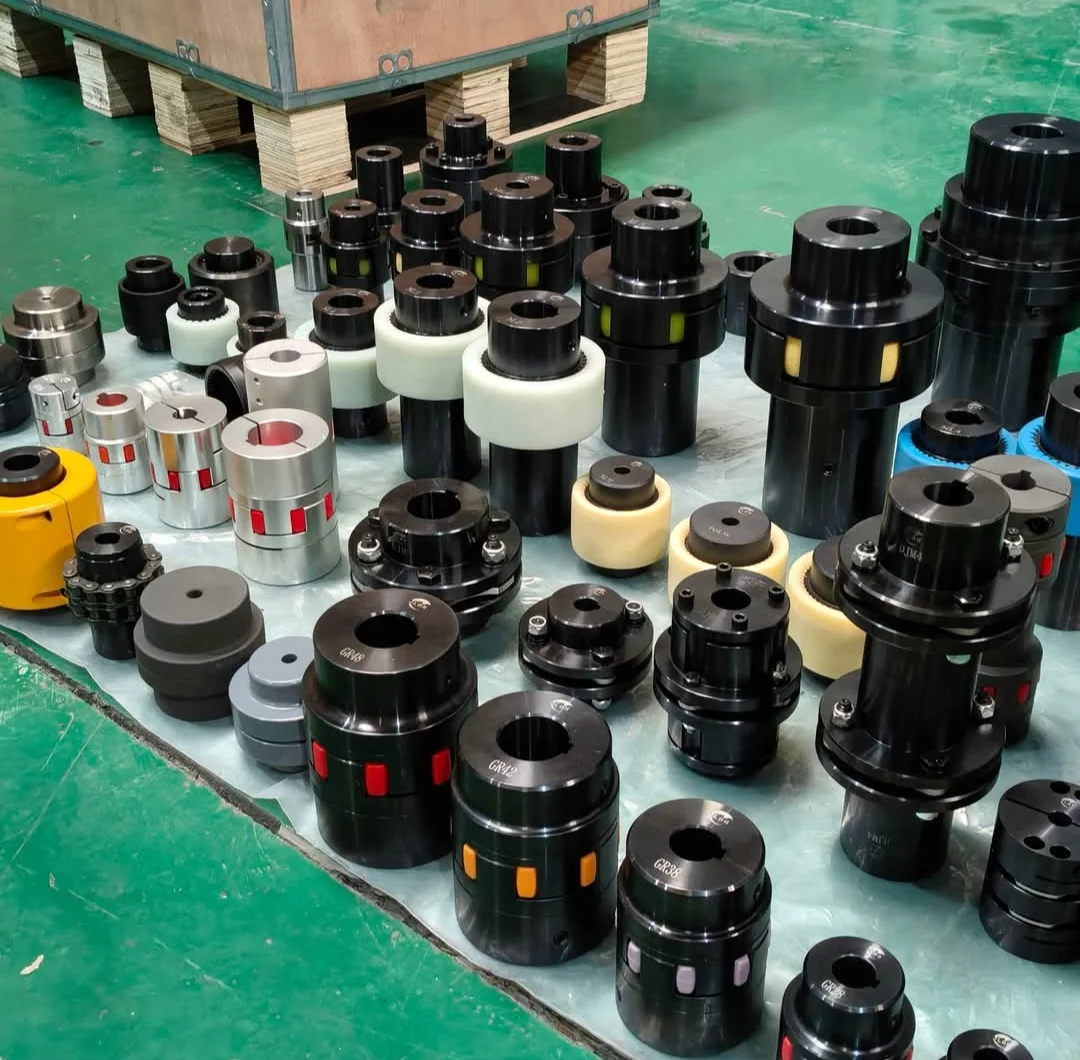
High Performance Industrial Rubber Jaw Coupling Exporter Solutions
0%

Table of Contents

In the demanding world of industrial power transmission, selecting the right coupling is critical for maintaining equipment longevity and operational efficiency. A professional rubber jaw coupling exporter provides the essential bridge between motors and reducers, ensuring that torque is transferred smoothly while isolating the system from destructive vibrations.        

       The global shift toward automation and high-precision manufacturing has increased the reliance on elastomeric components that can handle misalignment without compromising performance. By sourcing from a reputable rubber jaw coupling exporter, industries can access cutting-edge Polyurethane GR elastomers that significantly outperform traditional rubber in terms of wear resistance and load-bearing capacity.        

       Understanding the technical nuances of jaw couplings—from vibration damping to electrical insulation—allows engineers to reduce downtime and lower total cost of ownership. This guide explores the critical advantages of modern jaw coupling designs and how they solve the most persistent challenges in the general equipment manufacturing sector.

rubber jaw coupling exporter    

Vibration Damping and Impact Absorption

rubber jaw coupling exporter            

One of the most significant advantages offered by a quality rubber jaw coupling exporter is the integration of advanced Polyurethane GR elastomers. These materials are specifically engineered to efficiently absorb impact loads, such as those occurring during motor start-stop cycles or gear meshing impacts, which often cause premature failure in rigid couplings.            

           By utilizing these high-performance elastomers, the peak stress of the entire transmission system can be reduced by more than 30%. This drastic reduction in stress prevents fatigue in the shafts and bearings, ensuring that the machinery operates within its optimal design parameters even under volatile load conditions.

Maintenance-Free Longevity and Durability

Modern jaw couplings are designed to be entirely lubrication-free, removing the need for messy grease applications and frequent oil checks. This design philosophy, championed by any leading rubber jaw coupling exporter, eliminates the risk of oil leakage and prevents environmental pollution within the workspace.        

       The durability of the elastomer is a key performance indicator; typical service lives range from 30,000 to 50,000 hours. Because the materials are highly wear-resistant and aging-resistant, the interval between replacements is significantly extended compared to standard rubber alternatives.        

       This longevity translates directly into higher machine availability. In high-production environments, the ability to run for thousands of hours without scheduled coupling maintenance is a competitive advantage that reduces labor costs and increases overall equipment effectiveness (OEE).

Electrical Insulation and Safety Standards

Electrical safety is often overlooked in mechanical transmissions, but a professional rubber jaw coupling exporter ensures that the elastomer provides a critical barrier. The resistance value of these elastomers is greater than 10¹²Ω, acting as a high-impedance break in the electrical path.

This insulation is vital for blocking shaft currents, which are known to cause electrical erosion in bearings. By preventing these currents from passing through the bearing races, the coupling effectively protects the motor's internal components from "fluting" and premature failure.

In industries where electrical noise or stray currents can interfere with sensitive sensors or endanger personnel, the insulating properties of a jaw coupling are indispensable. This makes them the preferred choice for medical equipment and precision laboratory instruments.

Cost Reduction and Operational Efficiency

Efficiency in the industrial sector is measured not just by speed, but by the reduction of installation and maintenance costs. A rubber jaw coupling exporter provides solutions that allow for larger alignment errors, which reduces installation costs by up to 40% and shortens the overall equipment commissioning time.        

       Furthermore, the design allows for rapid maintenance. Replacing a worn elastomer typically takes only 10 minutes and does not require the movement of the main body of the equipment. This reduces potential downtime loss by half, ensuring that production lines return to operation almost immediately.

Efficiency Impact of Rubber Jaw Coupling Exporter Solutions

Equipment Security and Overload Protection

Safety is paramount in any mechanical system. A key feature provided by a professional rubber jaw coupling exporter is the "preferential break" design. When a system is severely overloaded, the elastic block is engineered to break first, acting as a mechanical fuse.        

       The preset breaking torque is typically ≤ 150% of the rated torque. By sacrificing the elastomer, the coupling protects far more expensive core equipment, such as high-torque motors and precision reducers, from catastrophic failure.

Environmental Impact and Noise Reduction

In the modern industrial landscape, noise pollution is a significant health and safety concern. Jaw couplings are inherently silent, with operating noise levels typically remaining below 70dB(A). This makes them ideal for "clean" workshops where noise reduction is mandatory.        

       Beyond noise, the materials used by a reputable rubber jaw coupling exporter are selected for their environmental compatibility. The absence of lubricants means there is no risk of contaminating the surrounding environment, which is a critical requirement for food processing and medical device manufacturing.        

       The combination of low acoustic emissions and zero-leakage design ensures that facilities can meet stringent ISO environmental and safety standards while maintaining high-throughput production levels.

Energy Saving via Lightweight Materials

Energy efficiency is now a primary driver in equipment design. Many a rubber jaw coupling exporter now offers customizable aluminum alloy wheels. These wheels are approximately 60% lighter than traditional steel or cast iron alternatives.        

       The reduction in mass directly leads to a lower moment of inertia. This means the motor requires less energy to accelerate the system to operational speed, resulting in an energy saving of approximately 1.5% to 3% over the life of the machine.        

       While 3% may seem small, in large-scale industrial plants with hundreds of motors running 24/7, these savings accumulate into significant reductions in electricity costs and a lower corporate carbon footprint.

Comparison of Material Properties in Jaw Coupling Systems

Wheel MaterialWeight ReductionEnergy SavingInertia Impact
Cast Iron0% (Baseline)0%High
Carbon Steel5-10%0.2%High
Aluminum Alloy60%1.5% - 3%Very Low
Polyurethane GRN/A (Insert)Indirect (Damping)Low
Stainless Steel0-5%0.1%High
Custom Hybrid40-50%1-2%Low

FAQS

How does a rubber jaw coupling protect the motor?

It protects the motor through two primary mechanisms: vibration damping and preferential breaking. The Polyurethane GR elastomer absorbs shock loads during start-up, and in the event of a severe overload, the elastomer breaks before the motor's shaft or the reducer's gears are damaged, acting as a safety fuse.

Why is electrical insulation important in a jaw coupling?

Electrical insulation prevents shaft currents from passing through the bearings. These currents cause electrical erosion (fluting), which leads to premature bearing failure. A quality rubber jaw coupling exporter ensures the elastomer has a resistance value > 10¹²Ω to block these currents completely.

What is the typical lifespan of a Polyurethane GR elastomer?

Depending on the load, temperature, and operational frequency, the typical service life of these advanced elastomers ranges from 30,000 to 50,000 hours. They are designed to be wear-resistant and aging-resistant to minimize replacement frequency.

Can aluminum wheels really save energy in a transmission system?

Yes. Aluminum alloy wheels are 60% lighter than steel. This reduces the moment of inertia, meaning the motor requires less torque to accelerate the load. This typically results in an energy saving of 1.5% to 3%.

Do rubber jaw couplings require lubrication?

No, they are designed to be completely maintenance-free. The elastomer provides the necessary flexibility and damping without the need for grease or oil, eliminating pollution and reducing maintenance labor.

How long does it take to replace the elastomer in these couplings?

Due to the modular design, replacing the elastomer usually takes only 10 minutes. Crucially, this can be done without moving the main motor or reducer, which halves the potential downtime loss.

Conclusion

In summary, the strategic selection of a rubber jaw coupling—specifically those utilizing Polyurethane GR elastomers and lightweight aluminum alloys—provides a comprehensive solution for industrial power transmission. From reducing peak stress by 30% and protecting bearings via electrical insulation to cutting installation costs by 40%, these components are essential for any operation seeking to maximize reliability and minimize OEE losses.        

       As the industry moves toward greener, quieter, and more efficient production, the role of the rubber jaw coupling exporter will evolve to include even more sustainable materials and precision-engineered designs. We recommend that plant managers evaluate their current coupling lifespan and energy consumption to identify opportunities for upgrading to these high-performance elastomeric solutions. Visit our website for more details: www.binhaocoupling.com

Marcus Thorne

Marcus Thorne

Marcus Thorne is the North American Sales Manager for Binhao Transmission Equipment. Marcus brings over a decade of experience in industrial sales and distribution, focusing on the metallurgy, mining, and power generation sectors. He's responsible for expanding Binhao’s market share across the US and Canada, building strong relationships with distributors and end-users. Prior to joining Binhao, Marcus held key account management positions at leading industrial supply companies. He understands the critical importance of timely delivery and reliable product performance. He is dedicated to ensuring client satisfaction and driving continued growth for Binhao in the North American market. Marcus holds a Business Administration degree from the University of Texas.
Previous Top Industrial Rubber Jaw Coupling Wholesale Suppliers Guide
Next Industrial Guide to Rubber Jaw Coupling Types and Benefits

If you are interested in our products, you can choose to leave your information here, and we will be in touch with you shortly.