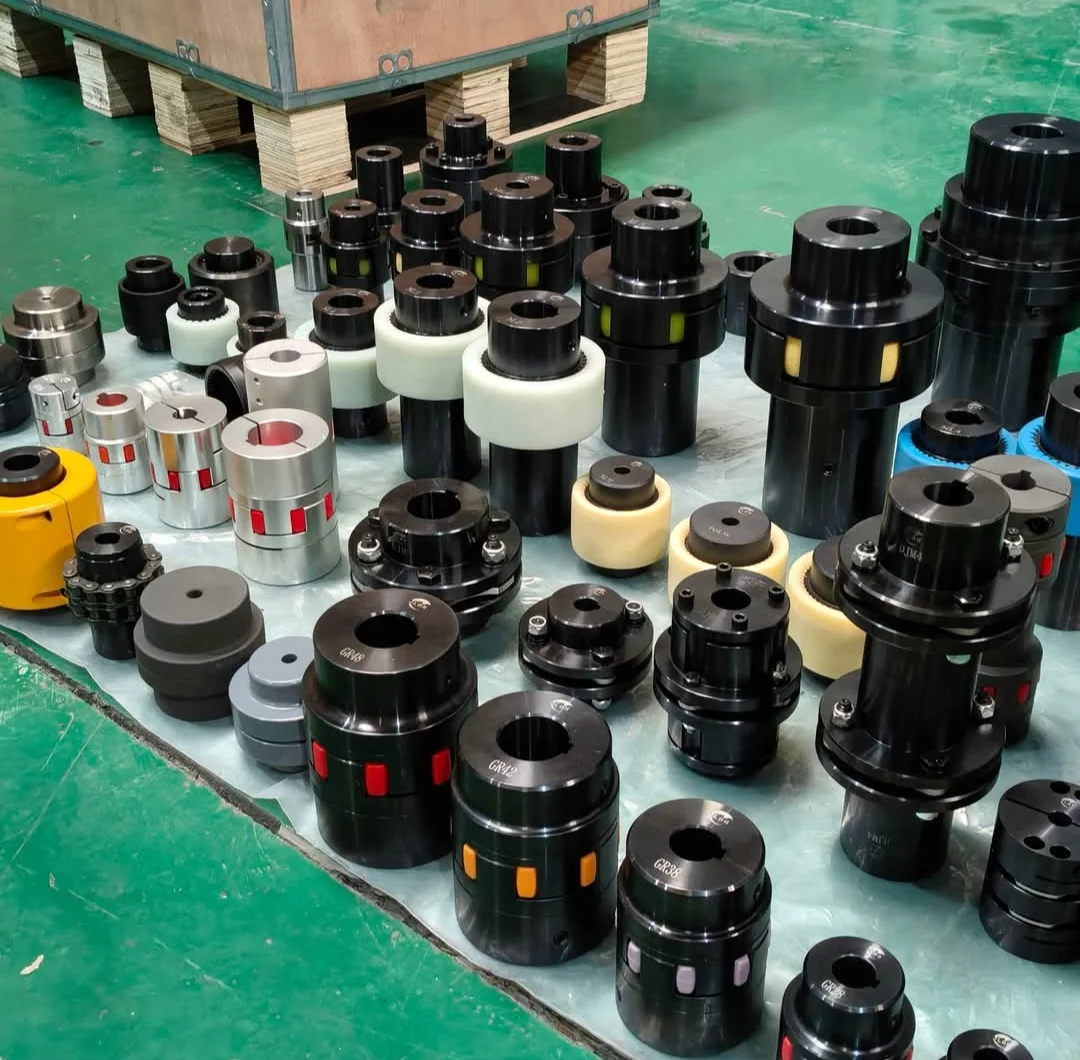
In the complex ecosystem of industrial power transmission, the Steel coupling serves as the critical bridge between prime movers and driven machinery. By ensuring a secure, rigid, or flexible connection between two shafts, these components are fundamental to maintaining operational stability and maximizing torque transfer efficiency across various heavy-duty applications.
Understanding the nuances of a high-quality Steel coupling is not merely a technical requirement but a strategic necessity for reducing unplanned downtime. From mitigating misalignment to absorbing vibrational energy, the right coupling choice directly impacts the lifespan of bearings and seals, ultimately protecting the capital investment of the entire production line.
As global industries push toward higher precision and extreme operational environments, the demand for advanced metallurgical properties in couplings has surged. Whether it is a DJM Diaphragm Coupling for high-speed precision or a TGL Drum Gear Coupling for massive torque, the evolution of steel coupling technology continues to drive the efficiency of the modern manufacturing landscape.

Global Relevance of Steel Coupling in Industry
On a global scale, the reliance on Steel coupling systems is mirrored by the growth of the global machinery market. According to ISO standards for mechanical transmission, the precision of the coupling interface is a primary determinant of energy loss. In regions with heavy industrialization, such as East Asia and Europe, the integration of high-torque steel couplings is essential for the operation of power plants, steel mills, and chemical processing facilities.
The primary challenge facing global operators is the "misalignment crisis," where poor installation or thermal expansion leads to premature failure. By implementing precision-engineered steel couplings, companies can reduce energy waste by up to 15% and significantly lower the carbon footprint associated with frequent part replacements.
Defining the Mechanics of Steel Coupling
In its simplest form, a Steel coupling is a device used to connect two shafts together at their ends for the purpose of transmitting power. Unlike simple sleeves, modern industrial couplings are designed to handle specific torque loads, manage axial or angular misalignment, and dampen the vibrations that naturally occur during the startup and shutdown cycles of heavy machinery.
From a structural perspective, these components can range from rigid designs—which ensure absolute alignment for precision tools—to flexible designs like the NL Gear Elastic Coupling or the L Series Elastic Jaw Coupling. The "steel" aspect refers not only to the material but to the rigorous heat treatment and alloying processes that ensure the component can withstand millions of cycles without fatigue failure.
In the context of modern humanitarian and infrastructure needs, these couplings are the unsung heroes of water treatment plants and emergency power grids. When a city relies on a massive pump to move water, the steel coupling ensures that the motor's energy is delivered to the pump impeller with zero slippage, ensuring the continuity of vital public services.
Core Technical Factors of Steel Coupling Performance
The first critical factor is Torsional Rigidity. A high-performance Steel coupling must provide a stiff connection to ensure that there is no "wind-up" or lag in power transmission, which is especially vital in servo-controlled systems or high-precision CNC machinery.
Secondly, Material Fatigue Resistance is paramount. Because steel couplings are subject to constant cyclic loading, the use of forged alloy steels in products like the GIICL Gear Coupling prevents the formation of micro-cracks, extending the mean time between failures (MTBF) significantly compared to cast alternatives.
Finally, Alignment Flexibility determines how the coupling handles real-world imperfections. Whether through the use of elastic inserts in a Plum Blossom Coupling or the diaphragm flex in an SDM Diaphragm Coupling, the ability to accommodate parallel and angular offsets prevents the transmission of destructive forces to the motor bearings.
Global Applications and Industrial Use Cases
The application of Steel coupling technology spans nearly every heavy industry. In the mining sector of Australia and South America, massive TGL Drum Gear Couplings are used in conveyor systems to move thousands of tons of ore per hour. The rugged environment demands materials that resist abrasion and extreme temperature fluctuations while maintaining a lock-tight grip on the shaft.
In more refined environments, such as pharmaceutical plants in Switzerland or semiconductor fabs in Taiwan, XL Aluminum Clamping Couplings and ZL Pin Couplings provide the low-backlash connection required for robotic arms and dosing pumps. Here, the focus shifts from raw power to precision and cleanliness, ensuring that no particulate matter from the coupling interferes with the sterile production environment.
Efficiency Performance of Different Steel Coupling Types
Long-Term Value and Operational Advantages
Investing in a premium Steel coupling provides immediate tangible benefits in terms of energy efficiency. By reducing the frictional losses and vibration-induced heat, operators can lower their electricity costs and extend the lubrication intervals for the rest of the drivetrain. This logical approach to procurement transforms a simple part into a tool for long-term cost reduction.
Beyond the numbers, there is an emotional and social value: Safety and Trust. A failed coupling in a high-speed turbine can lead to catastrophic mechanical failure. By utilizing certified, high-strength steel couplings, plant managers ensure the safety of their workforce, providing peace of mind that the machinery will operate reliably under peak loads without risking human life.
Future Trends in Coupling Materials and Automation
The future of Steel coupling design is leaning heavily toward "Smart Couplings." We are seeing the integration of embedded IoT sensors within the coupling hub that can monitor real-time torque, temperature, and vibration. This shift toward predictive maintenance allows companies to replace a coupling just before it fails, rather than following a rigid, often inefficient, calendar-based schedule.
Material science is also evolving, with the introduction of nano-coatings to reduce wear in gear-type couplings and the use of high-strength, lightweight alloys that maintain the rigidity of steel while reducing the rotational inertia of the system. This is particularly important for the green energy transition, where wind turbine drivetrains require components that can handle erratic load changes.
Furthermore, the trend toward modularity is enabling faster replacements. New designs in the JK Clamping Coupling family are focusing on "tool-less" adjustments, allowing technicians to align and secure shafts in minutes rather than hours, directly supporting the goal of zero-downtime manufacturing.
Overcoming Implementation Challenges in Steel Coupling
One of the most persistent challenges in using a Steel coupling is the installation error. Even the most expensive coupling will fail prematurely if the shafts are not concentric. The solution lies in the adoption of laser alignment tools and the use of couplings with built-in compensation, such as the ML Plum Blossom Coupling, which is more forgiving of slight installation variances.
Another hurdle is the environmental degradation—corrosion in marine or chemical environments. To solve this, industry experts are moving toward specialized surface treatments like electroless nickel plating or the use of stainless steel variants for the NL Gear Elastic Coupling series, ensuring that the coupling does not seize or rust over decades of service.
Lastly, the "over-specification" trap often leads to unnecessary costs. Many engineers choose a coupling that is far stronger than needed, which can actually increase vibration due to excessive stiffness. The professional approach is to perform a comprehensive torque and vibration analysis to select the specific coupling type—such as an L Series Elastic Jaw Coupling for light loads—that matches the application perfectly.
Comparative Analysis of Steel Coupling Series Performance
| Coupling Model | Torque Capacity | Misalignment Tolerance | Maintenance Level |
|---|
| GIICL Gear Coupling | Very High | Low | Medium (Lubrication) |
| DJM Diaphragm Coupling | Medium-High | Medium | Low (Maintenance-free) |
| L Series Jaw Coupling | Low-Medium | High | Very Low |
| TGL Drum Gear Coupling | Extreme | Low | High (Heavy Duty) |
| ML Plum Blossom Coupling | Medium | Very High | Low |
| XL Clamping Coupling | Low | Very Low | Low |
FAQS
A rigid steel coupling is designed for applications where shafts are perfectly aligned, providing maximum torque transfer without any movement. A flexible steel coupling, such as the L Series Jaw or ML Plum Blossom, allows for slight angular, parallel, or axial misalignment, protecting the motor and driven equipment from stress and vibration.
Lubrication intervals vary by application, but typically gear couplings should be inspected every 2,000 to 4,000 operating hours. The frequency increases in high-temperature or high-vibration environments to prevent metal-on-metal wear and ensure the longevity of the gear teeth.
Yes, the DJM and SDM Diaphragm Couplings are specifically engineered for high-speed applications. Because they have lower rotational inertia and superior balance, they can operate at very high RPMs while maintaining precise alignment and absorbing axial thermal expansion.
The most common causes are excessive misalignment, overloading beyond the rated torque, and lack of proper lubrication (for gear types). Fatigue failure can also occur if the coupling was not correctly matched to the cyclic load profile of the machinery.
Generally, no. Aluminum couplings like the XL series are designed for precision, low-torque applications such as stepper motors or small pumps. For high-torque requirements, you should opt for forged steel gear couplings or diaphragm couplings to avoid deformation or shearing.
Selection depends on three main factors: the shaft diameter, the maximum torque output of the motor (including startup peaks), and the expected level of misalignment. We recommend consulting a technical datasheet or a professional engineer to ensure the safety factor is appropriate for your specific load.
Conclusion
The Steel coupling is far more than a simple mechanical connector; it is a precision component that dictates the efficiency, safety, and lifespan of industrial drivetrains. From the raw power of gear couplings to the delicate precision of clamping models, the correct choice minimizes energy waste and prevents costly catastrophic failures.
As we move toward an era of Industry 4.0, the integration of smart monitoring and advanced metallurgy will continue to redefine the role of these components. To ensure your operations remain competitive and reliable, we suggest prioritizing high-grade materials and precision alignment tools. For industry-leading solutions, visit our website: www.binhaocoupling.com