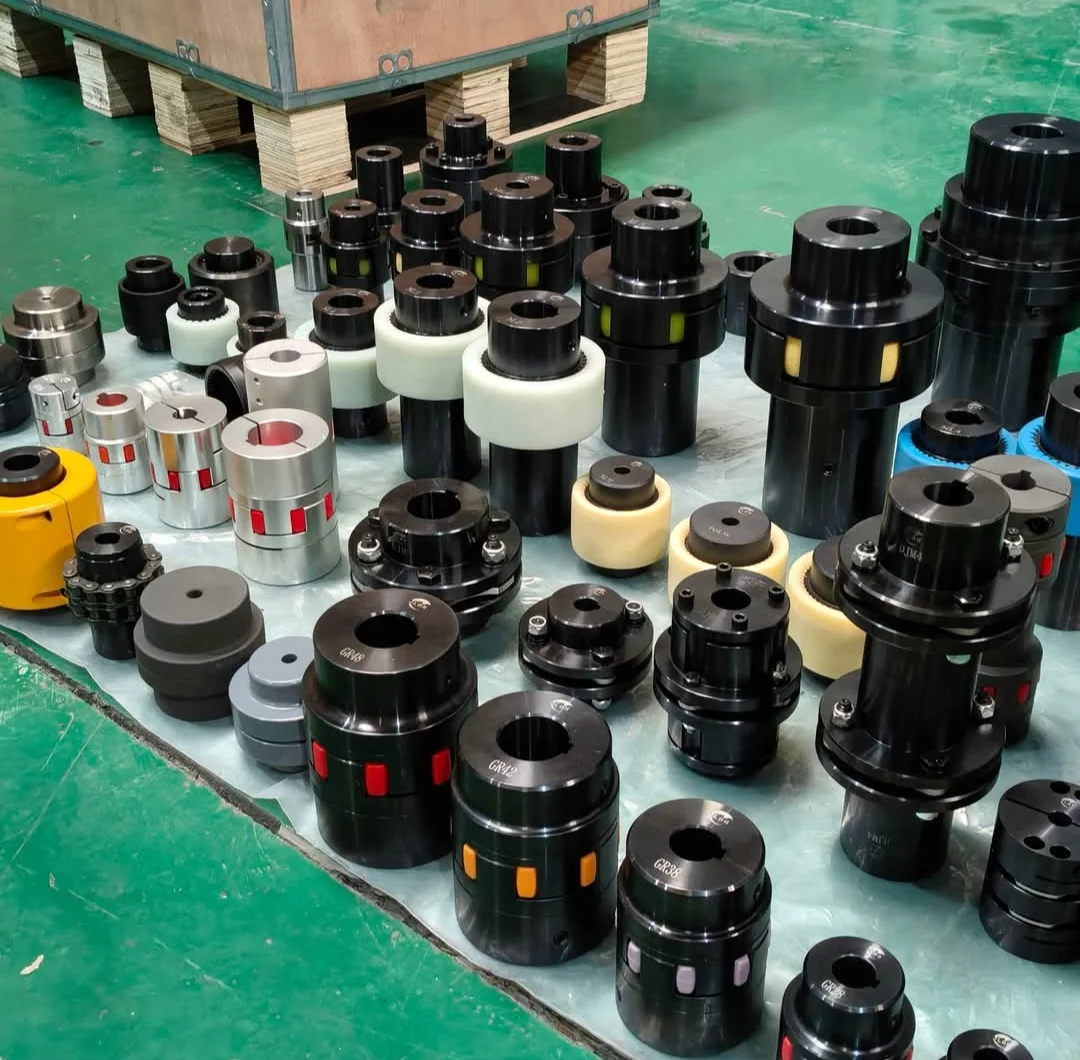
The global industrial landscape relies heavily on the precision and reliability of power transmission components to maintain operational uptime. Among the most critical elements in this chain are the components provided by professional shaft coupling Manufacturers, who ensure that torque is transferred efficiently while protecting sensitive machinery from misalignment and vibration. Understanding the nuances of coupling selection is essential for any facility aiming to optimize its mechanical throughput and reduce unexpected downtime.
From the intricate movements of robotic arms to the high-speed rotations of CNC machine tools, the demand for lightweight yet durable transmission solutions has never been higher. Leading shaft coupling Manufacturers are now focusing on materials that reduce inertia without sacrificing structural integrity, allowing for faster acceleration and higher precision in automated systems. This evolution in engineering is driving a new standard of efficiency across the general equipment manufacturing sector.
When selecting a partner for your power transmission needs, it is vital to collaborate with experienced shaft coupling Manufacturers who can provide tailored solutions like the XL Aluminum Alloy Clamping Coupling. By integrating advanced materials and precision engineering, these manufacturers enable industries to achieve zero-backlash performance and superior vibration damping in the most demanding operational environments.

Engineering Precision in Aluminum Alloy Couplings
The XL Aluminum Alloy Clamping Coupling represents a pinnacle of lightweight engineering, specifically designed to meet the rigorous demands of modern industrial automation. By utilizing high-strength aluminum alloy, shaft coupling Manufacturers are able to significantly reduce the moment of inertia, which is a critical factor for systems requiring rapid acceleration and high responsiveness. This reduction in mass allows motors to reach target speeds faster and with less energy consumption.
Beyond weight reduction, the structural integrity of the aluminum alloy is enhanced through a specialized surface oxidation treatment. This process ensures that the coupling remains resistant to corrosion even when exposed to harsh industrial environments, providing a stable and long-lasting connection between shafts. This commitment to material science allows for a perfect balance between agility and durability in precision machinery.
The Role of Zero-Backlash in High-Speed Applications
In the world of high-precision motion control, rotational clearance—often referred to as backlash—can be the difference between a perfect product and a costly defect. Professional shaft coupling Manufacturers address this challenge by implementing a unique clamping mechanism in the XL series. This design ensures that there is zero rotational clearance between the shaft and the coupling, allowing for an immediate and sensitive transfer of torque.
High-speed applications, such as those found in CNC machine tools, require components that can handle extreme velocities without losing synchronization. The XL series is engineered to support rotational speeds up to 19,000 rpm, a feat made possible by its G2.5 dynamic balance grade. This level of balancing minimizes parasitic vibrations that could otherwise lead to premature wear or catastrophic failure at high speeds.
The synergy between the clamping design and the balanced aluminum structure allows for a level of precision that traditional couplings cannot match. By eliminating the "slop" found in lower-grade connections, these components ensure that every degree of motor rotation is translated directly into machine movement, which is essential for robotics and micro-machining.
Mechanical Compensation and Vibration Damping
Even the most precise installations can suffer from minor misalignment due to thermal expansion or structural settling. To combat this, experienced shaft coupling Manufacturers integrate a high-performance polyurethane elastomer core into the XL series. This core acts as a flexible bridge that can automatically compensate for axial, radial, and angular deviations, effectively protecting the bearings and motors from undue stress.
The polyurethane elastomer does more than just align shafts; it serves as a critical shock absorber. By absorbing vibration and shock energy during the transmission process, shaft coupling Manufacturers ensure that the mechanical system operates smoothly, reducing the noise levels and extending the overall lifespan of the connected equipment.
With an angular displacement capacity of ±1.5°, the XL coupling provides a generous window of tolerance that simplifies the installation process. This flexibility reduces the time required for precision alignment during setup, allowing operators to deploy machinery faster while maintaining the confidence that the system is protected against misalignment-induced wear.
Performance Metrics for Modern Transmission Systems
Evaluating the efficiency of a power transmission system requires a deep dive into technical parameters. When comparing different solutions, such as the XL series versus diaphragm or gear couplings, the focus often shifts to the trade-off between weight, cost, and maintenance. The aluminum clamping approach offers a compelling balance, providing high torque capacity (up to 500 N·m) while remaining ultra-lightweight.
For engineers, the decision-making process is driven by the specific needs of the application—whether it is the heavy-duty requirements of a diaphragm coupling or the agile, maintenance-free nature of the XL series. The following data illustrates how various design philosophies employed by shaft coupling Manufacturers score across key performance indicators.
Transmission Solution Performance Ratings
Global Industrial Applications and Integration
The versatility of the XL Aluminum Alloy Clamping Coupling makes it a preferred choice across various high-tech sectors. In the field of industrial robotics, where joints must move with extreme speed and precision, the low-inertia design provided by top shaft coupling Manufacturers ensures that robotic arms can perform repetitive tasks with micron-level accuracy without overheating the drive motors.
Beyond robotics, these couplings are increasingly found in photovoltaic (PV) tracking systems and CNC machining centers. In PV systems, the ability to withstand temperature fluctuations from -40℃ to +120℃ is paramount. The thermal stability of the polyurethane elastomer ensures that the tracking mechanism remains operational regardless of the environment, proving that high-end engineering can solve real-world climate challenges.
Long-Term Operational Value and Maintenance
One of the most significant advantages of the XL series is the drastic reduction in operating expenses (OPEX). Unlike gear couplings that require periodic lubrication and monitoring, the XL Aluminum Alloy Coupling is entirely maintenance-free. This is achieved through the use of low-friction coefficient surfaces and a durable elastomer, eliminating the need for grease and the labor costs associated with regular servicing.
Furthermore, the predictability of the elastomer's life cycle allows companies to move from reactive maintenance to a proactive, scheduled replacement strategy. By monitoring wear patterns over time, facilities can replace components during planned shutdowns, thereby eliminating the risk of unplanned downtime that can cost thousands of dollars per hour in high-volume production lines.
From a logistics perspective, the lightweight nature of these components also reduces shipping costs and simplifies inventory management. For global organizations, sourcing from efficient shaft coupling Manufacturers means receiving products that are easier to handle and faster to deploy, further accelerating the time-to-market for new industrial installations.
Future Trends in Power Transmission Manufacturing
The future of power transmission is moving toward "smart" components and sustainable materials. We are seeing a trend where shaft coupling Manufacturers are integrating sensor-ready designs that can monitor torque and vibration in real-time, feeding data back into AI-driven maintenance systems. This digital transformation will allow for the absolute optimization of machine performance and the prediction of failures before they occur.
Sustainability is also becoming a core driver. The shift toward aluminum alloys over heavier steel components not only improves performance but also reduces the carbon footprint associated with material extraction and transportation. As green energy initiatives expand, the demand for efficient, lightweight couplings in wind and solar applications is expected to grow exponentially.
As automation continues to permeate every aspect of manufacturing, the need for zero-backlash, high-speed solutions will only intensify. The ongoing refinement of elastomer chemistry and alloy strength ensures that the next generation of couplings will be even more resilient and efficient, empowering the next wave of industrial innovation.
Comparison of XL Coupling Performance vs. Industry Standards
| Performance Metric | XL Aluminum Coupling | Standard Steel Coupling | Impact on ROI |
|---|
| Weight / Inertia | Ultra-Lightweight | Heavy / High Inertia | Faster Cycle Times |
| Rotational Play | Zero Backlash | Low to Moderate | Higher Precision |
| Maintenance | Maintenance-Free | Requires Lubrication | Reduced OPEX |
| Speed Capability | Up to 19,000 rpm | Typically < 10,000 rpm | Increased Throughput |
| Temp Range | -40℃ to +120℃ | Standard Industrial | Extreme Env. Adaptability |
| Installation | Simple Clamping | Complex Keyway/Fit | Lower Labor Cost |
FAQS
The primary advantages are its lightweight aluminum alloy construction and zero-backlash clamping design. This combination provides superior sensitivity and significantly reduced inertia compared to heavier steel couplings, making it ideal for high-acceleration movements in CNC and robotics.
Yes, the XL series is specifically engineered for high-speed transmission. It can support rotational speeds up to 19,000 r/min, backed by a G2.5 dynamic balance grade, which ensures stability and minimizes vibration at extreme velocities.
It utilizes a high-performance polyurethane elastomer core that absorbs misalignment. This material compensates for axial, radial, and angular deviations, with a specific angular displacement capacity of ±1.5°, protecting the connected shafts from wear.
No, the XL Aluminum Alloy Coupling is completely maintenance-free. Its materials are selected for a low coefficient of friction and high durability, eliminating the need for regular lubrication or grease application.
It is most effective in CNC machine tools, robotic joints, and photovoltaic tracking systems. These environments demand a combination of lightweight design, high precision, and the ability to adapt to various thermal conditions.
The coupling's elastomer is designed to operate reliably in temperatures ranging from -40℃ to +120℃. This wide range makes it suitable for both extreme cold (e.g., outdoor PV installations) and high-heat industrial settings.
Conclusion
The selection of high-performance components from reputable shaft coupling Manufacturers is a critical decision that impacts the efficiency, precision, and lifespan of industrial machinery. By utilizing solutions like the XL Aluminum Alloy Clamping Coupling, companies can achieve a perfect blend of zero-backlash precision, ultra-lightweight inertia, and maintenance-free operation, which collectively drive down OPEX and increase production throughput.
Looking forward, the integration of advanced materials and precision balancing will continue to redefine the limits of power transmission. We encourage engineers and procurement specialists to prioritize components that offer not just immediate technical specs, but long-term operational value and environmental adaptability. For those ready to optimize their systems, visit our website: www.binhaocoupling.com.