Introduction
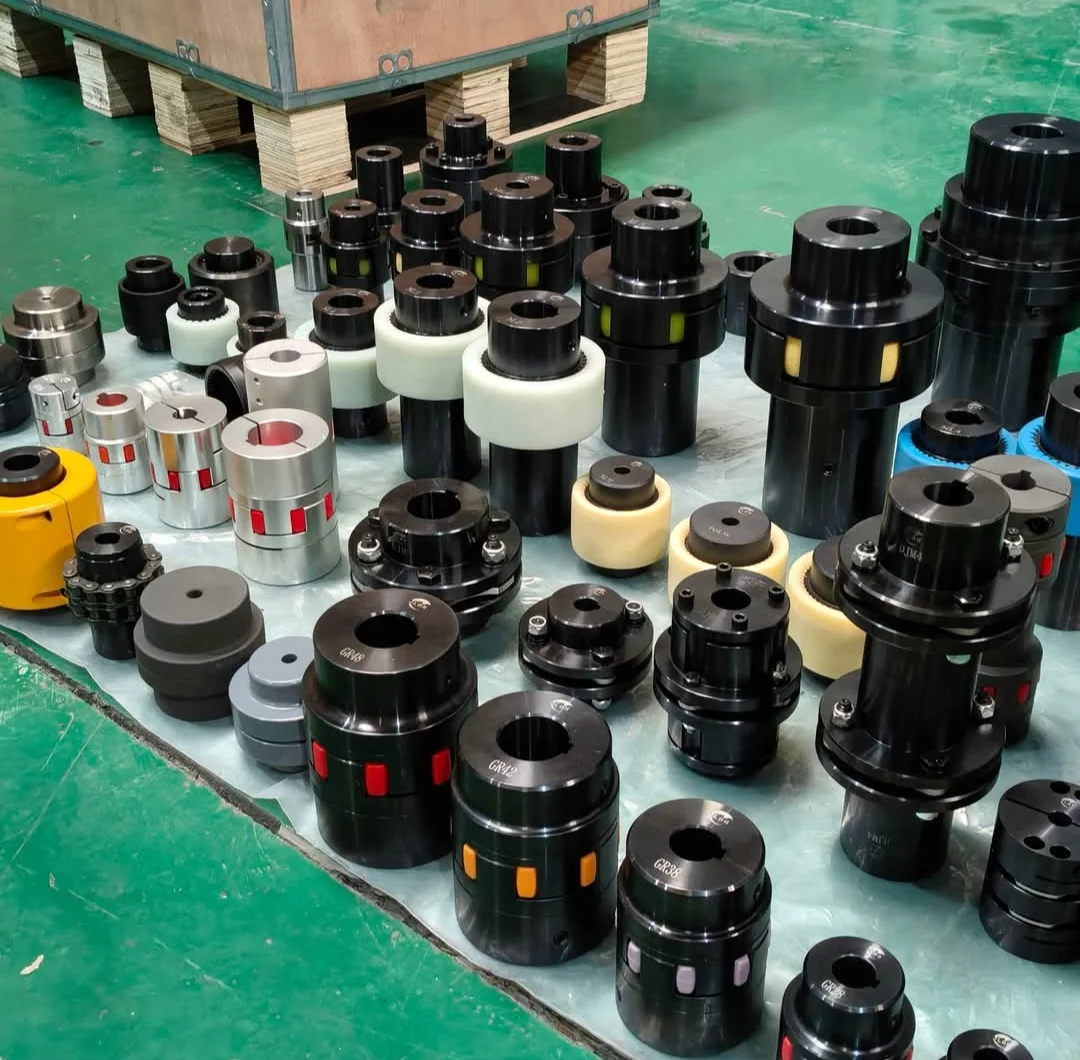
When engineers source components from Spider coupling Factories, the primary concern is rarely just the unit price, but rather the precision of torque transmission and the ability to handle shaft misalignment. In high-performance drive systems, the choice of a coupling can be the difference between a system that operates with micron-level accuracy and one plagued by vibration and premature bearing failure. Understanding the structural integrity and material science behind these components is critical for ensuring long-term operational stability.
The industrial demand for high-precision movement has shifted focus toward zero-backlash solutions. While traditional elastic couplings provide dampening, advanced systems now require the torsional rigidity and absolute positioning found in specialized series like the SDM Diaphragm Coupling. These components are essential for synchronizing servo motors and encoders, where any rotational play would result in unacceptable positioning errors in CNC machinery or robotics.
Evaluating the technical capabilities of a manufacturer involves analyzing their production control, testing standards, and the specific performance metrics of their product range. This guide examines the critical factors in selecting high-precision couplings, from material fatigue strength to thermal tolerance, providing a technical framework for those seeking reliable Spider coupling Factories to optimize their industrial transmission systems.

The Mechanics of High-Precision Coupling Transmission

High-precision transmission relies on the ability of a coupling to maintain a rigid connection while compensating for misalignment. In the case of the SDM series, this is achieved through the elastic deformation of stainless steel diaphragm groups. These diaphragms allow for axial, radial, and angular offsets without introducing rotational slippage, ensuring that the input torque is transferred to the output shaft with absolute fidelity.
The integration of an anodized aluminum alloy center sleeve further enhances this mechanism by reducing the rotational inertia of the assembly. This is particularly vital in bidirectional movements where frequent acceleration and deceleration occur. By minimizing the mass of the coupling, the system can achieve faster response times and reduce the mechanical stress on the motor's drive shaft.
Critical Factors Determining Coupling Operational Longevity
The service life of a coupling is primarily dictated by its fatigue strength and resistance to environmental degradation. For couplings used in high-cycle applications, the use of pre-stretched stainless steel is essential to avoid premature failure. This material ensures the diaphragm can withstand over 10 million cycles of deformation, which is a prerequisite for components integrated into 24/7 automated production lines.
Operational longevity is maximized when the coupling's balance grade meets ISO 1940 standards, such as G6.3, which eliminates vibration at high rotational speeds up to 10,000 RPM, directly extending the lifespan of connected bearings and seals by approximately 30%.
Furthermore, the protective surface treatment of the housing plays a decisive role in harsh industrial environments. Anodized aluminum surfaces provide critical resistance against acid and alkali corrosion, meeting IP54 protection standards. This ensures that the coupling does not become a point of failure due to surface oxidation when exposed to chemical vapors or humidity in pharmaceutical or chemical processing plants.
Strategic Value of Zero-Backlash Performance
In the context of precision engineering, backlash refers to the lost motion between mating parts. For standard couplings, this play can introduce positioning errors that compound over the length of a lead screw or gear train. Zero-backlash performance, achieved through rigid diaphragm deformation, eliminates this clearance entirely, allowing for immediate torque response.
The strategic value of zero-backlash is most evident in CNC equipment and 3D printing, where the absolute synchronization between the servo motor and the encoder is non-negotiable for maintaining dimensional tolerances.
Beyond precision, the absence of mechanical friction parts in these high-end designs removes the need for lubrication. This maintenance-free characteristic significantly reduces operational downtime and eliminates the risk of lubricant contamination in cleanroom environments, making these couplings the preferred choice for advanced robotics and semiconductor manufacturing.
Comparative Analysis of Torque and Speed Metrics
Selecting the correct coupling requires a quantitative analysis of the expected rotational speed versus the required torque range. High-speed applications require a low-inertia design to prevent centrifugal instability, while heavy-duty tasks demand higher torsional rigidity to prevent twisting under load.
The SDM series demonstrates a versatile performance envelope, supporting torque ranges from 0.25Nm for light encoder loads up to 100Nm for heavy-duty industrial drives, while maintaining stability at speeds that far exceed standard elastic couplings.
Max Rotational Speed (RPM) by Coupling Series
Application Framework for Servo and Encoder Systems
The primary application of precision diaphragm couplings is in the interface between a servo motor and its feedback encoder. Because the encoder must provide an exact reflection of the motor's shaft position, any angular deviation or radial play in the coupling would result in a "ghost" error in the control loop. By utilizing a clamp-style fastening system, the SDM series ensures a secure, centered connection that eliminates these positioning discrepancies.
Beyond servo systems, these couplings are deployed in laser engraving and high-precision medical imaging equipment. In these scenarios, the ability to operate across extreme temperatures—ranging from -50℃ to +250℃—ensures that the system remains calibrated regardless of the thermal expansion of surrounding components, maintaining a consistent balance grade of G6.3 throughout the operating cycle.
Evolutions in Diaphragm and Elastic Coupling Tech
The transition from traditional rubber-based elastic couplings to metal diaphragm systems represents a move toward higher rigidity and lower maintenance. While rubber pads are excellent for vibration dampening in low-speed applications, they suffer from thermal degradation and hysteresis. Metal diaphragms solve this by providing a predictable, linear elastic response.
Recent innovations in aluminum alloy anodization have further improved the surface hardness of coupling hubs, reducing the wear caused by repeated clamp adjustments. This evolution allows for faster integration and easier shaft adjustments during the initial machine setup, reducing the time required for system commissioning.
As industry 4.0 pushes toward higher speeds and tighter tolerances, the focus is shifting toward "intelligent" pairing—matching the coupling's specific axial and radial compensation limits (such as ±0.08 to ±0.9mm axial compensation) exactly to the tolerances of the bearings used in the drive train to minimize parasitic loads.
Addressing Integration Challenges in Complex Drives
Integrating a high-precision coupling into a complex drive system often reveals hidden misalignment issues. The most common challenge is "over-constraining" the system, where a coupling that is too rigid transmits all misalignment forces directly into the motor bearings, causing premature failure. The SDM series addresses this by providing calibrated elastic deformation.
Another critical consideration is the overload capacity. During emergency stops or system jams, a coupling must be able to handle instantaneous torque spikes. The SDM series is engineered for a 200% instantaneous torque overload capacity, protecting the more expensive servo motor from catastrophic shaft shear.
Finally, procurement teams must balance the initial investment against the total cost of ownership. While precision couplings have a higher upfront cost than basic spider couplings, the elimination of lubrication and the 30% extension of bearing life create a significant return on investment over the equipment's service life.
Precision Coupling Selection Matrix
| Metric | Standard Elastic | SDM Diaphragm | Selection Priority |
|---|---|---|---|
| Backlash | Measurable Play | Absolute Zero | Positioning Accuracy |
| Maintenance | Regular Lubrication | Zero Maintenance | Downtime Reduction |
| Max Speed | Moderate | Ultra High (10k) | Dynamic Stability |
| Bearing Life | Standard Wear | +30% Extension | System Longevity |
| Temp Range | Limited (Rubber) | -50℃ to +250℃ | Extreme Environments |
| Inertia | Medium/High | Very Low | Bidirectional Speed |
Frequently Asked Questions
Diaphragm couplings are preferred because they offer zero backlash and significantly higher torsional rigidity. In servo systems, any rotational play (backlash) results in positioning errors. The metal diaphragm ensures that the motor's movement is transmitted exactly to the encoder without any lost motion, which is critical for high-precision CNC and robotic applications.
The aluminum alloy construction reduces the overall mass and inertia of the coupling. Low inertia is critical for applications involving frequent forward and reverse rotations, as it reduces the load on the motor during acceleration and deceleration, thereby improving response time and reducing mechanical wear on the drive train.
No, the SDM series and similar high-precision diaphragm couplings are entirely maintenance-free. Because they utilize elastic metal deformation rather than sliding or rolling mechanical friction parts, there is no requirement for lubrication throughout their entire service life, which can exceed 100,000 hours.
The G6.3 balance grade, according to ISO 1940 standards, indicates a high level of rotational symmetry. This ensures that the coupling does not induce vibration even at speeds up to 10,000 RPM. Reducing vibration is essential for protecting the bearings of the motor and the connected equipment, extending their operational lifespan by approximately 30%.
They handle misalignment through the elastic deformation of the stainless steel diaphragms. This allows the coupling to compensate for axial deviations (±0.08 to ±0.9mm), radial deviations (0.03 to 0.55mm), and angular deviations (1 to 1.5°), preventing these misalignments from exerting damaging forces on the motor and encoder bearings.
Yes, the use of anodized aluminum alloy for the body and stainless steel for the diaphragms provides strong resistance to acid and alkali corrosion. This allows the couplings to meet IP54 protection standards, making them suitable for use in the chemical, petroleum, and pharmaceutical industries.
Conclusion
The transition toward zero-backlash and low-inertia transmission is a necessity for modern industrial automation. By prioritizing fatigue strength, balance grades, and precise misalignment compensation, engineers can significantly enhance the stability and accuracy of their servo-driven systems. The strategic selection of a coupling—balancing torque capacity with rotational speed—directly impacts the total lifecycle cost and the operational reliability of the entire machine.
For organizations seeking to optimize their transmission precision, partnering with a manufacturer that maintains end-to-end production control and rigorous QC standards is essential. To explore high-performance coupling solutions tailored to your specific torque and speed requirements, you are invited to review the technical specifications at www.binhaocoupling.com for detailed integration support.
Related Posts