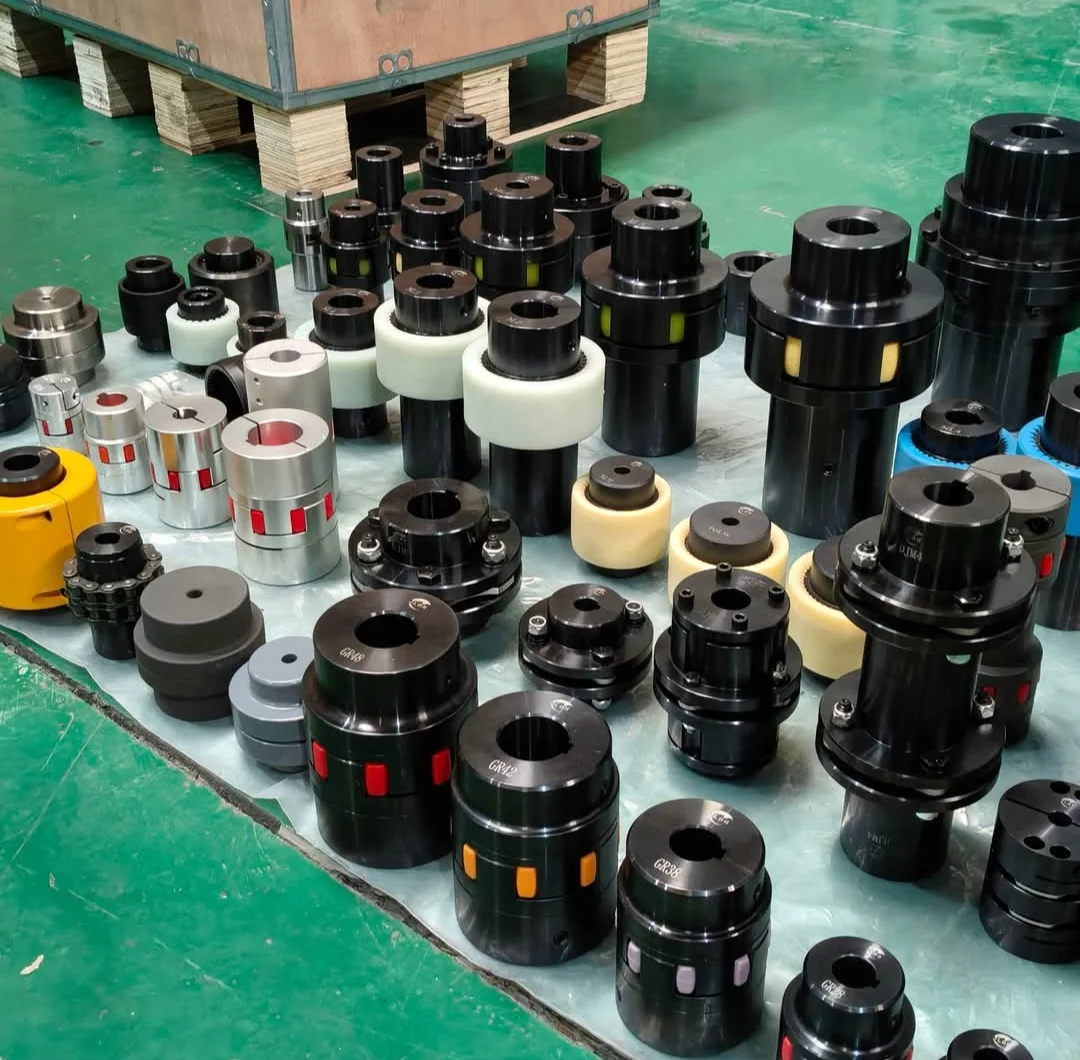
In the demanding world of industrial power transmission, the Rubber coupling serves as a critical bridge between energy sources and machinery. By utilizing the inherent flexibility of elastomeric materials, these components are designed to transmit torque while absorbing the shocks and vibrations that naturally occur during high-speed operations. Understanding the mechanics of these couplings is essential for any plant manager looking to reduce downtime and extend the lifespan of expensive rotating equipment.
The global shift toward high-precision manufacturing and automation has placed a renewed emphasis on the role of the Rubber coupling in maintaining system alignment. Whether it is mitigating the impact of sudden load spikes or compensating for minor axial and angular misalignments, these flexible connectors prevent catastrophic failures in drive trains. Their ability to operate without the need for complex lubrication makes them a sustainable and cost-effective choice for a wide range of industrial environments.
Beyond simple connectivity, the integration of advanced polymers has transformed the Rubber coupling from a basic accessory into a precision engineering tool. By balancing stiffness and damping, these couplings protect bearings and motors from premature wear, ensuring that production lines remain operational under varying stress levels. This guide explores the technical nuances, global applications, and future trajectories of flexible rubber-based transmission solutions.

Global Relevance of Rubber Coupling Systems
From a global perspective, the reliance on Rubber coupling technology is intrinsically linked to the growth of the worldwide manufacturing sector. According to industrial standards aligned with ISO guidelines, the reduction of vibration in rotating machinery can increase energy efficiency by up to 15%. In regions like Southeast Asia and Central Europe, where heavy industrialization is peaking, the demand for reliable vibration dampening has made these couplings a staple in every pump, compressor, and conveyor system.
The primary challenge these systems address is the inevitable misalignment between a driver (motor) and a driven component. Without a flexible interface, rigid connections would lead to rapid bearing failure and shaft breakage, causing massive economic losses due to unplanned outages. By implementing a high-quality Rubber coupling, industries can ensure a smoother transition of power, protecting the integrity of the entire mechanical chain across diverse climatic conditions.
Technical Definition and Industrial Role
In simple technical terms, a Rubber coupling is a mechanical device used to connect two shafts together at their ends for the purpose of transmitting power. Unlike rigid couplings, these utilize a flexible elastomer—such as natural rubber, neoprene, or polyurethane—to create a "cushion" that absorbs torsional shocks and compensates for parallel or angular misalignment. This flexibility is what allows the system to handle the dynamic stresses of starting and stopping heavy loads.
In the context of modern industry, these components serve as the "shock absorbers" of the machine world. For humanitarian needs, such as the operation of water purification plants in remote areas or the maintenance of power grids in developing nations, the simplicity and low maintenance of rubber-based solutions are invaluable. They eliminate the need for precision laser alignment in every single installation, making them accessible for rapid deployment in critical infrastructure projects.
Furthermore, the industrial role of the Rubber coupling extends to noise reduction. In urban industrial zones, reducing the acoustic footprint of machinery is often a regulatory requirement. The damping properties of the rubber element effectively mute the high-frequency vibrations that would otherwise travel through the metal frames of the machinery and into the surrounding environment.
Core Components and Performance Factors
The durability of a Rubber coupling is primarily determined by the quality of the elastomer and the precision of the metal hubs. The metal hubs, usually made of cast iron or aluminum, provide the structural rigidity needed to hold the shafts, while the rubber insert handles the flexibility. When these two components are engineered with tight tolerances, the resulting coupling can withstand millions of cycles without fatigue.
Cost efficiency is another critical factor. By choosing a Rubber coupling, companies reduce their long-term operational expenditure (OPEX). The ease of replacing a worn rubber insert—without having to disassemble the entire drive train—means that maintenance windows are shortened and labor costs are significantly lowered compared to gear or diaphragm alternatives.
Scalability and adaptability are achieved through a variety of rubber hardness levels (Durometer). Depending on whether the application requires high torque transmission with minimal flexibility or low torque with maximum shock absorption, the elastomer can be tuned. This makes the Rubber coupling versatile enough for everything from small HVAC fans to massive industrial mixers.
Comparative Analysis of Coupling Efficiency
When comparing different flexible coupling methods, the Rubber coupling often outperforms rigid options in terms of vibration isolation. While a rigid coupling provides the highest torque capacity, it offers zero forgiveness for misalignment, which can lead to shaft shearing. Rubber-based solutions provide a middle ground, offering sufficient torque for most general-purpose applications while ensuring a "fail-safe" mechanism where the rubber element wears out before the expensive motor shaft does.
The efficiency of these systems is measured by their ability to maintain torque while minimizing energy loss through heat. Modern high-performance elastomers have reduced the "hysteresis" (energy loss) associated with rubber, allowing these couplings to operate at higher RPMs without overheating, thus bridging the gap between low-cost rubber solutions and high-end metallic flexible couplings.
Performance Metrics of Various Coupling Methods
Real-World Applications and Use Cases
In the mining and mineral processing industry, the Rubber coupling is indispensable for driving heavy-duty conveyor belts. These systems often face extreme shock loads when large rocks hit the belt; the rubber element absorbs this energy, preventing the shock from traveling back into the electric motor and causing a winding failure.
Similarly, in remote industrial zones like offshore oil rigs or wind farm nacelles, ease of maintenance is a priority. Using a Rubber coupling allows technicians to perform quick replacements without specialized alignment tools, ensuring that energy production is maintained even in the most isolated environments on earth.
Long-Term Value and Reliability Benefits
The tangible benefits of investing in high-grade Rubber coupling systems manifest in the longevity of the entire asset. By isolating the motor from the driven load, the coupling reduces the stress on the motor's bearings and seals. This logical approach to system design results in a significant extension of the mean time between failures (MTBF), providing peace of mind to operators and increasing the overall reliability of the plant.
From an emotional and safety perspective, these couplings offer an essential layer of protection. In the event of a severe mechanical jam, a rubber element is designed to fail (shear) before the shaft snaps or the motor burns out. This "mechanical fuse" functionality prevents catastrophic accidents and ensures that workers are not exposed to the dangers of flying metal shards during a high-energy failure.
Moreover, the sustainability of the Rubber coupling is improving. The move toward recyclable elastomers and the reduction of petroleum-based additives in rubber manufacturing mean that these components are becoming more eco-friendly. This allows companies to meet their ESG (Environmental, Social, and Governance) targets without sacrificing the technical performance of their power transmission systems.
Future Innovations in Elastomeric Materials
The future of the Rubber coupling lies in the intersection of material science and digital transformation. We are seeing the emergence of "smart couplings" that incorporate embedded sensors within the rubber element. These sensors can monitor temperature and deformation in real-time, alerting maintenance teams via IoT platforms before the rubber fails, shifting the paradigm from reactive to predictive maintenance.
Furthermore, the development of nano-composite rubbers is increasing the torque density of flexible couplings. By adding carbon nanotubes or graphene to the elastomer, engineers are creating Rubber coupling elements that are significantly stronger and more heat-resistant, allowing them to replace heavier metallic couplings in high-load applications.
As the world transitions toward green energy, the role of these couplings in electric vehicle (EV) drivetrains and hydrogen compressors is expanding. The need for silent, efficient, and vibration-free power transmission makes advanced rubber-based solutions the primary choice for the next generation of sustainable industrial machinery.
Comparison of Rubber Coupling Material Characteristics
| Material Type | Damping Capacity | Chemical Resistance | Operating Temp Range |
|---|
| Natural Rubber | Excellent (9/10) | Low | -40°C to 70°C |
| Neoprene | Good (7/10) | Medium | -30°C to 100°C |
| Polyurethane | Moderate (6/10) | High | -20°C to 110°C |
| Nitrile (NBR) | Good (8/10) | Excellent (Oil) | -30°C to 120°C |
| Silicone | Moderate (5/10) | Medium | -60°C to 200°C |
| EPDM | Good (7/10) | Excellent (Weather) | -50°C to 150°C |
FAQS
The main advantages of a Rubber coupling are vibration damping and the ability to handle misalignment without lubrication. Gear couplings are excellent for extremely high torque but are rigid and require constant greasing. Rubber couplings protect the motor from shocks and are significantly cheaper to maintain, making them ideal for general-purpose industrial machinery.
Replacement intervals depend on the load, RPM, and environment. Typically, an elastomeric element should be inspected every 6-12 months. Signs of wear include visible cracking, "powdering" of the rubber, or increased vibration in the system. Replacing the rubber element proactively prevents the risk of total drive failure and protects the shafts from damage.
Standard natural rubber may degrade at high temperatures, but specialized Rubber coupling materials like Silicone or EPDM can withstand temperatures up to 150°C or 200°C. When selecting a coupling for high-heat areas, it is crucial to check the material's thermal rating to avoid premature softening or melting of the elastomer.
The most common causes are excessive misalignment beyond the coupling's design limits, exposure to incompatible chemicals (like oil on natural rubber), and overheating. When the misalignment is too great, the rubber is subjected to constant bending stress, leading to fatigue cracks. Using the correct material for the specific environment is key to longevity.
Yes, provided the coupling is correctly sized. By increasing the diameter and using high-durometer (harder) polyurethane or reinforced rubber, a Rubber coupling can handle substantial torque. However, for extremely heavy industrial loads, a hybrid approach or a larger-frame flexible coupling is recommended to ensure safety.
Choose a softer rubber (lower durometer) if your primary goal is shock absorption and vibration isolation. Choose a harder rubber (higher durometer) if you need higher torque transmission and more precise rotational stability. Most manufacturers provide a range of inserts for the same hub to allow for this fine-tuning based on operational needs.
Conclusion
The Rubber coupling remains a cornerstone of modern mechanical engineering due to its unique ability to marry power transmission with protective flexibility. By effectively dampening vibrations, compensating for misalignment, and acting as a mechanical fuse, these components ensure that industrial systems operate with maximum efficiency and minimum risk. From the choice of material—whether natural rubber for damping or polyurethane for strength—to the integration of smart monitoring, the value of these couplings is found in their ability to protect the most expensive parts of a production line.
Looking forward, the shift toward smarter materials and sustainable manufacturing will only enhance the role of flexible couplings in the global industry. For companies seeking to optimize their machinery's lifespan and reduce unplanned downtime, investing in high-quality elastomeric solutions is a strategic necessity. We encourage engineers and procurement managers to evaluate their current drive train health and consider the long-term reliability benefits of upgraded coupling systems. Visit our website for professional guidance and high-performance solutions: www.binhaocoupling.com