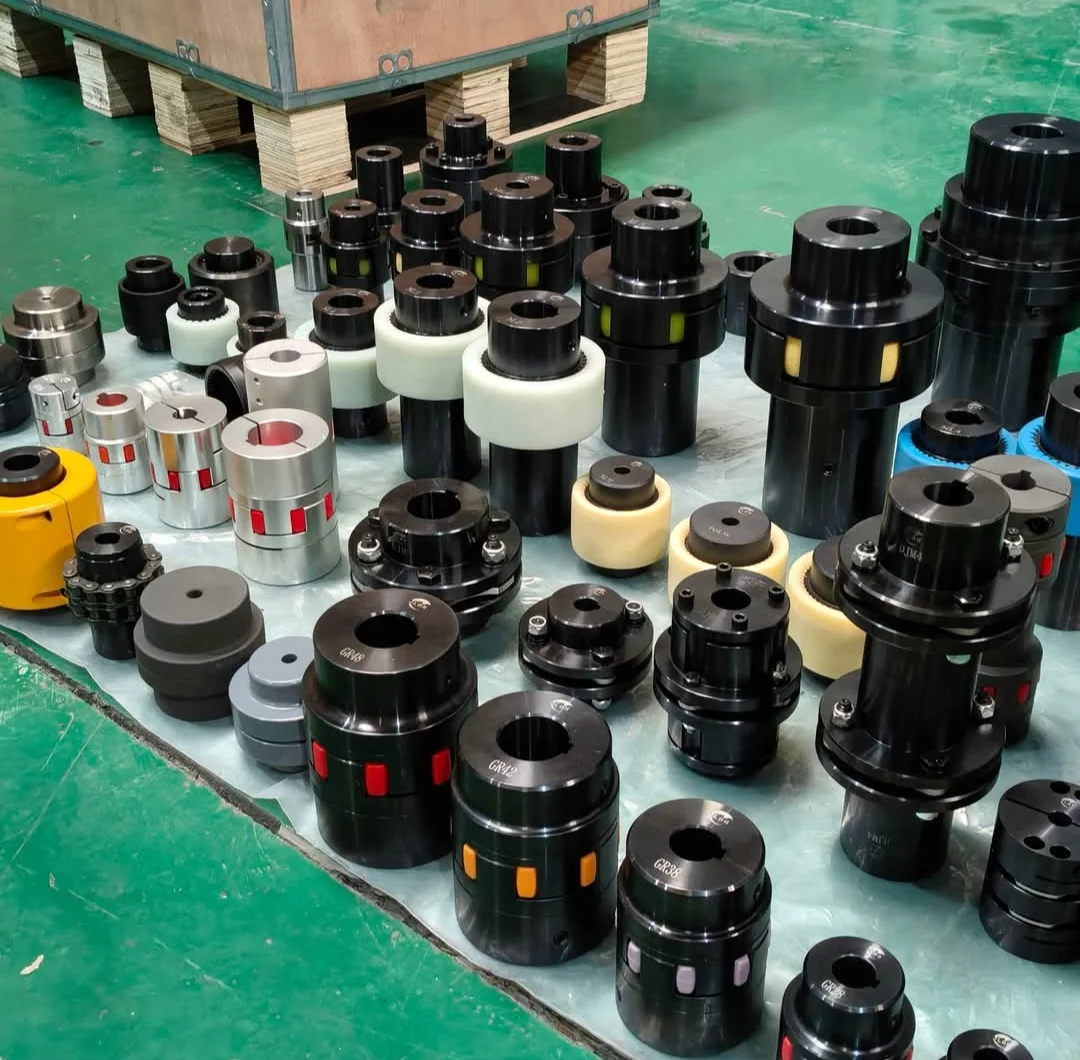
In the demanding world of industrial power transmission, selecting the right coupling is critical for equipment longevity and operational efficiency. Among the various options, rubber jaw coupling types have emerged as a gold standard for applications requiring a balance between structural rigidity and vibration dampening. By utilizing an elastic insert to bridge two hubs, these couplings safeguard expensive machinery from the destructive forces of misalignment and shock loads.
Understanding the specific mechanics of rubber jaw coupling types is essential for engineers and maintenance managers who aim to reduce downtime. These components are not merely connectors; they act as mechanical fuses and shock absorbers, converting kinetic energy from impacts into heat through the elastic deformation of the rubber pad. This prevents the transfer of harmful vibrations to motors and reducers, ensuring a smoother operational cycle.
Across the global manufacturing landscape, from water treatment plants to conveyor systems, the versatility of rubber jaw coupling types makes them indispensable. Whether dealing with small-scale stirring equipment or medium-torque fans, these couplings provide a cost-effective solution that simplifies installation and maintenance while maintaining high reliability in temperatures up to 80°C.

The Structural Mechanics of Rubber Jaw Coupling Types
The fundamental design of rubber jaw coupling types relies on a three-piece assembly. Two high-strength cast iron hubs are designed with interlocking "jaws," and an annular rubber elastic pad is embedded between them. This specific configuration ensures that the torsional rigidity is maintained by the cast iron, while the elasticity is provided by the rubber element, creating a stable yet flexible connection.
By utilizing high-strength cast iron for the main body, these couplings offer significant structural stability. The rubber pad serves as the core elastic element, which not only transmits torque but also absorbs energy. This simple yet effective structure is what allows these couplings to be widely adopted in general equipment manufacturing where extreme precision is less critical than overall durability and ease of assembly.
Core Buffering and Vibration Reduction Capabilities
One of the most significant advantages of rubber jaw coupling types is their ability to mitigate the impact of sudden load changes. In many industrial systems, motors and reducers are subject to "shock loads" during startup or under varying loads. The rubber pad within the coupling undergoes elastic deformation, effectively acting as a cushion that prevents these spikes from reaching and damaging the sensitive internal components of the connected machinery.
Beyond impact protection, these couplings are highly effective at reducing operational noise. In environments such as fan rooms or pump stations, the constant hum of mechanical transmission can lead to structural fatigue and an unpleasant working environment. The rubber elements in these jaw couplings dampen high-frequency vibrations, leading to a quieter operation and extending the life of the bearings and seals.
This buffering capacity is essential for protecting the drive train. By absorbing the energy of the vibration, rubber jaw coupling types reduce the wear and tear on shafts and keys. This proactive protection means that the intervals between major overhauls are extended, lowering the total cost of ownership for the end-user.
Displacement Compensation in Rubber Jaw Coupling Types
Precision alignment is often a challenge in real-world industrial installations. rubber jaw coupling types provide a critical safety margin by compensating for three primary types of misalignment: angular, radial, and axial. This ensures that even if the motor and the driven equipment are not perfectly aligned, the system can still operate without generating excessive stress.
Specifically, these couplings can compensate for an angular deviation of up to 1°, a radial (parallel) offset of approximately 0.5mm, and a small degree of axial expansion and contraction. This axial flexibility is particularly important for accommodating thermal expansion, where shafts may grow slightly in length as they heat up during prolonged operation.
Without this compensation capacity provided by rubber jaw coupling types, any misalignment would result in severe bending moments on the shafts. Such stress would lead to premature failure of bearings and potentially cause the shafts to snap under high torque, making the elastic pad a vital component for system reliability.
Performance Metrics for Medium Torque Transmission
When evaluating the suitability of rubber jaw coupling types, it is important to note that they are optimized for medium and small torque transmissions. Their performance is ideal for equipment such as water pumps, mixers, and conveyor belts where the load is consistent and does not reach the extreme thresholds required for heavy-duty gear couplings.
The effectiveness of these couplings is measured by their ability to maintain torsional rigidity while providing dampening. While they cannot compete with high-speed precision couplings in extreme RPM environments, they offer the best "performance-to-cost" ratio for the vast majority of general industrial applications.
Performance Ratings of Various Rubber Jaw Coupling Types Applications
Cost-Efficiency and Maintenance Advantages
From a financial perspective, rubber jaw coupling types are among the most economical choices available. The use of cast iron for the hubs keeps the initial procurement cost low without sacrificing the structural integrity needed for medium torque. Because the design is simple, the manufacturing process is streamlined, passing the savings on to the industrial operator.
Maintenance is where these couplings truly shine. Unlike complex couplings that require the complete disassembly of the drive train, replacing a worn rubber gasket in these jaw couplings is a straightforward process. By simply removing the bolts, the elastic pad can be swapped out without moving the motor or the reducer. This drastically reduces labor costs and minimizes production downtime during routine maintenance cycles.
Ideal Working Conditions and Environmental Limits
To maximize the lifespan of rubber jaw coupling types, it is crucial to operate them within their specified environmental parameters. The most critical limit is temperature; the long-term working temperature should not exceed 80°C. Since the core functionality depends on the elasticity of the rubber, excessive heat will accelerate the aging process, leading to hardening and eventual cracking of the pad.
Additionally, while these couplings are robust, they are not suited for high-torque or high-speed environments. In such cases, the centrifugal forces or the sheer amount of torque could cause the rubber pad to deform permanently or fail catastrophically. For these extreme scenarios, gear or diaphragm couplings would be more appropriate.
Regular inspection is the final piece of the operational puzzle. Because the rubber element is a wear part, it should be checked periodically for signs of fatigue or chemical degradation. Timely replacement of the elastic insert ensures that the rubber jaw coupling types continue to protect the connected equipment from vibration and misalignment.
Comparative Analysis of Industrial Application Scenarios
The deployment of rubber jaw coupling types varies significantly across different machinery. In water pump systems, the primary goal is often the absorption of hydraulic shock and the compensation for slight pump-motor misalignment. Here, the durability of the cast iron hubs combined with the flexibility of the rubber pad ensures consistent flow and reduced bearing wear.
In contrast, for conveyor belt systems, the priority is often handling the startup torque and mitigating the vibrations caused by the belt's movement. The jaw coupling's ability to buffer these initial surges prevents the motor from overheating and protects the gearbox from sudden impact loads, making it a highly reliable choice for logistics and mining sectors.
Ultimately, the choice of these couplings depends on a trade-off between cost, torque requirements, and environmental conditions. As summarized in the table below, the specific strengths of rubber jaw coupling types make them the ideal fit for general-purpose machinery where ease of maintenance and vibration control are prioritized over extreme high-speed precision.
Technical Suitability Matrix for Rubber Jaw Coupling Types
| Application Type | Torque Level | Vibration Risk | Suitability Score (1-10) |
|---|
| Centrifugal Fans | Small to Medium | Moderate | 9 |
| Water Pumps | Medium | High (Hydraulic) | 10 |
| Industrial Mixers | Medium | Moderate | 8 |
| Conveyor Drives | Medium | High (Impact) | 9 |
| High-Speed Turbines | High | Low | 3 |
| Heavy Crushers | Extreme | Very High | 4 |
FAQS
The rubber pad serves as the elastic element that provides buffering and vibration reduction. It absorbs impact loads during transmission, reduces operational noise, and allows the coupling to compensate for angular and radial misalignments, which protects the connected motor and reducer from premature wear or damage.
These couplings are designed to compensate for an angular deviation of ≤1° and a radial (parallel) offset of approximately 0.5mm. They also allow for a small amount of axial expansion and contraction to accommodate thermal changes or installation errors.
While there isn't a specific "replacement temperature," the long-term working temperature should not exceed 80°C. If the environment consistently exceeds this limit, the rubber will age rapidly, harden, and lose its elasticity, necessitating more frequent inspections and replacements to avoid failure.
No, rubber jaw coupling types are specifically designed for medium and small torque transmissions. For high-torque, high-speed, or extreme temperature environments, other coupling types—such as gear or diaphragm couplings—are recommended to ensure structural safety and transmission efficiency.
Maintenance is very simple. Because of the jaw design, you can replace the rubber gasket simply by removing the mounting bolts. There is no need to move the main body of the equipment or realign the entire drive train, making it a highly efficient maintenance process.
They are widely used in general equipment manufacturing, specifically in applications involving fans, water pumps, stirrers, mixers, and conveyor belts. Any industry requiring cost-effective, low-maintenance vibration dampening for medium-load machinery typically employs these couplings.
Conclusion
In summary, rubber jaw coupling types provide an essential blend of durability, flexibility, and cost-effectiveness for modern industrial power transmission. By effectively managing vibration, compensating for misalignment, and offering a simplified maintenance routine, these couplings ensure that medium-torque machinery operates smoothly and reliably. The synergy between high-strength cast iron and elastic rubber elements makes them a versatile choice for a wide array of general manufacturing applications.
Looking forward, the continued optimization of rubber materials may further extend the temperature and torque limits of these components, but their core value remains their accessibility and reliability. For engineers seeking to protect their equipment from the hidden costs of vibration and misalignment, investing in high-quality jaw couplings is a strategic move for long-term operational stability. Visit our website for more professional solutions: www.binhaocoupling.com