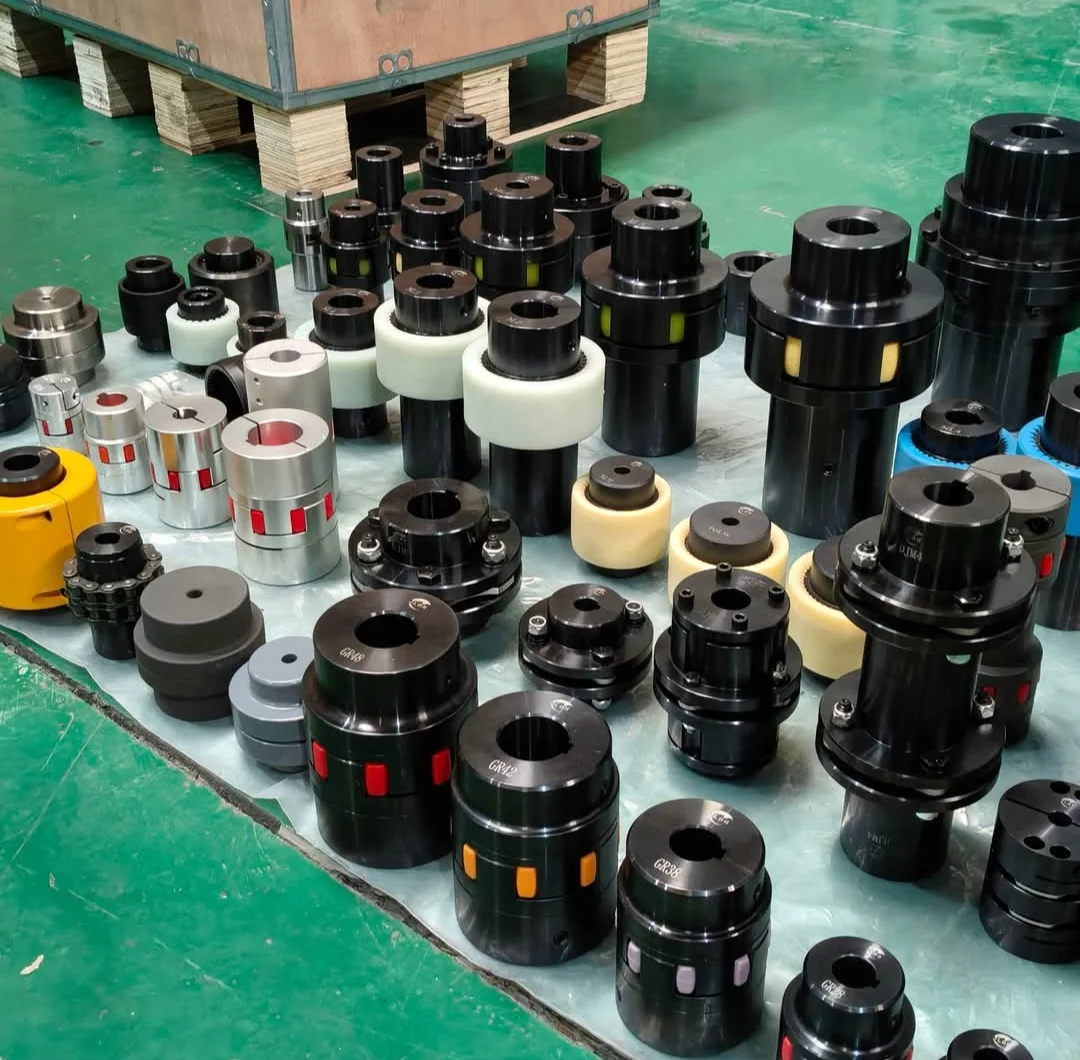
In the complex world of industrial power transmission, the demand for reliability and vibration control has led to a surge in the strategic procurement of rubber jaw coupling Wholesale solutions. These components serve as the critical link between motors and reducers, ensuring that torque is transmitted efficiently while protecting sensitive machinery from the destructive effects of misalignment and shock loads.
For global manufacturers, sourcing high-performance couplings in bulk is not merely a cost-saving measure but a strategic move to standardize maintenance cycles and reduce unplanned downtime. The transition toward advanced materials, such as Polyurethane GR elastomers, has redefined the expectations for durability and energy efficiency in heavy-duty manufacturing environments.
Understanding the technical nuances of the XL Spider Flexible Coupling series allows engineers to optimize their transmission systems for maximum lifespan. By prioritizing dampening capabilities and electrical insulation, businesses can significantly lower their operational costs and protect their long-term capital investments.

The Industrial Significance of rubber jaw coupling Wholesale
The global shift toward automation and high-precision manufacturing has placed immense pressure on power transmission components. Utilizing rubber jaw coupling Wholesale channels allows enterprises to secure a steady supply of high-performance couplers that mitigate the risks of mechanical failure. In industries ranging from food processing to heavy machinery, the ability to absorb impact loads is the difference between a seamless production run and a catastrophic system crash.
By adopting the XL Spider Flexible Coupling, companies can ensure a silent and energy-efficient connection between shafts. The integration of these couplings into large-scale industrial frameworks reduces the peak stress on motors by over 30%, effectively extending the service life of the entire drivetrain and reducing the frequency of expensive replacements.
Core Components and Material Science of XL Spider Couplings
At the heart of the XL series is the Polyurethane GR elastomer, a material specifically engineered for superior wear resistance and aging properties. Unlike standard rubber, this advanced elastomer provides a service lifespan of 30,000 to 50,000 hours, making it a premier choice for those seeking rubber jaw coupling Wholesale options that prioritize longevity over short-term cost.
The hub material is equally critical, with options for customizable aluminum alloy or steel. The aluminum alloy hubs are particularly noteworthy, as they are 60% lighter than their steel counterparts. This reduction in weight lowers the moment of inertia, which directly translates into a power saving of 1.5% to 3% for the overall system.
Together, these components create a "mechanical fuse" system. The elastic spider is designed to break preferentially during extreme overload events (typically at ≤ 150% of rated torque), thereby protecting the more expensive motor and reducer from permanent damage.
Critical Factors Driving Transmission Efficiency
To achieve peak operational performance, one must consider the damping capacity inherent in rubber jaw coupling Wholesale products. The ability of the Polyurethane GR elastomer to absorb vibrations during motor starts and gear meshing is paramount for maintaining shaft alignment and reducing mechanical wear.
Another critical factor is electrical insulation. With an insulation resistance exceeding 10¹²Ω, the XL Spider coupling effectively blocks shaft currents. This is a vital feature in modern industrial setups where electrical erosion can rapidly destroy critical bearings if not properly managed.
Finally, maintenance efficiency plays a massive role in the total cost of ownership. The lubrication-free design eliminates the risk of oil leakage and pollution, which is essential for clean-room environments. Moreover, the ability to replace the elastomer in just 10 minutes without moving the equipment reduces downtime losses by half.
Global Applications and Use Case Analysis
The versatility of rubber jaw coupling Wholesale solutions makes them indispensable across various sectors. In the medical and food industries, where contamination is a primary concern, the lubrication-free nature of the XL series ensures compliance with strict hygiene standards while keeping operating noise below 70dB(A).
In heavy-duty manufacturing zones, these couplings are utilized to bridge the gap between high-torque motors and industrial gearboxes. Their ability to handle rigorous operating conditions while reducing peak stress by 30% ensures that production lines remain stable even under fluctuating loads.
Performance Comparison of Transmission Methods
Long-Term Value and Economic Advantages
Investing in high-quality rubber jaw coupling Wholesale provides immediate and long-term financial returns. The reduction in installation costs by 40% is just the beginning; the real value lies in the prevention of catastrophic failures. By acting as a mechanical fuse, the XL Spider coupling prevents the need for entire motor replacements during an overload.
Furthermore, the energy savings associated with lightweight aluminum alloy hubs contribute to a lower carbon footprint and reduced electricity costs. When scaled across a factory with hundreds of drive units, a 3% energy saving per unit represents a significant impact on the bottom line and corporate sustainability goals.
Innovations in Vibration Damping and Insulation
The evolution of materials science has led to the development of Polyurethane GR, which offers a vastly superior balance of flexibility and hardness compared to traditional rubber. This innovation allows rubber jaw coupling Wholesale products to maintain their shape and damping properties even under continuous high-load stress, extending the service life up to 50,000 hours.
Digital transformation in manufacturing has also enabled more precise 3D design and custom fabrication. Designers can now provide detailed 3D drawings to ensure a perfect fit with existing equipment, reducing the trial-and-error phase of installation and ensuring that the coupling aligns perfectly with the shaft's center of rotation.
Moreover, the focus on electrical insulation as a standard feature reflects a deeper understanding of motor health. By blocking shaft currents, these couplings prevent the "pitting" effect in bearings, which is a common yet overlooked cause of bearing failure in VFD-driven (Variable Frequency Drive) systems.
Implementation Challenges and Expert Solutions
Despite the advantages, some firms struggle with the initial transition to advanced coupling systems. A common challenge is the misconception that all jaw couplings are identical. However, the difference between a standard rubber insert and a Polyurethane GR elastomer is profound in terms of heat resistance and load-bearing capacity.
To overcome this, professional engineering consultation is recommended. By analyzing the specific torque requirements and environmental conditions of a site, experts can recommend the optimal combination of hub material (Aluminum vs. Steel) and elastomer hardness to maximize the investment return.
Another challenge is the logistics of bulk procurement. To solve this, rubber jaw coupling Wholesale providers now offer rapid prototyping and custom brand integration, allowing companies to standardize their spare parts inventory with custom-logoed components that match their internal brand identity.
Investment Return Comparison: Traditional vs. XL Spider Flexible Couplings
| Performance Metric | Traditional Steel Couplings | XL Spider Flexible Coupling | Impact on ROI |
|---|
| Installation Cost | Standard Baseline | 40% Reduction | High Immediate Saving |
| Maintenance Needs | Periodic Lubrication | Zero Lubrication | Lower OpEx |
| Repair Downtime | High (Equipment Move) | Low (10-Min Swap) | Minimized Lost Revenue |
| Energy Consumption | Standard Inertia | 1.5% - 3% Saving | Sustainable Cost Reduction |
| Vibration Stress | High Transmission Peak | 30% Lower Peak Stress | Extended Machine Life |
| Service Lifespan | Variable/Lower | Up to 50,000 Hours | Long-term Asset Stability |
FAQS
Unlike gear couplings, which often require complex lubrication and are prone to wear from misalignment, the XL Spider coupling is completely lubrication-free. It offers superior vibration damping through the use of Polyurethane GR elastomers and provides critical electrical insulation to protect bearings from shaft currents, making it more versatile and lower-maintenance.
The coupling features a preset breaking torque of ≤ 150% of the rated torque. In the event of a sudden overload, the elastic spider is designed to break first. This allows it to act as a mechanical fuse, absorbing the energy of the surge and preventing the torque from reaching a level that would cause catastrophic failure in the motor or reducer.
Yes, they are ideal for these settings. Because the XL series is lubrication-free, there is zero risk of oil contamination in the production area. Additionally, with an operating noise level below 70dB(A), they contribute to a safer and quieter working environment, meeting the stringent requirements of medical and food-grade facilities.
Depending on the load and environmental conditions, the wear-resistant Polyurethane GR elastomer typically provides a service life ranging from 30,000 to 50,000 hours. This longevity significantly reduces the frequency of replacements compared to standard rubber couplings, providing better value for wholesale purchasers.
Aluminum alloy hubs are approximately 60% lighter than steel or cast iron hubs. This reduction in mass significantly lowers the moment of inertia of the rotating assembly. In practical industrial applications, this typically results in an energy saving of approximately 1.5% to 3%, which adds up to substantial costs over time.
One of the most significant advantages of the XL series is its efficiency of maintenance. Replacing the elastomer typically takes only 10 minutes. Because the spider is an external component of the assembly, the replacement can be performed without moving the main body of the equipment, drastically reducing downtime.
Conclusion
The strategic implementation of rubber jaw coupling Wholesale solutions, specifically the XL Spider Flexible Coupling, represents a critical upgrade for any industrial transmission system. By combining the damping power of Polyurethane GR elastomers with the energy efficiency of lightweight aluminum hubs and the security of electrical insulation, manufacturers can achieve a rare balance of performance, durability, and cost-effectiveness.
Looking forward, as industries move toward smarter, more autonomous operations, the need for maintenance-free and high-reliability components will only grow. Investing in high-specification couplings today not only secures current production stability but also prepares the infrastructure for the next generation of industrial efficiency. For those looking to optimize their drivetrain, the shift toward the XL series is a logical step toward long-term operational excellence. Visit our website: www.binhaocoupling.com