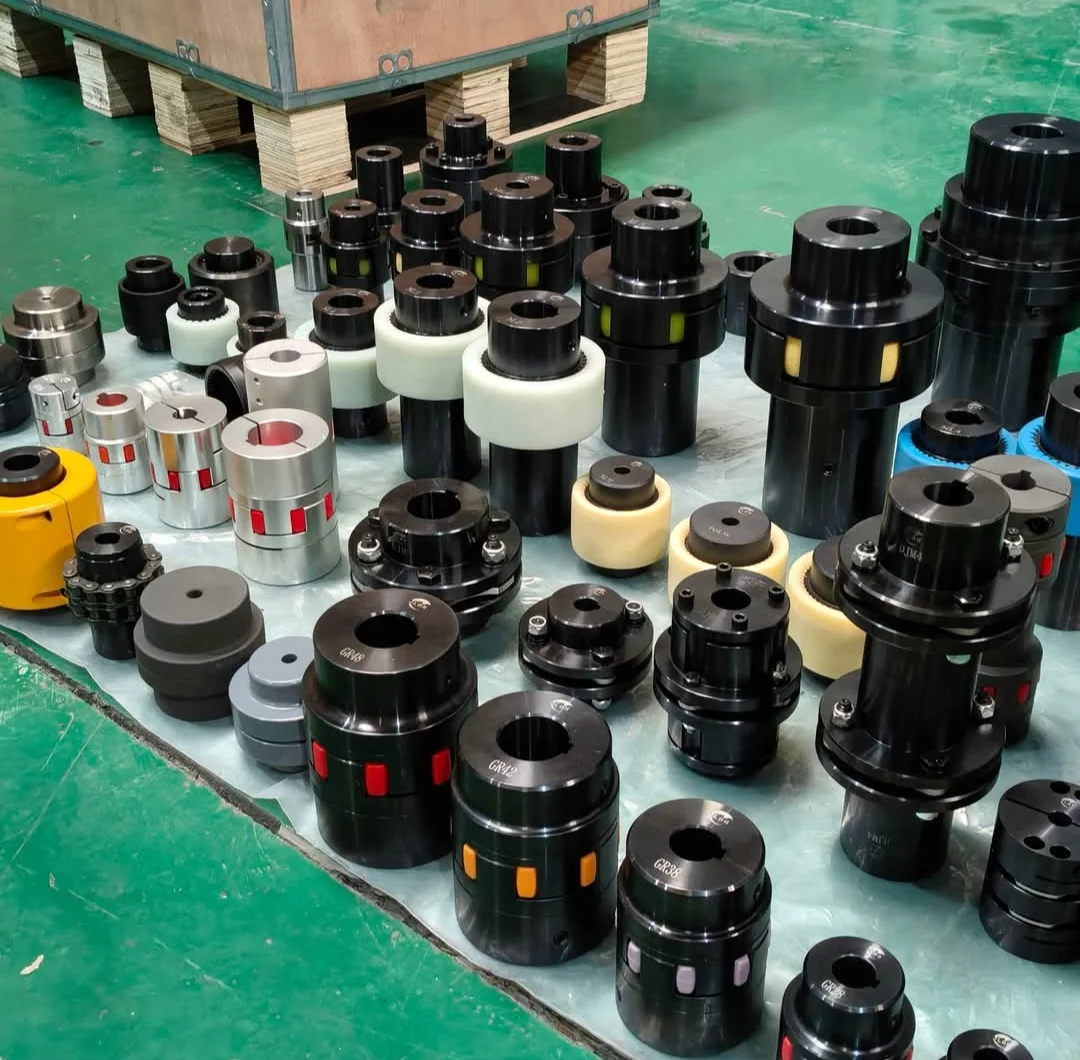
The global industrial landscape relies heavily on the precision of power transmission, where the role of specialized equipment providers is critical. When searching for reliable plum coupling manufacturers, engineers are typically looking for a balance between torsional rigidity and ease of maintenance. The efficiency of modern machinery depends on these components to ensure that torque is transferred without loss or dangerous backlash.
In the context of general equipment manufacturing, the shift toward zero-backlash solutions has highlighted the importance of high-precision clamping technology. While many seek the flexibility of elastic components, the demand for rigid, high-torque transmission has led to the rise of advanced clamping sleeve designs. These solutions address the critical need for stability in pumps, fans, and agitators across various industrial sectors.
Choosing the right partner among various plum coupling manufacturers involves analyzing the specific load requirements and installation constraints of a project. For those requiring rigid torque transmission, the JK, JQ, and JQW series offer a robust alternative to traditional elastic couplings, providing a secure bond and streamlined assembly process that minimizes operational downtime.

The Engineering Logic of Rigid Clamping Couplings
The JK, JQ, and JQW Clamping Sleeve Couplings are engineered for high-precision rigid torque transmission. Unlike flexible options often discussed by plum coupling manufacturers, these rigid couplings utilize a powerful clamping force to bond the half couplings to shaft ends. This ensures a stable, zero-backlash power transfer essential for synchronous transmission.
This design eliminates the need for traditional keyways, which can often create stress concentrations in the shaft. By utilizing a symmetrical semi-cylindrical structure and high-strength axial bolts, these couplings provide a 360-degree wrap-around grip, distributing torque evenly across the shaft surface for maximum reliability.
Core Components and Material Selection
The structural integrity of a clamping sleeve coupling depends heavily on its material composition. High-strength steel is the primary choice for heavy-duty industrial loads, allowing the coupling to handle torque ranges reaching up to 15,000 Nm. This ensures that the components do not deform under extreme torsional stress during critical operations.
For applications where weight reduction is a priority or where corrosion resistance is necessary, aluminum alloy serves as an ideal alternative. This material is frequently employed in light to medium-load machinery, providing a high strength-to-weight ratio that reduces the rotational inertia of the system.
The fastening mechanism is another core component, utilizing high-strength axial bolts to generate the necessary clamping force. This simplified fastening method allows for a secure fit that is resistant to slippage, provided that the correct torque settings are applied during the installation phase.
Comparing Clamping Sleeves to Elastic Designs
When evaluating the offerings of various plum coupling manufacturers, it is important to distinguish between elastic and rigid transmissions. Elastic couplings use a polymer insert to absorb shock and compensate for misalignment, whereas clamping sleeve couplings prioritize a direct metal-to-metal bond.
The primary advantage of the rigid clamping design is the total elimination of the torsional gap. While plum coupling manufacturers provide solutions for vibration dampening, the JK series is designed for scenarios where precision synchronization is paramount, removing the inherent backlash found in elastic inserts.
Furthermore, the space requirements differ significantly. Clamping sleeve couplings occupy a much smaller volume than equivalent elastic models. This compact footprint makes them the superior choice for confined industrial spaces where every millimeter of installation room is critical.
Operational Efficiency and Torque Performance
Operational efficiency in power transmission is measured by the ability to maintain torque consistency under varying loads. The JK series excels by providing a wide torque range from 10Nm to 15,000Nm, ensuring that whether the application is a small industrial fan or a heavy-duty agitator, the power transfer remains seamless.
Unlike the flexible solutions often cited by plum coupling manufacturers, these rigid couplings require strict precision alignment. However, the trade-off is a significant increase in transmission efficiency and the complete removal of maintenance requirements associated with elastic inserts.
Performance Comparison: Rigid Clamping vs. Elastic Options
Global Industrial Applications and Use Cases
Clamping sleeve couplings are widely deployed in general equipment manufacturing across the globe. In industrial pump stations and ventilation systems, where reliability is non-negotiable, these couplings provide the rigid link necessary for high-speed operation. Their ability to be disassembled axially without moving the surrounding equipment makes them invaluable in dense plant layouts.
Beyond standard factories, these components are critical in remote industrial zones and heavy-duty processing plants. Whether it is an agitator in a chemical reactor or a conveyor belt in a mining operation, the zero-lubrication design reduces the risk of contamination and lowers long-term operational costs compared to traditional geared or elastic options.
Maintenance Optimization and Downtime Reduction
One of the most significant pain points for plant managers is industrial downtime. Traditional couplings often require hours of labor to remove, involving the shifting of motors or pumps. The JK series solves this by allowing for single-person disassembly within 10 minutes, radically improving maintenance schedules.
Furthermore, the maintenance-free nature of these couplings is a game-changer. Because there are no sliding parts or elastic inserts to wear out, there is no need for periodic lubrication. This removes the cost of lubricants and the labor associated with grease intervals.
When compared to the maintenance cycles provided by most plum coupling manufacturers, the clamping sleeve's "install and forget" approach provides a higher return on investment by focusing resources on production rather than component upkeep.
Future Trends in Precision Power Transmission
The future of power transmission is leaning heavily toward digitalization and sustainability. We are seeing a trend where the integration of precision engineering with smarter material science allows for even higher torque densities in smaller frames. The move toward aluminum alloys in medium-duty applications reflects a global push for energy efficiency through weight reduction.
Automation is also influencing how plum coupling manufacturers and rigid coupling producers approach quality control. 360-degree wrap-around clamping accuracy is now being verified through rigorous digital gauging, ensuring that every unit delivered meets strict zero-backlash standards.
As industries move toward "Green Manufacturing," the elimination of lubricants in the JK series aligns perfectly with environmental goals. Reducing chemical waste and contamination risks makes these rigid solutions a sustainable choice for the next generation of industrial machinery.
Comparative Analysis of Coupling Technology Investment Return
| Feature Metric | Clamping Sleeve Coupling | Traditional Elastic Coupling | Impact on ROI |
|---|
| Installation Time | Under 10 Minutes | 30-60 Minutes | High Labor Saving |
| Maintenance Cost | Near Zero (No Lube) | Periodic Lube/Replace | Reduced OpEx |
| Transmission Gap | Zero Backlash | Torsional Gap Present | Higher Precision |
| Equipment Movement | Not Required | Often Required | Faster Downtime |
| Space Requirement | Ultra-Compact | Larger Footprint | Layout Optimization |
| Shaft Stress | Even Distribution | Keyway Concentrations | Extended Shaft Life |
FAQS
Clamping sleeve couplings provide a 360° wrap-around grip that distributes stress evenly across the shaft. This eliminates the need for keyways, which are traditional points of failure due to stress concentrations, thereby increasing the overall lifespan of the shaft and the coupling.
Because the JK series are rigid couplings without elastic elements, their ability to compensate for radial or angular displacement is very limited. Strict precision alignment of the two shafts is required during installation to prevent premature wear or mechanical failure.
They are widely used in general equipment manufacturing for pumps, fans, conveyor belts, and agitators. They are especially preferred in setups where space is limited and high torsional rigidity is needed for synchronous transmission.
Steel is recommended for heavy-duty applications requiring maximum torque up to 15,000 Nm. Aluminum alloy is ideal for light to medium loads where weight reduction, lower inertia, and corrosion resistance are the primary priorities.
No, the clamping sleeve coupling is designed to be entirely maintenance-free. There are no sliding parts, bearings, or elastic inserts that require lubrication or periodic replacement, reducing long-term operational costs.
Insufficient bolt tension can lead to slippage between the coupling and the shaft, resulting in torque loss or surface damage to the shaft. It is critical to use high-strength bolts and follow the manufacturer's specified torque settings during installation.
Conclusion
In summary, while plum coupling manufacturers provide essential flexible solutions, the JK, JQ, and JQW Clamping Sleeve Couplings offer an unparalleled alternative for those requiring rigid, zero-backlash transmission. By combining high-strength materials with a maintenance-free, compact design, these couplings significantly reduce industrial downtime and operational costs while enhancing transmission precision.
Looking forward, the integration of these rigid solutions into modern, streamlined industrial layouts will be key to achieving higher efficiency and sustainability. For engineers and plant managers aiming to optimize their power transmission systems, investing in high-precision clamping technology is a strategic move toward long-term reliability. Visit our website for more information: www.binhaocoupling.com