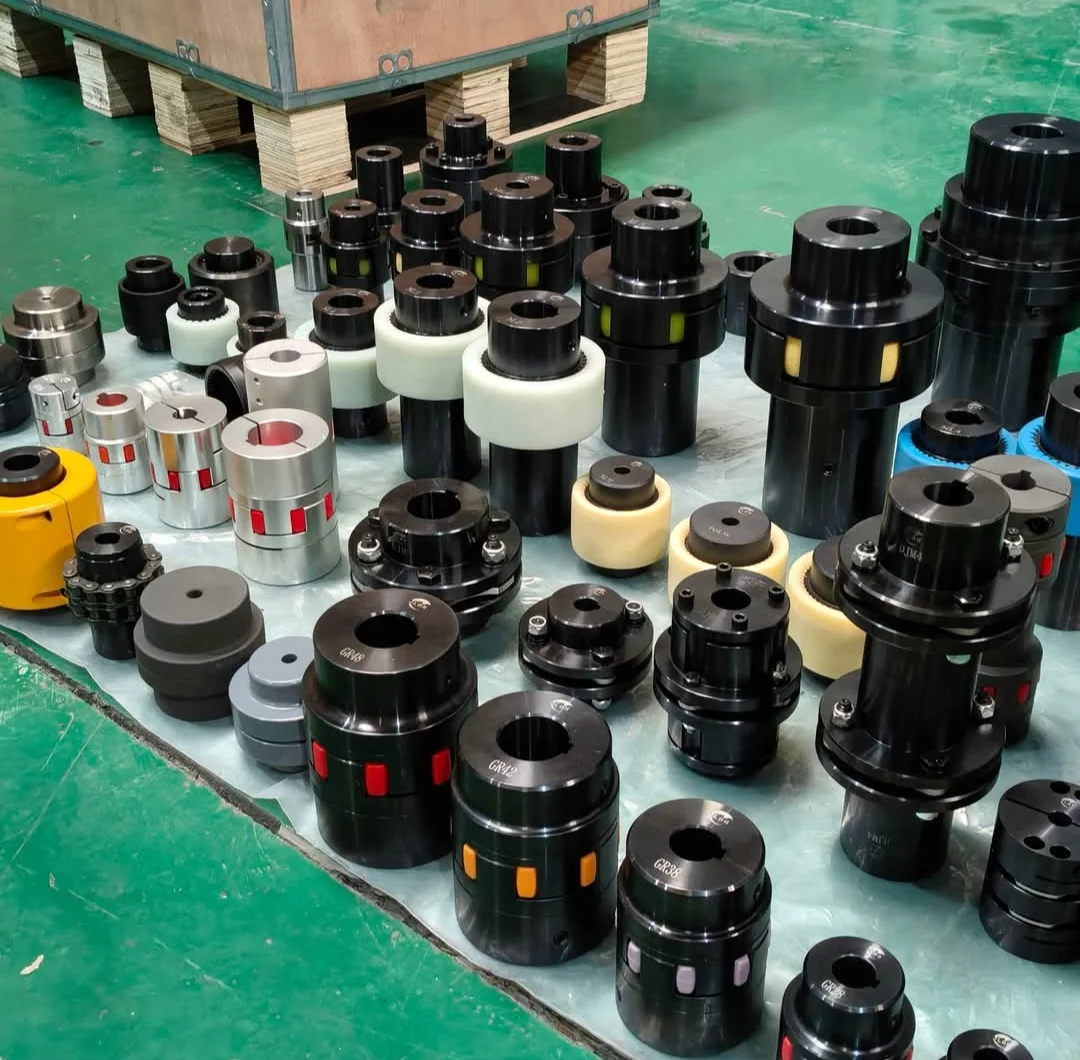
Selecting the right mechanical transmission components often comes down to a critical decision: which shaft coupling Suppliers can provide the necessary balance between torque capacity and alignment flexibility. In high-stress industrial environments, the coupling is not merely a connector but a vital safeguard for bearings and gearboxes.
For procurement managers in the general equipment manufacturing sector, the challenge lies in navigating a market saturated with generic options. The ability to secure components that adhere to strict standards, such as JB/T 5514-2022, can mean the difference between a system that lasts 30,000 hours and one that fails prematurely due to vibration fatigue.
This guide examines the technical criteria for evaluating suppliers, the performance trade-offs between different coupling architectures, and how integrated production control impacts the total cost of ownership for critical industrial machinery.

Evaluating Technical Capabilities of Coupling Manufacturers

When auditing potential partners, the first metric should be the level of in-house production control. Suppliers that maintain complete manufacturing of critical components within their own facilities, rather than outsourcing raw machining, typically offer higher traceability and tighter tolerances.
A high-tech enterprise capability is evidenced by the presence of automated testing centers and a commitment to R&D, such as collaborating with academic institutions to establish technology research centers. This infrastructure allows for the rapid delivery of customized design drawings—often within 48 hours—which is essential for specialized machinery builds.
Furthermore, the breadth of the product portfolio—ranging from Diaphragm and Gear couplings to Elastic Jaw and Pin types—indicates a supplier's ability to handle diverse mechanical requirements, from low-torque precision applications to heavy-duty industrial power transmission.
Critical Performance Indicators for High-Torque Transmission
Technical superiority in couplings is measured by the ability to manage misalignment without sacrificing torque integrity. For instance, advanced nylon internal teeth designs can effectively reduce transmission vibration while supporting rated torques up to 8000 N·m.
Key metrics include radial deviation compensation (often up to 1.1mm) and angular deviation tolerance (up to 1°). These specifications are critical because they directly reduce the time and cost associated with installation alignment, potentially cutting those costs by half.
Additionally, the wear rate of internal components, such as self-lubricating sleeves, determines the service life. A wear rate of ≤0.1mm per thousand hours ensures that the equipment can operate for over 30,000 hours before requiring a simple sleeve replacement.
Industrial Application Scenarios and Environmental Constraints
The operating environment dictates the material selection. In damp and dusty settings, such as mines or ports, an IP55 protection rating is essential to prevent contaminants from compromising the internal meshing structure.
For water pumps, fans, and reducers, the focus shifts to vibration suppression. Systems designed with backlash preloading can absorb 15% or more of the equipment's vibration energy, which protects downstream bearings and gearboxes from premature fatigue.
Extreme temperature adaptation is another critical factor. Components must remain stable from -40℃ to +120℃, ensuring that materials do not become brittle at low temperatures or suffer from creep at high temperatures, while maintaining 100% humidity tolerance.
Comparative Analysis of Transmission Efficiency and Vibration
Comparing all-metal couplings with flexible nylon-tooth designs reveals significant differences in system longevity. While all-metal options offer rigid precision, they often transmit more noise and vibration to the motor.
By integrating flexible elements, manufacturers can enhance impact resistance by up to 40% and significantly lower the noise floor of the overall transmission system, leading to a more stable operational environment.
shaft coupling Suppliers Performance Metrics
As illustrated in the performance data, the adoption of specialized flexible coupling solutions improves vibration absorption and reduces alignment costs compared to standard industry benchmarks, directly impacting the system's MTBF (Mean Time Between Failures).
Procurement Strategies for Reducing Maintenance Overhead
To optimize the total cost of ownership, buyers should prioritize "zero-maintenance" structures. Dry meshing designs that require no lubrication throughout their life cycle eliminate the risk of over-lubrication or lubricant contamination.
A critical cost-saving feature is the modularity of the coupling. When only the nylon gear sleeve needs replacement while metal components are 100% reused, maintenance costs can be reduced by as much as 60% compared to full-unit replacements.
Furthermore, stocking components from a supplier with a large inventory of finished and semi-finished goods ensures that downtime is minimized when unexpected failures occur in the field.
Future Trends in Precision Coupling Material Science
The industry is likely to shift toward advanced composite materials that offer the strength of steel with the damping properties of polymers. This evolution will likely result in couplings that can handle higher RPMs without increasing thermal expansion.
We may also see an increase in "smart couplings" equipped with embedded sensors to monitor torque and vibration in real-time, allowing for predictive maintenance rather than scheduled intervals.
Sustainability will also play a larger role, with a focus on recyclable materials and energy-efficient manufacturing processes that reduce the carbon footprint of the production cycle.
Coupling Selection Framework for Industrial Buyers
Selecting the correct coupling requires matching the mechanical load to the environmental constraints. A gear coupling may be ideal for high torque, while a plum blossom or jaw coupling is better suited for vibration damping.
The following framework provides a comparison of different technical approaches based on common industrial requirements to aid in the decision-making process.
| Coupling Type | Primary Strength | Optimal Environment | Maintenance Need |
|---|---|---|---|
| Diaphragm (DJM/SDM) | High Torsional Stiffness | Precision Machinery | Low |
| Gear (GIICL/NL) | Extreme Torque Load | Heavy Industry/Mining | Medium (Lubricated) |
| Elastic Jaw (L Series) | Vibration Isolation | General Purpose Pumps | Low (Sleeve Replace) |
| Pin (HL/TL/ZL) | Robustness/Simplicity | Agricultural Machinery | Medium |
| Clamping (JK/XL) | Fast Installation | Lightweight Robotics | Very Low |
| Plum Blossom (ML) | Excellent Damping | Fan/Reducer Systems | Low |
Ultimately, the choice depends on the specific balance of torque, speed, and misalignment compensation required for your specific application. For detailed specifications, readers can review the product range available through www.binhaocoupling.com.
Frequently Asked Questions
Conclusion
The efficiency of a power transmission system is only as strong as its weakest link. By selecting shaft coupling Suppliers who prioritize rigorous QC, end-to-end production control, and advanced material science, companies can significantly extend the life of their downstream equipment.
Whether the requirement is for extreme torque in mining or vibration damping in ventilation, focusing on verifiable technical parameters and lifecycle costs ensures a sustainable industrial operation. For those seeking precision solutions, more information is available at www.binhaocoupling.com.