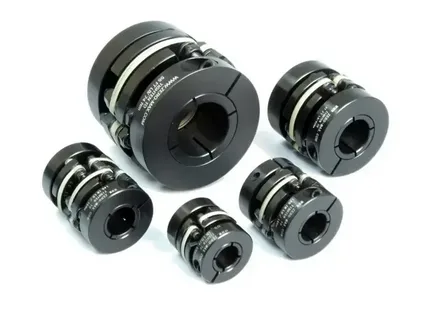
Selecting the right partner among global shaft coupling exporters is often the difference between a seamless industrial operation and costly unplanned downtime. In the realm of power transmission, the coupling serves as the critical link, and its quality directly impacts the longevity of motors, pumps, and gearboxes across metallurgy, mining, and chemical processing plants.
For procurement managers and mechanical engineers, the challenge lies in balancing technical specifications—such as torque capacity and misalignment compensation—with the logistical reliability of the supplier. Whether requiring the precision of a diaphragm coupling or the ruggedness of a gear coupling, the sourcing process must prioritize material traceability and manufacturing standards.
This analysis explores the critical evaluation metrics for selecting exporters, the technical shift toward low-maintenance materials, and how high-capacity production facilities ensure the consistency required for global industrial deployment.

Evaluating Technical Capabilities of Global Coupling Suppliers

When auditing shaft coupling exporters, the primary focus should be on the integration of R&D and production. A supplier that maintains in-house control over forged steel processing and precision machining is far more likely to guarantee the tight tolerances necessary for high-torque applications.
Technical authority is demonstrated through the breadth of the product portfolio. For instance, a comprehensive range including DJM Diaphragm, GIICL Gear, and ML Plum Blossom couplings indicates an exporter's ability to solve diverse engineering challenges, from vibration damping to high-precision alignment.
Furthermore, the presence of automated testing centers and ISO 9001 certification ensures that the theoretical torque ratings translate into real-world reliability, reducing the risk of catastrophic failure in critical infrastructure.
The Shift Toward Lubrication-Free Transmission Solutions
Modern industrial trends are moving aggressively toward "Zero-Maintenance" architectures. Traditional metal-on-metal gear couplings often require frequent lubrication, which introduces the risk of grease contamination and increases operational expenditure (OPEX).
The TGL series, for example, utilizes a self-lubricating nylon tooth surface that prevents micro-motion wear. This innovation is particularly critical in textile machinery and chemical plants where grease leakage can ruin products or contaminate sensitive environments.
By focusing on the friction coefficient (typically 0.1 - 0.3 for nylon inserts), these solutions achieve a lifespan of up to 100,000 start-stop cycles, significantly extending the interval between scheduled overhauls.
Critical Application Scenarios for High-Performance Couplings
The selection of a coupling is dictated by the specific stress profile of the application. In metallurgy and mining, where shock loads are frequent, heavy-duty gear or pin couplings (like the TL or ZL series) are essential to absorb kinetic energy and protect the drive motor.
In contrast, laboratory environments or noise-sensitive facilities require silent operation. Here, the drum-shaped tooth profile of nylon sleeve couplings maintains noise levels below 65 dB(A), making them ideal for centrifugal fans and precision pumps.
Chemical and marine sectors demand extreme corrosion resistance. In these scenarios, the inherent resistance of nylon to acids and alkalis provides a strategic advantage over standard steel components, ensuring longevity in saline or caustic atmospheres.
Analyzing Efficiency Gains in Power Transmission Systems
Efficiency in power transmission is not just about the transfer of torque, but the reduction of parasitic losses. Low-inertia designs are critical for applications involving frequent starts and stops, as they reduce the starting load on the motor.
Comparing a standard all-metal coupling with a lightweight forged steel and nylon composite reveals a measurable drop in energy consumption. A reduction in moment of inertia (≤ 0.5 kg·m²) can lead to energy savings of 5% to 8% over the system's lifecycle.
shaft coupling exporters Performance Metrics
These metrics demonstrate that shifting to advanced composite materials does not sacrifice torque capacity (which remains robust up to 5,000 Nm in TGL series) but instead optimizes the energy-to-output ratio.
Procurement Framework for Industrial Coupling Sourcing
When engaging with exporters, procurement teams should move beyond price-per-unit and evaluate the "Total Cost of Ownership" (TCO). This includes the cost of installation, the frequency of lubrication, and the projected downtime for replacement.
Key evaluation factors should include the exporter's ability to provide customized design drawings within a tight window (e.g., 48 hours) and their inventory capacity. A supplier with a large stock of semi-finished goods can drastically reduce lead times for specialized bores.
Additionally, verification of material certificates for 45# forged steel and high-strength nylon is non-negotiable to ensure the coupling can withstand the rated operating torque without premature deformation.
Future Trends in Coupling Materials and Precision Engineering
The future of coupling technology is likely to be driven by the integration of smarter materials and digital traceability. We expect to see a rise in "intelligent" couplings that incorporate sensors to monitor vibration levels and predict failure intervals.
Material science is also evolving, with an emphasis on hybrid composites that offer the rigidity of steel with the dampening characteristics of advanced polymers. This could further reduce the noise profile in high-speed applications while maintaining high torque transmission.
Moreover, as global supply chains seek more agility, the capacity for rapid customization—supported by automated CNC machining—will become the primary competitive advantage for leading exporters.
Comparative Analysis of Coupling Technologies by Requirement
Choosing the correct coupling requires matching the technical architecture to the specific operational constraint. While gear couplings excel in torque, elastic couplings are superior for misalignment compensation.
The following table provides a decision-making matrix for engineers evaluating different coupling types based on their primary industrial needs.
| Coupling Type | Primary Advantage | Ideal Application | Maintenance Level |
|---|---|---|---|
| TGL Nylon Sleeve | Low Noise / Zero Lub | Industrial Fans/Pumps | Ultra-Low |
| GIICL Gear | High Torque Density | Heavy Metallurgy | High (Lubricated) |
| DJM Diaphragm | High Precision | Turbines/High-Speed | Low |
| ML Plum Blossom | Vibration Damping | General Machinery | Medium |
| XL Aluminum Clamping | Lightweight/Rapid Fit | Servo Motors | Low |
| HL Pin Coupling | Ruggedness/Reliability | Mining Equipment | Medium |
Ultimately, the goal is to optimize the balance between the starting load on the motor and the long-term durability of the transmission link.
Frequently Asked Questions
Conclusion
The global market for power transmission is evolving toward a convergence of high torque capacity and low maintenance requirements. For enterprises operating in demanding sectors, the transition to lubrication-free, low-inertia coupling solutions represents a tangible path toward increasing energy efficiency and reducing operational downtime.
Engineers and procurement specialists evaluating these technologies can find detailed product specifications and corporate capacity information through www.binhaocoupling.com to ensure their machinery transmission is optimized for long-term reliability.