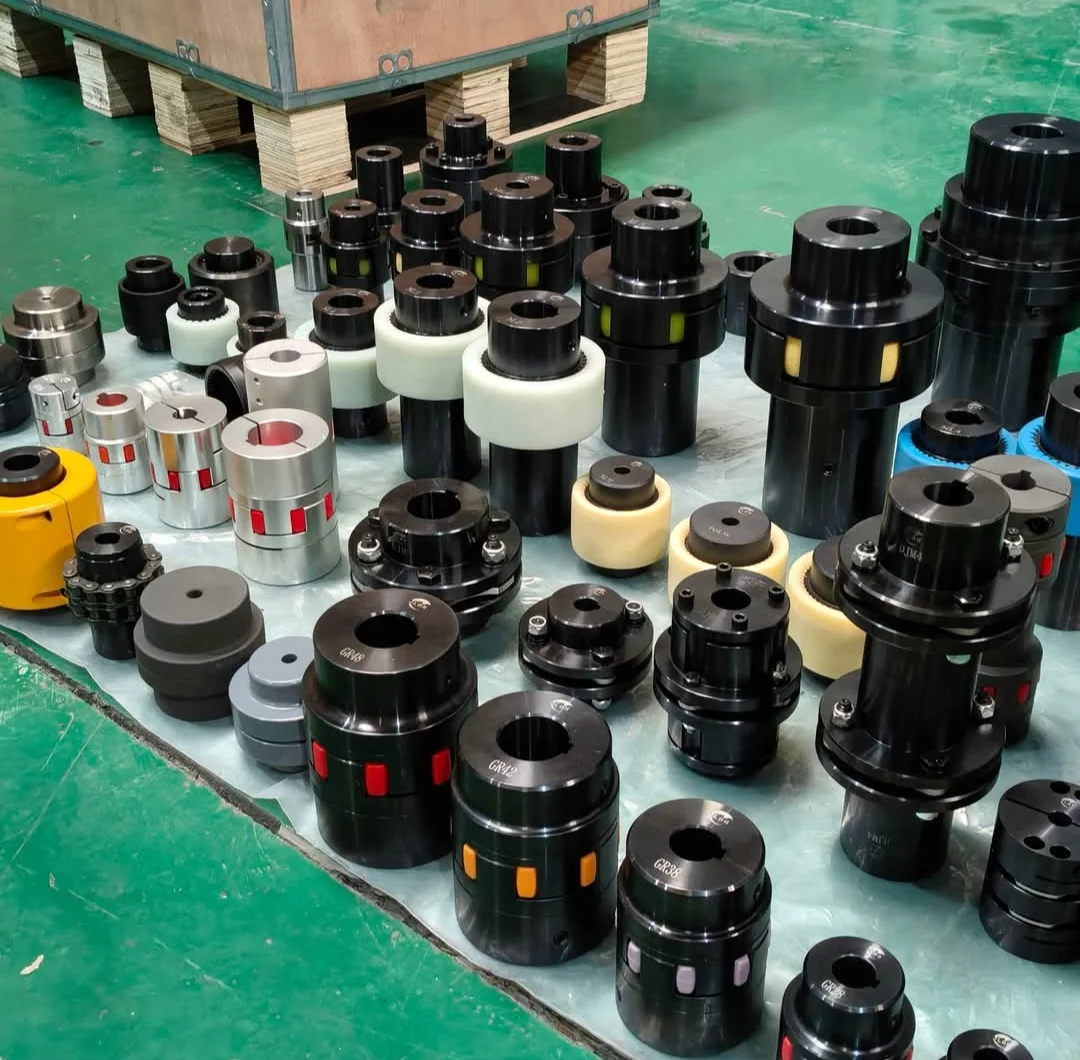
When sourcing from shaft coupling Factories, industrial procurement managers must balance precision engineering with long-term operational reliability. In the specialized field of general equipment manufacturing, the coupling serves as the critical link between motors and driven machinery, where a single point of failure can halt entire production lines in metallurgy, mining, or petroleum sectors.
The primary challenge for buyers is identifying a manufacturer that can provide not just a standard component, but a solution tailored to specific torque, speed, and displacement requirements. Selecting the wrong coupling type or a factory with insufficient quality control often leads to premature wear, excessive vibration, and costly unplanned downtime.
This guide provides a strategic framework for evaluating coupling manufacturers, comparing technical specifications of various coupling series, and establishing a rigorous selection process to ensure optimal power transmission efficiency.

Critical Selection Criteria for Coupling Factories

Selecting a partner among various shaft coupling Factories requires a shift from price-centric buying to value-centric engineering. A professional manufacturer must demonstrate a deep understanding of two-axis displacement compensation, specifically the ability to handle radial, angular, and axial offsets generated during operation. Factories that rely on standardized molds without customization capabilities often fail to meet the precise alignment needs of high-speed machinery.
Beyond technical specs, the operational infrastructure of the factory is a key indicator of reliability. For instance, Binhao utilizes a 20,000 square meter facility to maintain end-to-end production control, ensuring that critical components are not outsourced to unverified third parties. This integration allows for tighter tolerances and faster design iterations, which is vital for specialized industrial applications.
Analyzing Technical Capabilities Across Product Series
Different industrial needs require distinct coupling architectures. For medium to low torque applications, the HL Pin Coupling is highly effective due to its simple structure, utilizing nylon pins for self-lubrication and corrosion resistance. This eliminates the need for additional grease, reducing maintenance costs and preventing oil leakage in sensitive environments like textile or agricultural machinery.
For high-performance requirements, factories must offer a broader portfolio. Diaphragm couplings (DJM, SDM) are essential for high-alignment accuracy and temperature stability, while Gear couplings (GIICL, NL, TGL) are designed for high-torque transmission. The ability of a factory to produce 20+ series, including Plum Blossom (ML) and Elastic Jaw (L Series) couplings, indicates a mature R&D capability and a comprehensive understanding of mechanical stress and vibration damping.
Application-Specific Coupling Integration
The effectiveness of a shaft coupling is measured by its performance within a specific ecosystem. In water pumps and fans, the focus is often on vibration isolation and ease of assembly. In contrast, connections between small motors and reducers in light industrial machinery prioritize compactness and cost-efficiency. This is where the XL Aluminum Clamping Coupling and JK Clamping Coupling provide the best balance of weight and rigidity.
Implementation requires careful consideration of environmental limits. For example, nylon-based couplings like the HL series are limited to temperatures between -20℃ and +80℃. For environments exceeding these limits, engineers must pivot to metal-based elastic elements or diaphragm designs. A reliable factory provides this technical guidance during the selection phase rather than simply shipping a part number.
Evaluating Production Capacity and Scalability
Scalability is a hidden risk in procurement. A factory that cannot handle volume spikes or lacks a robust inventory system becomes a bottleneck in the customer's supply chain. Evaluating a factory's annual output and warehouse capacity is essential to ensure lead times are minimized and spare parts are readily available for urgent maintenance.
The chart above illustrates a conceptual relative evaluation of factory capabilities. While high-volume output is necessary for standard parts, the "Customization Agility" score is what separates specialized manufacturers from generic factories. Binhao, for example, focuses on delivering design drawings within 48 hours, bridging the gap between mass production and bespoke engineering.
Risk Mitigation in Power Transmission Procurement
The most significant risks in coupling procurement are material failure and alignment errors. Material fatigue in nylon elements can lead to sudden failure if the coupling is used beyond its rated torque or in excessive heat. To mitigate this, buyers should verify the raw material sourcing and the factory's testing protocols for elastic elements.
Furthermore, the "compensation capacity" is often overestimated. While most flexible couplings can handle some displacement, the actual limits vary wildly between a Pin Coupling and a Diaphragm Coupling. Engineering teams must request precise compensation data sheets from the factory to avoid installation failures that can damage the driving motor or the driven reducer.
Quality Control Benchmarks for Industrial Couplings
True quality control in shaft coupling manufacturing extends beyond final inspection. It begins with raw material traceability and continues through CNC machining, heat treatment, and final assembly. Factories that implement ISO 9001 and operate automated testing centers can provide verified data on torque transmission and vibration levels.
Key benchmarks for a high-quality factory include the use of dedicated inspection equipment for each processing stage and the presence of a specialized research center. Collaboration with academic institutions to refine coupling technology indicates a commitment to precision that far exceeds the capabilities of low-cost, non-specialized workshops.
Manufacturer Decision Matrix
To finalize a supplier choice, procurement teams should use a structured comparison matrix. This involves weighing the factory's product range against the specific technical constraints of the application, such as torque limits, temperature ranges, and required compensation levels.
| Coupling Type | Torque Capacity | Maintenance Level | Best Use Case |
|---|---|---|---|
| HL Pin Coupling | Medium/Low | Very Low (No Lube) | Agricultural Machinery |
| Gear Coupling (GIICL) | Very High | Moderate (Lube Req) | Heavy Mining Equipment |
| Diaphragm (DJM) | High | Low | High-Precision Turbines |
| Elastic Jaw (L Series) | Medium | Low | General Industrial Motors |
| Plum Blossom (ML) | Medium | Low | Vibration-Sensitive Gear |
| Clamping (XL/JK) | Low/Medium | Minimal | Light Machinery/Fans |
The decision should ultimately align with the operational environment. For instance, if the application involves corrosive materials and requires low maintenance, the self-lubricating properties of nylon-pin designs are superior. However, for heavy-duty industrial power transmission, the structural rigidity of gear or diaphragm couplings is non-negotiable.
Frequently Asked Questions
For high-torque needs, prioritize Gear couplings (like GIICL or TGL) or Diaphragm couplings. These are engineered to handle severe loads without deformation. Ensure the factory provides a torque-speed curve for the specific model selected.
Nylon pin couplings, such as the HL series, offer self-lubricating properties, reducing maintenance costs and eliminating oil leakage. They are generally more cost-effective for medium-to-low power transmission.
Yes, but the degree varies. Diaphragm and plum blossom couplings typically offer higher compensation than pin couplings. Always check the specific radial and angular displacement limits provided by the manufacturer.
Standard nylon materials typically operate between -20℃ and +80℃. Beyond +100℃, the material may soften, leading to a decline in strength and potential failure. Use metal-element couplings for high-temperature environments.
Depending on the factory, customization can vary. Professional high-tech enterprises like Binhao aim to deliver preliminary design drawings within 48 hours to accelerate the procurement cycle.
ML Plum Blossom couplings and L Series Elastic Jaw couplings are specifically designed for damping vibration and absorbing shocks, making them ideal for light industrial and textile machinery.
Conclusion
Selecting the right partner among shaft coupling Factories is a technical decision that directly impacts the operational uptime of industrial machinery. Success depends on matching the coupling's material properties and displacement capacity with the actual demands of the application—whether that is the high-torque rigidity of gear couplings or the low-maintenance flexibility of nylon pin designs.
For organizations requiring precision-engineered transmission solutions and rapid customization, reviewing the technical specifications at www.binhaocoupling.com can help ensure that the selected components meet the rigorous standards of modern industrial manufacturing.