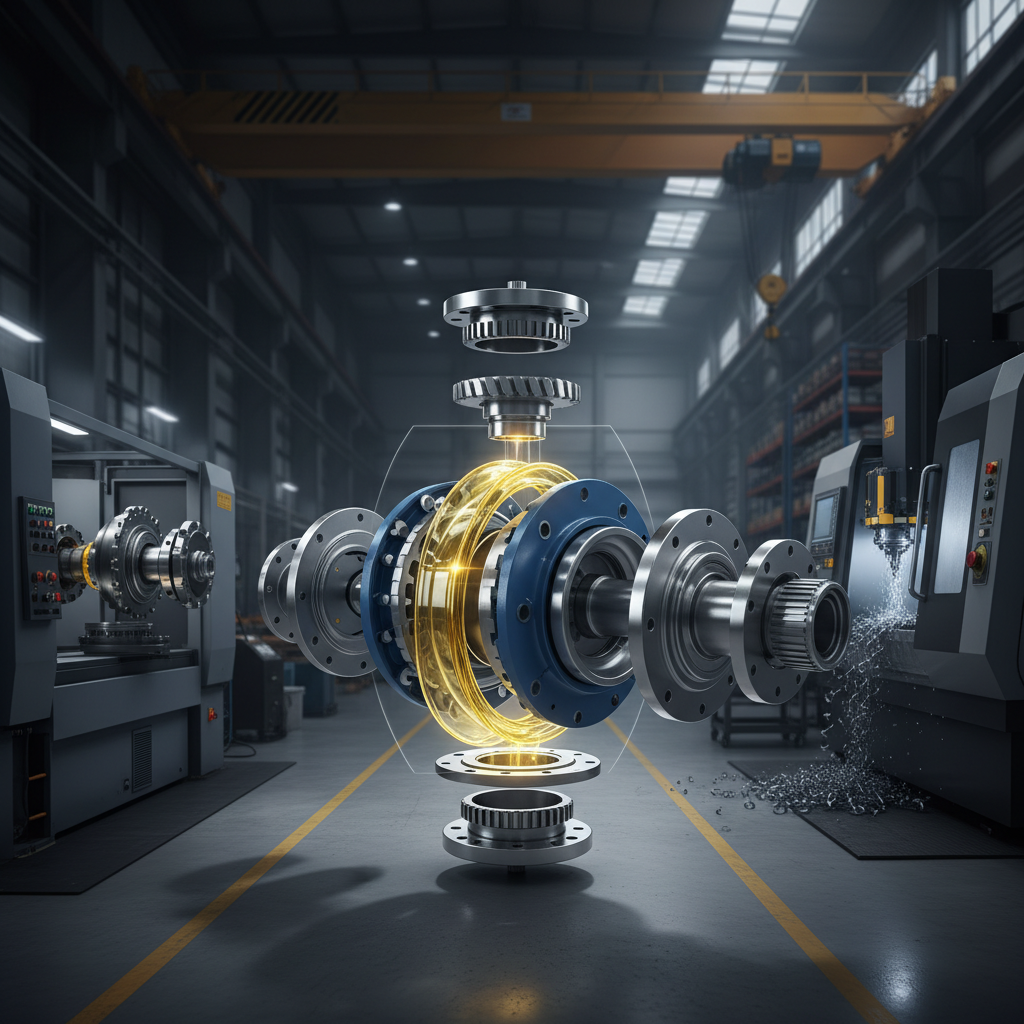
In the high-stakes world of industrial power transmission, the Hydraulic coupling stands as a critical component designed to manage the transfer of energy between a prime mover and a driven machine. Unlike rigid connections, these fluid couplings provide a flexible interface that absorbs shock loads and allows for smooth starts, which is essential for maintaining the longevity of expensive machinery in heavy-duty environments.
Globally, the demand for efficient torque transmission has led to the widespread adoption of fluid-based systems. By utilizing the kinetic energy of a liquid—typically oil—a Hydraulic coupling eliminates the need for direct mechanical contact between the input and output shafts, thereby reducing wear and tear and preventing catastrophic failures during sudden load spikes.
Understanding the operational nuances of these systems is not just a matter of technical curiosity but a strategic necessity for plant managers and engineers. From reducing energy waste to enhancing operational safety, the integration of a high-quality Hydraulic coupling ensures that industrial processes remain continuous, sustainable, and cost-effective in an increasingly competitive global market.
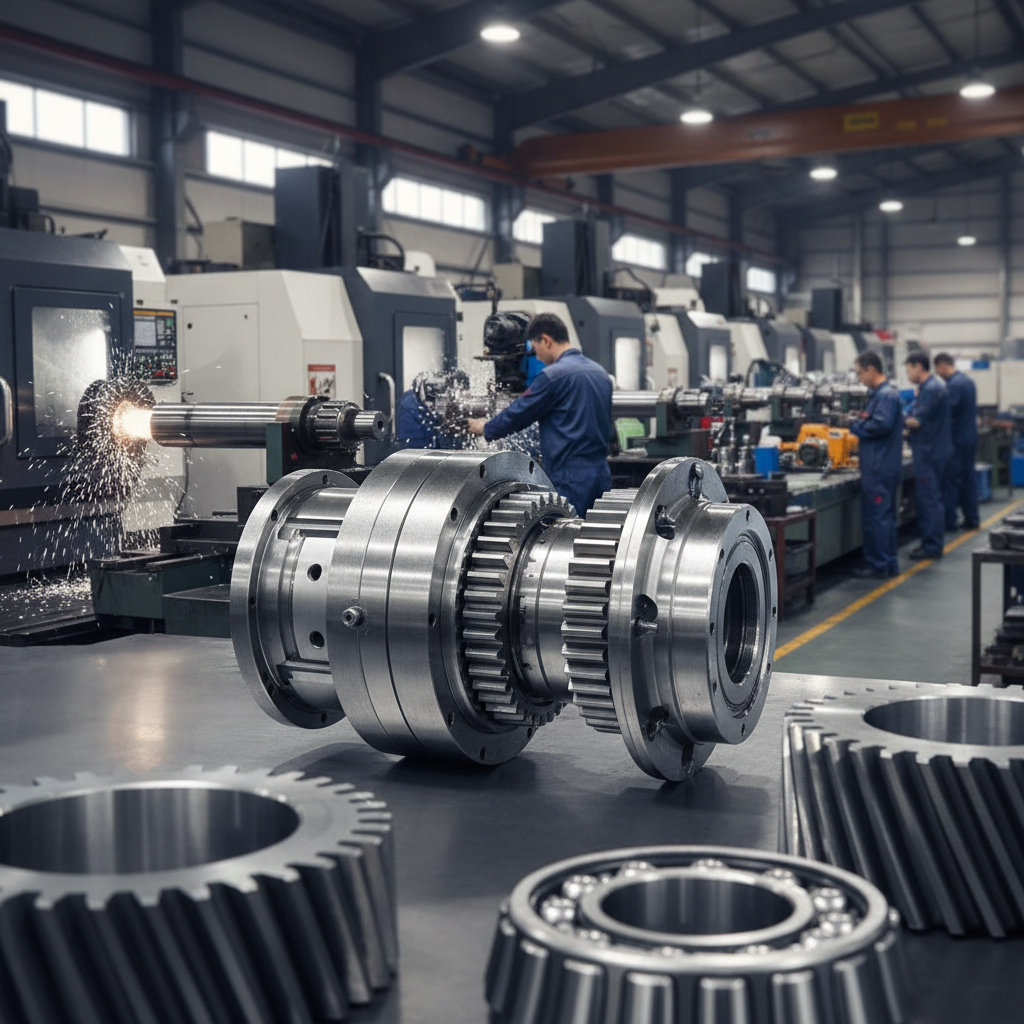
Global Industrial Significance of Hydraulic Coupling
The global industrial landscape relies heavily on the ability to move massive loads without compromising the integrity of the drive train. In sectors like mining, cement production, and marine propulsion, the Hydraulic coupling serves as a vital buffer. According to ISO standards for mechanical transmission, the reduction of vibration and shock is paramount to achieving operational excellence and reducing unplanned downtime.
By decoupling the motor from the load, these systems prevent the "hammer effect" that often occurs during startup or sudden load changes. This not only protects the gearboxes and bearings but also allows motors to start under no-load conditions, significantly reducing the peak current draw from the electrical grid—a critical factor for facilities operating in regions with unstable power infrastructures.
The Mechanics and Definition of Fluid Transmission
At its most fundamental level, a Hydraulic coupling is a hydrodynamic device used to transmit rotating mechanical power. It consists of two main parts: an impeller (pump) connected to the driving shaft and a runner (turbine) connected to the driven shaft, both enclosed in a leak-proof casing filled with hydraulic fluid. There is no mechanical connection between the two; the power is transferred via the kinetic energy of the fluid.
This "fluid bridge" allows for a degree of slip, which is the primary advantage of the system. When the load is too heavy for the motor to start directly, the impeller continues to rotate, stirring the fluid and gradually accelerating the runner. This soft-start capability is indispensable for humanitarian and industrial infrastructure projects where heavy machinery must operate reliably in remote or harsh environments.
Modern iterations of the Hydraulic coupling have evolved to incorporate variable fill levels, allowing operators to adjust the torque transmission ratio. This adaptability ensures that the system can be tuned to the specific requirements of the load, optimizing energy consumption and increasing the overall lifespan of the mechanical assembly.
Core Components for Maximum Durability
The efficiency of a Hydraulic coupling is largely determined by the precision of its internal geometry. The impeller must be perfectly balanced to prevent centrifugal vibration, while the runner's vanes are engineered to maximize fluid capture and energy transfer. These components are typically forged from high-strength alloys to resist cavitation and wear.
Crucially, the sealing system and the quality of the hydraulic fluid are what ensure long-term reliability. A high-performance Hydraulic coupling utilizes advanced synthetic seals to prevent leakage and specialized oils that maintain viscosity across a wide range of temperatures, ensuring consistent torque transmission from Arctic conditions to tropical heat.
Furthermore, the housing must be designed for thermal dissipation. Since some energy is lost as heat during the slip process, integrated cooling fins or external heat exchangers are often employed. This thermal management prevents the fluid from breaking down, thereby maintaining the lubrication properties and the operational stability of the entire drive train.
Performance Metrics and Efficiency Analysis
Evaluating the performance of a Hydraulic coupling requires a deep dive into the relationship between slip, torque, and efficiency. While a rigid coupling has 100% efficiency, the fluid coupling trades a small percentage of energy for the immense benefit of overload protection and smooth acceleration.
Engineers typically measure the "Efficiency Curve" to determine the optimal operating point. By analyzing the slip percentage, one can determine if the system is under-loaded or over-loaded, allowing for precise adjustments to the fluid level to regain maximum energy efficiency without sacrificing the protective qualities of the coupling.
Performance Rating of Various Coupling Methods
Real-World Applications Across Global Sectors
In the mining sector of Australia and South America, the Hydraulic coupling is indispensable for conveyor belt systems. These belts often start under full load; a direct start would either trip the circuit breakers or snap the belt. The fluid coupling allows the motor to reach full speed before the belt begins to move, ensuring a gradual and safe ramp-up.
Beyond mining, these systems are widely used in the maritime industry for propulsion and in large-scale ventilation systems for underground tunnels. In post-disaster relief operations, where emergency power generators must drive heavy water pumps or compressors, the reliability and shock-absorption of a Hydraulic coupling prevent equipment failure during critical moments.
Long-Term Economic and Operational Value
The primary logical argument for investing in a high-grade Hydraulic coupling is the dramatic reduction in Total Cost of Ownership (TCO). While the initial procurement cost may be higher than a simple jaw or pin coupling, the savings found in reduced motor burnouts and gearbox replacements are substantial over a 10-year lifecycle.
From an emotional and safety perspective, these couplings provide peace of mind. Plant operators know that in the event of a mechanical jam downstream, the Hydraulic coupling will simply slip, acting as a mechanical fuse. This prevents catastrophic shaft shears and protects personnel from the dangers of exploding mechanical components.
Furthermore, the sustainability aspect cannot be ignored. By optimizing the startup current and reducing mechanical wear, companies reduce their carbon footprint associated with frequent part replacements and energy spikes. This aligns with the global shift toward "Green Manufacturing" and ISO 14001 environmental standards.
Future Trends in Coupling Automation
The future of the Hydraulic coupling lies in the integration of Industry 4.0. We are seeing the emergence of "Smart Couplings" equipped with IoT sensors that monitor fluid temperature, vibration levels, and slip rates in real-time. This data allows for predictive maintenance, where the system alerts operators to a fluid leak or wear before a failure occurs.
Materials science is also playing a role, with the introduction of nano-coatings on the impeller and runner to further reduce friction and cavitation. These innovations are paving the way for highly efficient, low-maintenance systems that can operate for decades with minimal intervention, fitting perfectly into the automation trends of the modern factory.
Additionally, the move toward hybrid systems—combining the fluid dynamics of a Hydraulic coupling with electronic speed control—is optimizing energy use to an unprecedented degree. This synergy allows for an almost perfect balance between soft-start capabilities and high-speed efficiency.
Comparative Analysis of Hydraulic Coupling Implementation Strategies
| Implementation Model |
Torque Stability |
Maintenance Need |
Operational ROI |
| Standard Fluid Fill |
Medium |
Low |
7/10 |
| Variable Fluid Control |
High |
Medium |
9/10 |
| IoT-Integrated Model |
Very High |
Very Low |
10/10 |
| Heavy-Duty Forged |
High |
Low |
8/10 |
| Compact Industrial |
Medium |
Low |
6/10 |
| Custom High-Torque |
Very High |
Medium |
9/10 |
FAQS
The primary advantage is the elimination of mechanical shock. While a direct drive transmits all torque immediately—which can snap shafts or burn out motors during a heavy start—a hydraulic coupling uses fluid slip to allow the motor to accelerate smoothly. This protects the entire drivetrain and reduces the peak electrical current required for startup.
Maintenance intervals vary by application, but typically, fluid is checked every 6-12 months. If the coupling is used in an environment with extreme temperature fluctuations or high vibration, more frequent checks are recommended. Using high-quality synthetic oils can extend these intervals significantly by resisting thermal degradation.
Yes, specifically variable-fill models. By adjusting the amount of oil inside the coupling, you can change the slip ratio. A lower fill level increases slip and reduces the output speed relative to the input, allowing for a degree of speed control without needing a complex variable frequency drive (VFD) in some applications.
It is slightly less efficient than a rigid coupling because some energy is lost as heat through slip. However, this "loss" is actually a protective feature. The overall system efficiency is often higher because it prevents costly downtime and allows motors to operate closer to their ideal efficiency curve by removing the burden of a heavy start.
If the fluid leaks, the torque transmission will drop significantly, and the coupling will eventually fail to drive the load. Because the impeller and runner do not touch, it won't cause immediate mechanical destruction, but the driven machine will stop. Modern couplings feature high-grade seals and leak-detection ports to prevent this.
Industries with high-inertia loads benefit most. This includes mining (conveyors, crushers), cement plants (kilns, mills), and marine shipping (propulsion). Any application where a motor must start a heavy load from a standstill without causing electrical surges or mechanical stress is an ideal candidate.
Conclusion
The Hydraulic coupling represents a perfect marriage of fluid dynamics and mechanical engineering, solving the age-old problem of torque shock and startup stress. By acting as both a power transmitter and a protective buffer, it ensures that industrial operations can scale safely, reducing the risks of catastrophic failure while maximizing the operational life of the drivetrain.
As we move toward an era of smarter, more sustainable manufacturing, the evolution of these couplings into IoT-enabled, high-efficiency components will be pivotal. For companies looking to optimize their machinery, investing in a precision-engineered Hydraulic coupling is not just a technical upgrade—it is a commitment to reliability and long-term operational excellence. Visit our website for more details: www.binhaocoupling.com