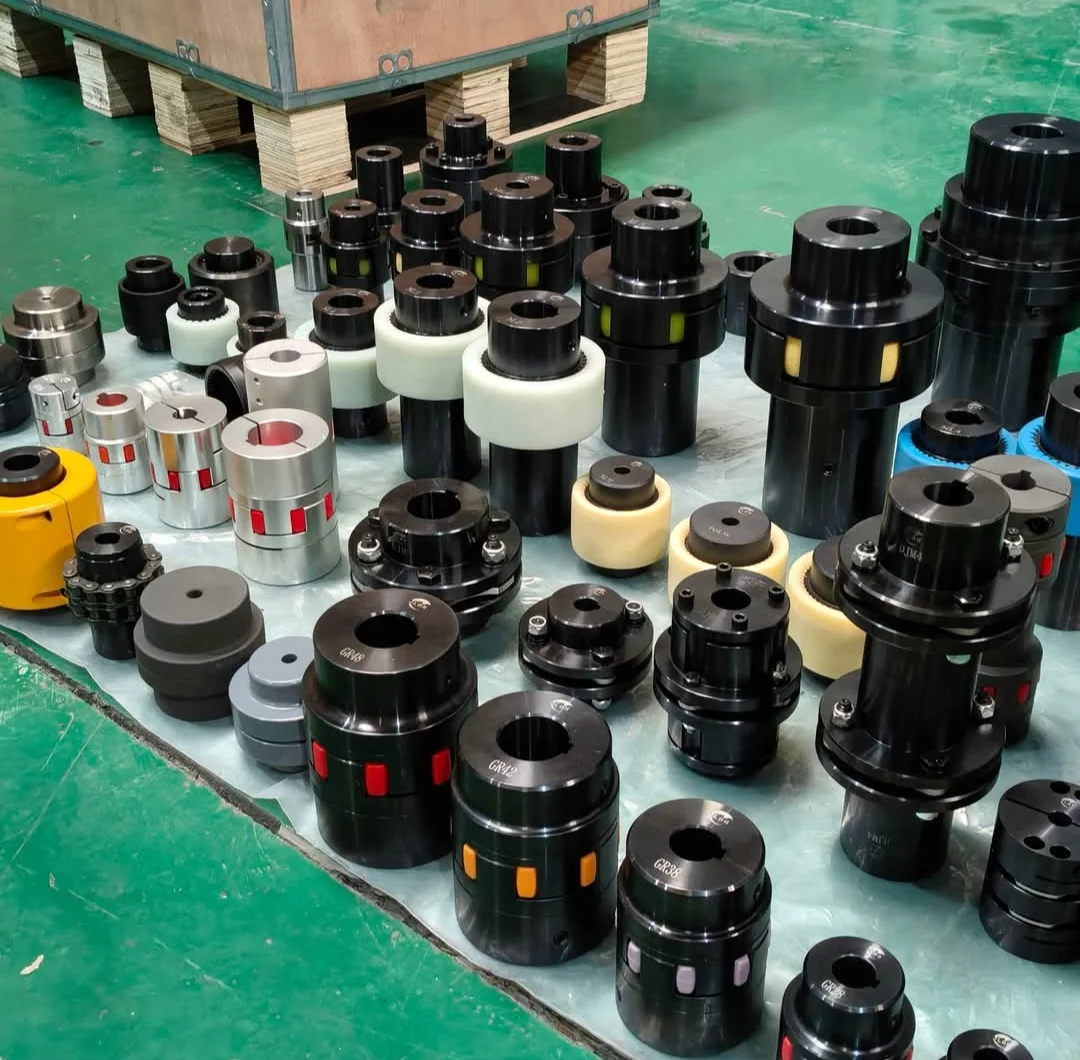
In heavy-duty industrial power transmission, the conflict between high-torque requirements and limited axial installation space often creates a critical engineering bottleneck. When standard couplings are too bulky for compact machinery compartments, the risk of misalignment and vibration increases, potentially leading to premature equipment failure.
The evolution of coupling design has shifted toward optimizing the axial footprint without sacrificing load-bearing capacity. This necessity has led to the development of specialized gear geometries and precision-balanced components that can withstand extreme operational stress while maintaining a slim profile.
Selecting the right flexible coupling Manufacturer involves evaluating the balance between torque density, displacement compensation, and long-term wear resistance. This article examines the technical shift toward space-optimized high-torque solutions and their application in demanding industrial environments.

Constraints of Axial Installation Space

In many heavy-duty setups, such as ship propulsion or mining crushers, the physical space between the motor and the driven equipment is severely limited. Standard gear couplings often require a wide axial footprint to handle high torque, which can force engineers to use longer, less stable shafts or compromise on protective housing.
When axial space is restricted, the primary challenge is maintaining load-bearing capacity without increasing the diameter of the coupling. This leads to the adoption of narrow tooth width designs, which maximize the efficiency of the contact area while minimizing the overall length of the assembly.
Mechanics of Narrow Tooth Width Design
The shift toward narrow tooth width design is not merely a reduction in size but a precision engineering adjustment. By focusing on high-frequency quenching and grinding of the tooth surfaces, manufacturers can ensure that a smaller contact area can still transmit tens of thousands of Newton-meters (Nm) of torque without deformation.
This design logic relies on the principle of increasing the surface hardness to offset the reduction in width. When the material is hardened to a specific threshold, the stress concentration is managed more effectively, allowing the coupling to resist sudden impact loads that would typically shear a standard coupling of the same width.
For companies like Julu County Binhao Transmission Equipment Co., Ltd., this involves a rigorous CAD/CAM integration process to tailor axial dimensions for specific machinery, ensuring that the narrow design does not compromise the structural integrity of the power train.
Compensation and Vibration Control
Shaft system deviations—whether angular or radial—are inevitable in heavy industrial environments. Without adequate compensation, these deviations translate into operational vibrations that accelerate wear on bearings and seals.
The use of spherical profiles for external teeth allows for superior angular and radial displacement compensation, effectively decoupling the motor from the driven load and eliminating stress concentrations at the mesh points.
In the case of the GIICL series, angular compensation is managed up to ≤ 1.5° and radial displacement up to ≤ 0.3mm. This flexibility is critical when operating at high speeds—up to 5000 rpm—where even a minor misalignment could lead to catastrophic failure due to centrifugal forces.
Performance Metrics in Extreme Conditions
Evaluating the efficacy of a high-torque coupling requires looking beyond nominal torque ratings. Key performance indicators include dynamic balance stability and the ability to maintain lubrication under high-frequency rotation. Precision treatment of the dynamic balance ensures that vibration is minimized even as the system approaches its maximum speed limit.
Comparing a standard gear coupling to a space-optimized version reveals significant differences in installation flexibility and maintenance cycles. The integrated use of forced oil injection systems allows these couplings to operate in harsher environments with extended intervals between overhauls.
Figure 2. Relative Performance Index: Standard vs. Space-Optimized Gear Couplings
Industrial Application Scenarios
The practical utility of space-optimized couplings is most evident in metallurgical rolling mills and heavy-duty mining crushers. In these settings, the equipment is often packed into tight compartments where every millimeter of axial space saved reduces the complexity of the surrounding infrastructure. For instance, a mining crusher utilizing a GIICL coupling can maintain high torque transmission while allowing for easier access to other critical components during routine inspections.
Beyond mining and metallurgy, ship propulsion shafting represents another critical use case. The marine environment demands extreme reliability and the ability to handle sudden impact loads from wave action. The combination of hardened tooth surfaces and forced lubrication ensures that the power transmission remains stable despite the constant radial and angular stresses inherent in maritime operations.
Advancements in Lubrication and Wear Resistance
Wear resistance in high-torque couplings is primarily a function of the tooth surface treatment and the efficiency of the lubrication system. High-frequency quenching followed by precision grinding creates a surface that is not only hard but also possesses a low coefficient of friction, reducing heat generation during high-speed operation.
However, surface hardness alone is insufficient; the lubrication method must match the operational intensity. Forced oil injection, typically using ISO VG320 gear oil, ensures that a consistent lubricant film is maintained between the spherical external teeth and the internal gear ring, even under maximum load.
This systemic approach to wear management significantly extends the operational lifecycle of the coupling, reducing the total cost of ownership for plant managers who must balance production uptime with maintenance budgets.
Selecting Between Standard and Optimized Couplings
Choosing the correct coupling requires a rigorous analysis of the installation environment and the dynamic loads of the system. While standard couplings are suitable for open layouts with generous space, they may introduce inefficiencies or installation difficulties in compact machinery.
The decision framework should prioritize axial space requirements first, followed by the maximum operating speed and the expected frequency of impact loads. If the system operates above 3000 rpm or requires specific angular compensation, a specialized solution like the GIICL series becomes the more technically sound choice.
Ultimately, the trade-off is between initial procurement cost and long-term operational efficiency. Optimized couplings may require more precise installation and specific lubrication systems, but they offer a significant return in terms of space efficiency and vibration reduction.
| Evaluation Factor | Standard Gear Coupling | GIICL Optimized Coupling | Impact on Operation |
|---|---|---|---|
| Axial Space Requirement | High (Standard Width) | Low (Narrow Width) | Installation Flexibility |
| Vibration Absorption | Moderate | High (Spherical Profile) | Equipment Longevity |
| Max Speed Stability | Standard | High (Up to 5000rpm) | Operational Efficiency |
| Lubrication Method | Standard Grease/Oil | Forced Oil Injection | Wear Rate Reduction |
| Load Handling | High Torque | High Torque + Impact | Reliability under Stress |
| Customization Level | Limited | High (CAD/CAM Integrated) | System Compatibility |
Questions & Answers
Narrow tooth width design reduces the physical axial footprint but maintains high torque capacity through advanced material treatment. By utilizing high-frequency quenching and precision grinding, the tooth surfaces achieve extreme hardness. This allows the coupling to transmit high torque and resist impact loads without the need for the larger axial dimensions found in standard gear couplings, provided that the material specifications are strictly met.
Spherical external teeth are engineered to provide superior angular and radial displacement compensation. In heavy industrial machinery, perfect alignment between shafts is nearly impossible. The spherical profile allows the coupling to adapt to slight misalignments (up to 1.5° angularly), which prevents stress concentration at the tooth mesh and significantly reduces operational vibrations that could otherwise damage bearings.
Forced oil injection, typically using ISO VG320 gear oil, is recommended for high-speed and high-torque applications because it ensures a continuous lubricant film across all contact surfaces. Unlike standard grease, which can be displaced under extreme pressure or high heat, forced lubrication actively removes wear particles and dissipates heat, which is critical for couplings operating up to 5000 rpm.
Axial space optimization is most critical in compact equipment compartments such as metallurgical rolling mills, mining crushers, and ship propulsion systems. In these scenarios, the distance between the power source and the load is limited by the overall machinery footprint. Using a narrow-width coupling allows engineers to maintain high power transmission without increasing the overall length of the machine or compromising the structural housing.
Yes, provided they undergo precise dynamic balancing treatment. The GIICL series, for example, is designed to be stable at speeds up to 5000 rpm. Dynamic balancing minimizes the centrifugal forces acting on the components, ensuring that the coupling does not induce high-frequency vibrations that could lead to mechanical fatigue or instability in the power train.
Buyers should evaluate a manufacturer based on their R&D capabilities, specifically their ability to provide CAD/CAM integrated design for axial adjustments. Key indicators include the availability of automated inspection for tooth profiles, the ability to deliver technical drawings within a short window (e.g., 48 hours), and the implementation of a rigorous QC process that ensures full traceability from raw materials to the final precision-balanced product.
Final Thoughts
The transition toward space-optimized, high-torque couplings reflects a broader industrial trend toward miniaturization and increased power density. By integrating narrow tooth widths with spherical profiles and forced lubrication, engineers can now resolve the long-standing conflict between axial space constraints and heavy-duty power transmission.
Ultimately, the success of these components depends on the precision of their manufacture and the rigor of their balancing. For industries operating under extreme conditions, investing in specialized coupling solutions is not just about fitting a component into a gap, but about ensuring the long-term stability and reliability of the entire industrial asset.