
- russian
- italian
- japanese
- korean
- latin
- latvian
- lithuanian
- malay
- norwegian
- persian
- polish
- portuguese
- romanian
- irish
- sanskrit
- slovak
- spanish
- swahili
- swedish
- tamil
- thai
- turkish
- ukrainian
- urdu
- vietnamese
- welsh
- english
- arabic
- armenian
- basque
- belarusian
- bengali
- bulgarian
- burmese
- croatian
- czech
- danish
- deutsch
- dutch
- albanian
- estonian
- filipino
- finnish
- french
- georgian
- greek
- hebrew
- hindi
- hungarian
- icelandic
- indonesian
When diving into the mechanics of power transmission, one of the most common questions for engineers is what is pin bush coupling and how it differs from standard rigid connections. In the world of general equipment manufacturing, these components serve as the critical bridge between a motor and a driven machine, ensuring that torque is transferred efficiently while accommodating the inevitable imperfections of mechanical alignment.
Understanding what is pin bush coupling is essential for maintaining industrial uptime. By utilizing a combination of metal pins and resilient bushes, this specific type of coupling provides a fail-safe mechanism that protects expensive machinery from vibration and shock loads, making it a staple in everything from pump systems to heavy-duty conveyors.
Globally, the demand for reliable coupling solutions has surged as industries push for higher efficiency and lower maintenance costs. Whether you are dealing with the precision of a DJM Diaphragm Coupling or the robustness of an HL Pin Coupling, knowing the fundamental principles of pin and bush configurations allows operators to optimize their system's lifespan and operational safety.

Global Relevance of Pin Bush Couplings
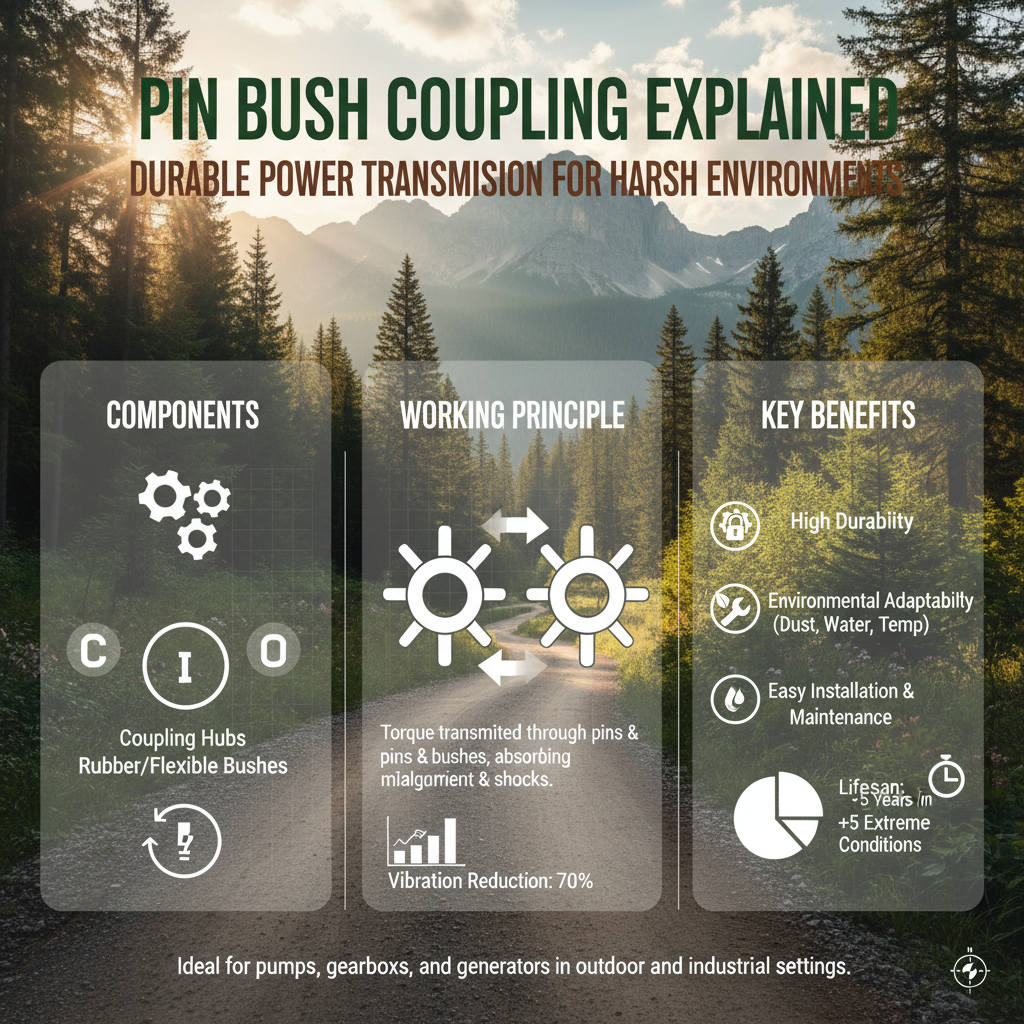
In the current landscape of global manufacturing, the ability to maintain continuous operation is a primary KPI for any industrial plant. The question of what is pin bush coupling becomes critical when analyzing ISO standards for vibration and shaft alignment. These couplings are not merely connectors; they are shock absorbers that prevent the catastrophic failure of bearings and seals in high-torque environments.
Across Southeast Asia and Europe, the integration of high-quality pin bush systems has reduced unplanned downtime by approximately 15-20% in pumping stations and mining facilities. By mitigating the stress caused by parallel and angular misalignment, these components ensure that the energy transferred from the driver to the driven machine is maximized while the wear and tear on the hardware is minimized.
FAQS
A pin bush coupling is a flexible shaft connector that uses a set of pins inserted into rubber or polyurethane bushes to transmit torque between two hubs. It works by allowing the elastic bushes to compress slightly, which absorbs vibrations and compensates for minor shaft misalignments, preventing the stress from damaging the connected motor or gearbox.
You should choose a pin bush coupling when vibration damping and shock absorption are more critical than extreme torque density. While gear couplings (like the GIICL) can handle higher loads in a smaller space, pin bush couplings are far superior at isolating vibration and are generally easier and cheaper to maintain since only the bushes need replacement.
Signs of wear include visible cracking or "chunking" of the rubber/polyurethane material, an increase in system vibration, or unusual noise during operation. It is recommended to perform a visual inspection every 3-6 months. If the bushes have lost their elasticity or show significant deformation, they should be replaced immediately to avoid pin failure.
It depends on the material of the bush. Standard nitrile rubber is suitable for moderate temperatures, but for high-heat applications, specialized fluorocarbon or high-grade polyurethane bushes must be used. Always check the material specifications to ensure the bush won't melt or become brittle under your operating temperatures.
Generally, pin bush couplings are considered lubrication-free because the torque is transmitted through the compression of the bush rather than sliding metal-on-metal contact. However, keeping the exterior clean of corrosive debris is important to ensure the bushes do not degrade prematurely due to chemical exposure.
The difference typically lies in the load rating and material composition. HL (Heavy Duty) couplings are designed for higher torque and more severe shock loads, often using reinforced forged steel hubs. TL (Standard) couplings are optimized for general-purpose industrial use, balancing cost-efficiency with reliable performance for lighter loads.
Conclusion
In summary, answering the question of what is pin bush coupling reveals a component that is indispensable for industrial stability. By combining the rigidity of steel hubs and pins with the elasticity of polymer bushes, these couplings provide a vital safeguard against misalignment and vibration, directly impacting the longevity of motors, pumps, and gearboxes across the globe.
As industry moves toward more sustainable and automated operations, the evolution of pin bush couplings—through smarter materials and precision engineering—will continue to drive efficiency. For engineers and plant managers, investing in high-quality coupling solutions is not just about hardware; it is about ensuring the reliability, safety, and economic viability of their entire production line. Visit our website for more technical guidance: www.binhaocoupling.com
Related Posts
-
High Quality Nylon Sleeve Gear Coupling Manufacturer for Industrial Applications
-
Leading Flexible Coupling Manufacturer for Industrial Power Transmission Solutions
-
Reliable Rubber Coupling Company Solutions for Industrial Performance
-

Expert Spider Coupling Manufacturer for Industrial Power Transmission Solutions