
- russian
- italian
- japanese
- korean
- latin
- latvian
- lithuanian
- malay
- norwegian
- persian
- polish
- portuguese
- romanian
- irish
- sanskrit
- slovak
- spanish
- swahili
- swedish
- tamil
- thai
- turkish
- ukrainian
- urdu
- vietnamese
- welsh
- english
- arabic
- armenian
- basque
- belarusian
- bengali
- bulgarian
- burmese
- croatian
- czech
- danish
- deutsch
- dutch
- albanian
- estonian
- filipino
- finnish
- french
- georgian
- greek
- hebrew
- hindi
- hungarian
- icelandic
- indonesian
You know, I've been running around construction sites all year, covered in dust and grease, and honestly, the biggest trend I’ve seen lately is everyone wanting stuff faster and lighter. It’s not just about saving money anymore; it’s about getting the job done quicker and with less strain on the guys doing the work. Everyone's talking about composite materials, prefabrication… it’s a whole new ballgame. It’s funny though, they all want the fancy stuff, but forget about practicality.
Have you noticed how many engineers design things that look great on paper but are a nightmare to actually assemble on-site? I encountered this at a factory in Dongguan last time, they designed this coupling with a really complicated locking mechanism. Looked beautiful in the CAD drawings. Tried to put it together with gloves on, in the rain? Forget about it. It was a total mess. Simple is usually better, believe me.
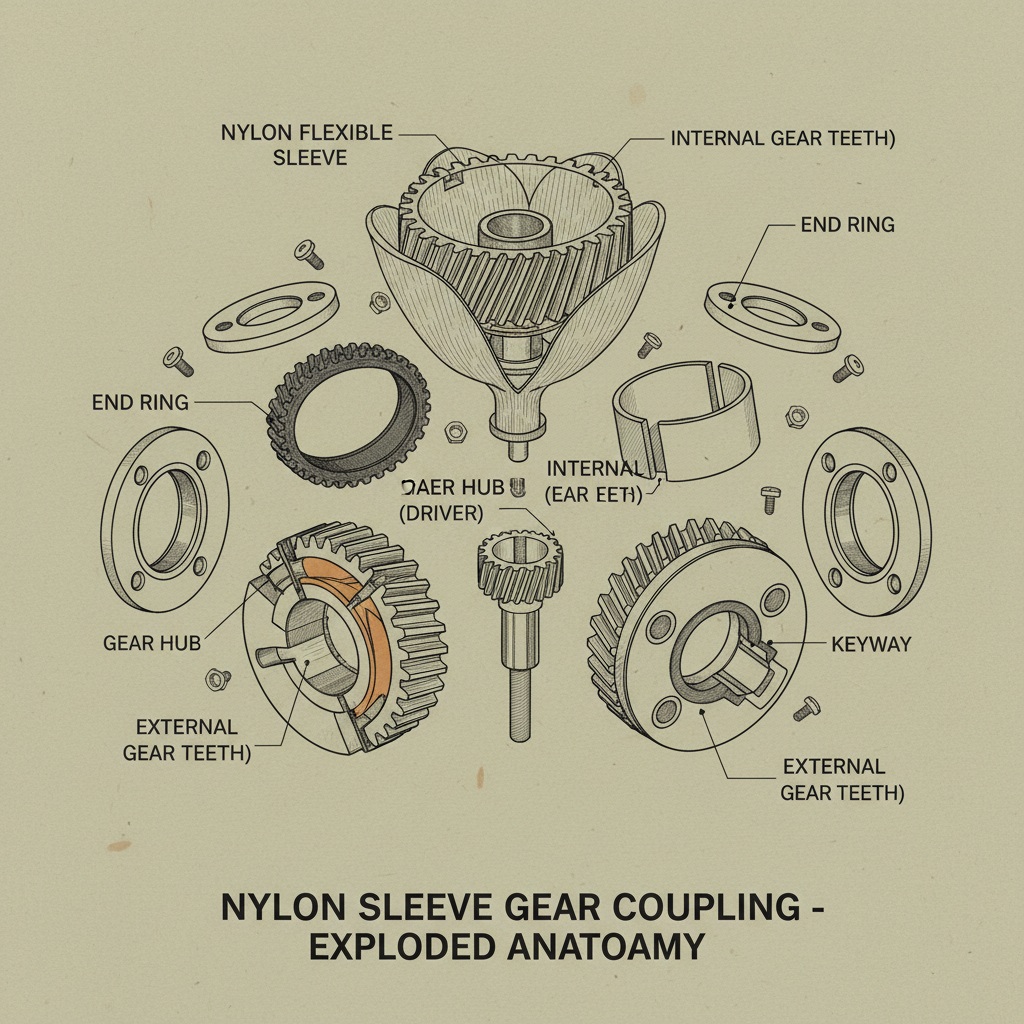
Speaking of couplings, we mainly work with nylon sleeve gear couplings – the nylon sleeve gear coupling manufacturer side of things. To be honest, people underestimate the nylon sleeve. It’s not just plastic, you know? It’s a specific grade, a kind of high-density nylon. It smells a bit… chemically when you first open the package, and it feels almost waxy to the touch. You gotta handle it carefully, avoid getting grease on it because that affects its damping properties. It's tougher than it looks, though, takes a beating.
Industry Trends and Design Pitfalls
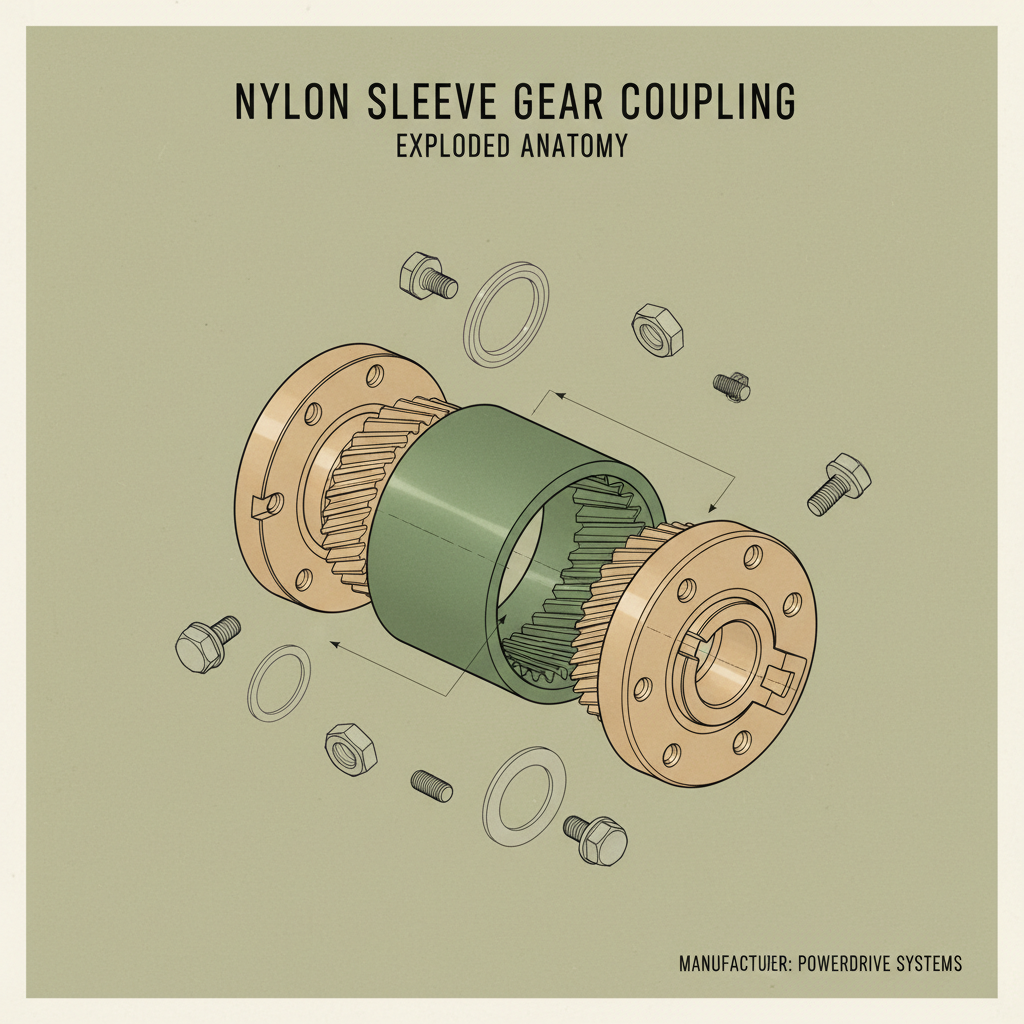
Strangely, a lot of designers think “lightweight” means “flimsy.” They design these couplings, aiming to shave off every gram, and then wonder why they fail under load. It’s a balancing act, right? You need strength, durability, and then, yeah, weight matters. We've been pushing for more robust designs, thicker flanges, better heat treatment on the steel components…it adds a little weight, but saves a lot of headaches.
I think the biggest thing impacting us right now is the push for more automated manufacturing. Companies want couplings that are easy for robots to handle, quick to inspect, and consistently reliable. It means tighter tolerances, better surface finishes, and a lot more quality control. It's good, but it's also a challenge.
FAQS
Generally, our standard nylon sleeve gear couplings are best suited for temperatures between -40°C and +80°C. Exceeding these limits can cause the nylon sleeve to deform or degrade, leading to premature failure. We do offer specialized high-temperature nylon formulations for applications requiring higher operating temperatures, but these are typically more expensive and have a shorter lifespan.
Nylon sleeve gear couplings are designed to accommodate a certain degree of misalignment – both angular and parallel. The exact amount depends on the coupling size and the specific design. As a rule of thumb, we recommend keeping the angular misalignment below 3 degrees and the parallel misalignment below 0.08 inches. Exceeding these limits can significantly reduce the coupling's lifespan.
We recommend using a lithium-based grease with good EP (extreme pressure) properties. Avoid using greases that contain molybdenum disulfide, as it can cause the nylon sleeve to swell. Apply a thin, even coat of grease to the sleeve before installation and then re-grease it every 6-12 months, depending on the operating conditions. Over-lubrication is just as bad as under-lubrication, so don't go overboard.
It depends. Standard nylon sleeves are not particularly resistant to prolonged submersion in water, especially saltwater. However, we offer specialized nylon formulations with improved water resistance. If you're planning to use a coupling in a submerged environment, be sure to specify that requirement when placing your order. We can also recommend a suitable protective coating to prevent corrosion.
Lead times for custom couplings vary depending on the complexity of the design and our current workload. Typically, it takes 2-4 weeks from order confirmation to delivery for a standard custom coupling. More complex designs or large orders may require longer lead times. We'll provide you with a firm quote and delivery schedule when you submit your custom specifications.
Selecting the right size coupling involves several factors, including the motor horsepower, operating speed, and torsional load. We recommend using our online coupling selector tool, which will guide you through the process. Alternatively, you can contact our engineering team, and we'll be happy to assist you in choosing the best coupling for your needs. Don't guess – a properly sized coupling is essential for reliable performance.
Conclusion
So, there you have it. Nylon sleeve gear couplings: they're not glamorous, but they’re reliable, affordable, and get the job done. The industry is shifting towards faster, lighter solutions, but the fundamentals remain the same – you need a coupling that can transmit torque smoothly, dampen vibrations, and withstand the rigors of real-world operation.
Look, at the end of the day, all the fancy engineering and material science doesn't matter if the coupling fails in the field. That’s why we focus on quality, durability, and customer satisfaction. Ultimately, whether this thing works or not, the worker will know the moment he tightens the screw.
Related Posts
-
China Best Flexible Coupling Manufacturer: Delivering High-Performance Shaft Solutions
-

Exploring Rubber Coupling Companies Applications and Future Trends
-

Reliable Spider Coupling Supplier for Industrial Power Transmission Solutions
-
Expert Shaft Coupling Exporter Navigating Global Industrial Supply Chains