
- russian
- italian
- japanese
- korean
- latin
- latvian
- lithuanian
- malay
- norwegian
- persian
- polish
- portuguese
- romanian
- irish
- sanskrit
- slovak
- spanish
- swahili
- swedish
- tamil
- thai
- turkish
- ukrainian
- urdu
- vietnamese
- welsh
- english
- arabic
- armenian
- basque
- belarusian
- bengali
- bulgarian
- burmese
- croatian
- czech
- danish
- deutsch
- dutch
- albanian
- estonian
- filipino
- finnish
- french
- georgian
- greek
- hebrew
- hindi
- hungarian
- icelandic
- indonesian
To be honest, the coupling industry…it’s been wild lately. Everyone’s chasing higher torque density, lighter weight, and, naturally, lower cost. It’s a constant balancing act. You go to a trade show, and it’s all carbon fiber this and titanium that. Sounds great on paper, but have you *tried* machining titanium on a jobsite? Nightmare. Anyway, I think the real shift is towards more specialized couplings. No one wants a one-size-fits-all solution anymore.
Been seeing a lot of designs trying to squeeze every last bit of performance out of the materials, and it often leads to problems. People get so focused on the calculations, the FEA, that they forget how things actually *work* in the real world. I encountered this at a factory in Ningbo last time – gorgeous design, perfect simulations, but the tolerances were so tight that even a bit of dust could lock it up. Seriously. Dust.
We primarily work with aluminum alloys – 6061, 7075, depending on the application. It’s a good compromise. Not as exotic as some of the other materials, but you can actually weld it if you need to, and it doesn’t smell like burning hair when you machine it. Plus, it's forgiving. We also use a lot of SBR (styrene-butadiene rubber) for the flexible elements. It's got a…distinct smell, kinda like tires, but it’s incredibly resilient and handles temperature fluctuations really well. The key is getting the durometer right. Too soft, and it'll tear. Too hard, and you lose the damping effect.
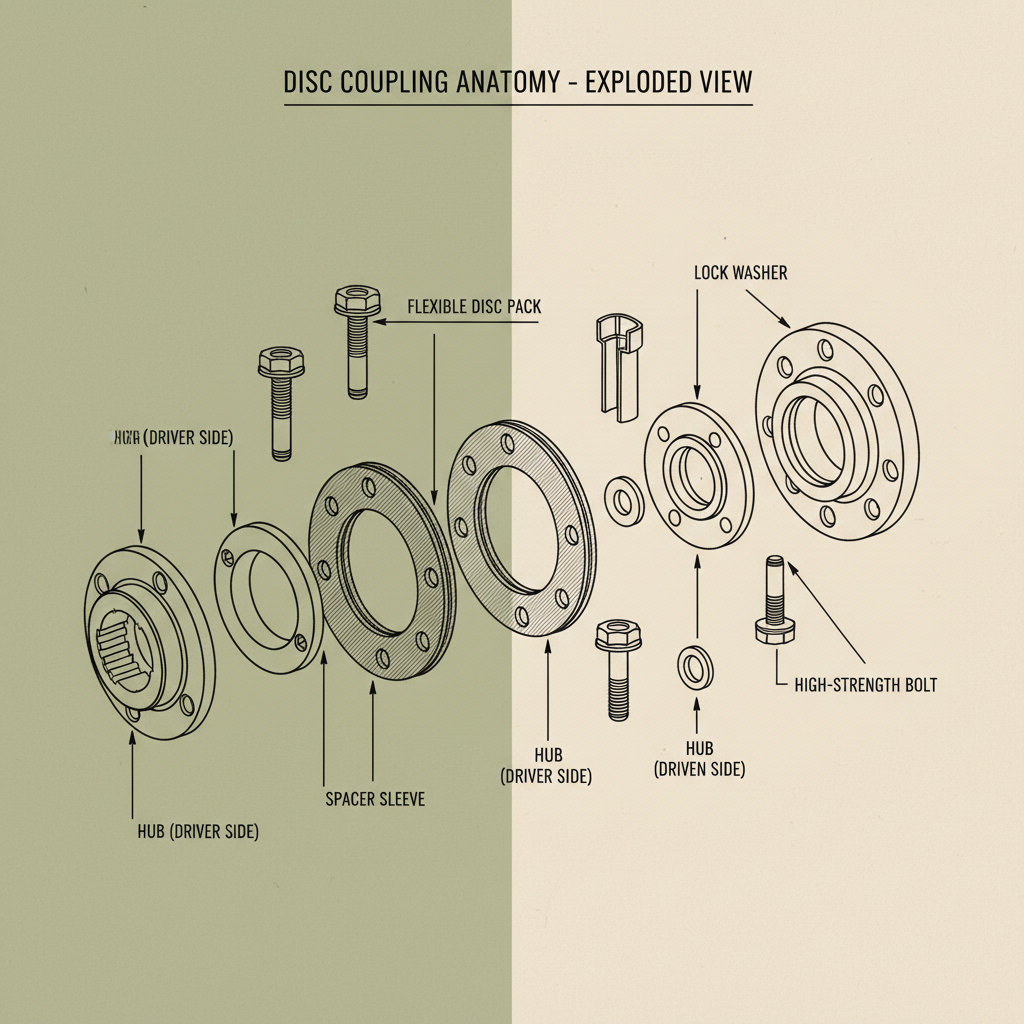
Current Industry Trends
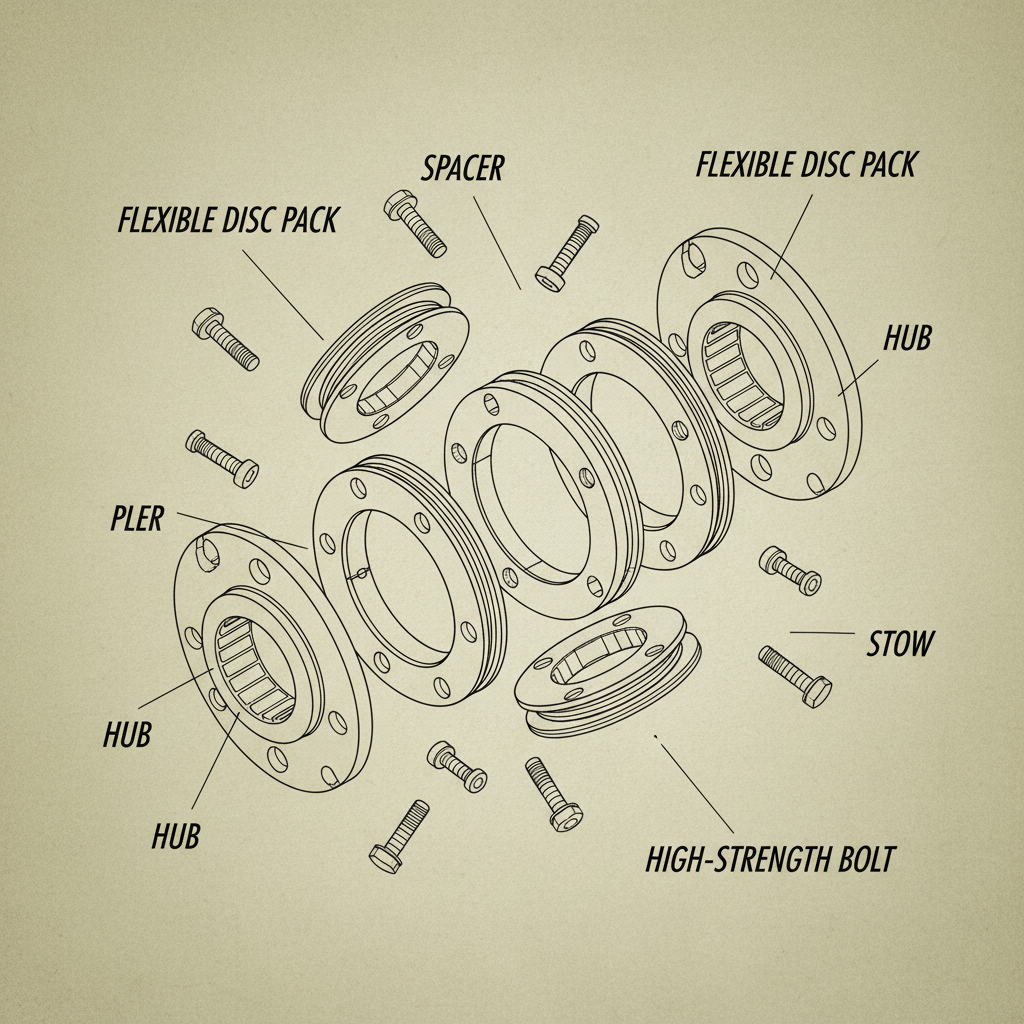
Strangely enough, everyone’s talking about predictive maintenance now. Apparently, putting sensors on couplings to monitor vibration and temperature is the next big thing. Sounds good in theory, but I’ve seen enough sensors fail in harsh environments to be skeptical. It’s a lot of extra cost for something that might just give you a false alarm. But… it *is* becoming more common, especially in industries like oil and gas.
The demand for flexible couplings that can handle misalignment is also increasing. Machines aren’t always perfectly aligned, and trying to force them to be is just asking for trouble. That’s where disc couplings really shine, you know? They're inherently forgiving.
FAQS
That depends heavily on the diameter and the material, but generally, you want to stay below 6,000 RPM. Exceeding that significantly increases the risk of disc fatigue and premature failure. We’ve seen cases where customers pushed it too far, and the discs literally exploded. Not pretty. It's critical to consult the manufacturer's specifications and consider the specific application requirements.
Most standard disc couplings can accommodate a few degrees of angular misalignment and some parallel offset. The exact amount varies based on the coupling size and design. But don’t think you can just throw it on a severely misaligned shaft and expect it to work. That’ll just accelerate wear and tear. Proper alignment is always the best practice, even with flexible couplings.
Absolutely. Disc couplings are well-suited for reversing applications, as the flexible discs can handle the alternating torque without issues. However, frequent reversals and high acceleration/deceleration rates can still cause wear, so it's important to consider the duty cycle and select a coupling with appropriate torque capacity.
Most disc couplings don’t *require* lubrication, which is a major advantage. But, applying a thin layer of grease to the hub bore where the coupling connects to the shaft can help prevent corrosion and facilitate assembly/disassembly. Just be careful not to get grease on the discs themselves, as it can attract dirt and debris.
It depends. If a disc is cracked or broken, it *must* be replaced. You can’t weld it or patch it up. But, if the hubs are still in good condition, you can often just replace the disc pack. It's generally more cost-effective than replacing the entire coupling, but it requires careful inspection and proper installation.
Misalignment, overload, excessive vibration, and corrosion are the usual suspects. Also, operating the coupling outside of its specified temperature range can significantly reduce its lifespan. And sometimes, it’s just poor installation – not tightening the fasteners properly, or using the wrong size tools. It happens all the time.
Conclusion
So, disc couplings…they're not glamorous, but they're incredibly important. They’re the unsung heroes of the industrial world. They silently transfer power, absorb misalignment, and protect expensive machinery. We've talked about the trends, the pitfalls, the materials, and the testing. It all boils down to understanding the application, selecting the right coupling, and installing it correctly.
Ultimately, whether this thing works or not, the worker will know the moment he tightens the screw. If it feels right, looks right, and runs smoothly, you’re good to go. If not, you go back to the drawing board. That’s just how it is. disc coupling manufacturers are always striving to provide the best solutions.
Related Posts
-
Global Leading Gear Coupling Supplier From China for Industrial Power Transmission
-
Navigating the Dynamic Landscape of Plum Coupling Manufacturers and Solutions
-
Leading Flexible Coupling Manufacturer for Industrial Power Transmission Solutions
-

Expert Shaft Coupling Suppliers for Industrial Power Transmission Solutions