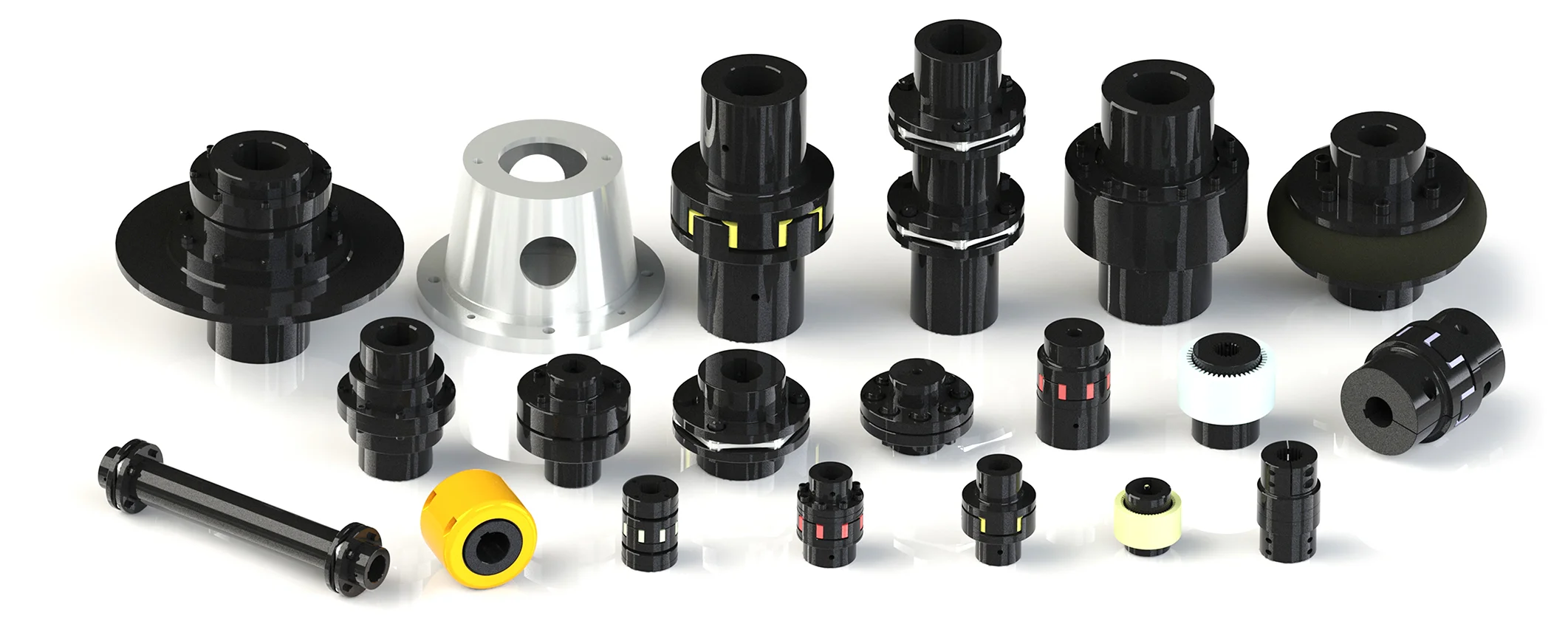
In the complex landscape of industrial power transmission, the role of specialized component suppliers is pivotal to operational uptime. For many engineers, finding reliable jaw coupling Manufacturers often means balancing the need for precision engineering with the practical demands of heavy-duty industrial environments.
The global demand for efficient torque transmission has led to a surge in the development of versatile coupling solutions. Whether dealing with pumps, conveyors, or compressors, the ability of a coupling to handle misalignment while maintaining structural integrity is what separates standard components from high-performance industrial tools.
Understanding the technical nuances offered by leading jaw coupling Manufacturers allows companies to reduce their Total Cost of Ownership (TCO) through better component selection and reduced maintenance cycles.
The Engineering Logic of KC Roller Chain Couplings
The KC Roller Chain Coupling is engineered as a high-performance power transmission solution that prioritizes industrial reliability. Unlike some offerings from jaw coupling Manufacturers, the KC series utilizes a mechanical meshing system consisting of two precision-machined sprocket hubs and a robust double-row roller chain, all enclosed within a sealed protective cover to ensure longevity.
This specific design allows the coupling to efficiently transmit torque while providing an exceptional ability to compensate for radial, angular, and axial displacements between two shafts. This makes it an indispensable tool for medium to high-speed applications where small to medium power requirements are the norm.
Global Industrial Relevance and Demand
In the global manufacturing sector, the demand for stable power transmission is non-negotiable. Industrial standards, such as those defined by ISO, emphasize the importance of fault tolerance in general machinery. The challenge often lies in managing shaft misalignment, which, if left unchecked, can lead to premature bearing failure and costly unplanned downtime.
Many firms searching for jaw coupling Manufacturers are actually looking for solutions that offer a balance between cost and displacement flexibility. The KC series addresses this by providing a pragmatic approach to shaft connection, ensuring that radial and axial deviations do not compromise the overall system stability.
As industrialization expands in emerging markets, the need for "low-alignment precision" components has grown. The KC Roller Chain Coupling is particularly relevant here, as it reduces the time and technical expertise required for installation, making it a preferred choice for rapid deployment in diverse industrial environments.
Core Components and Technical Architecture
The structural integrity of the KC coupling is rooted in its three primary components: steel rims, standard double-row chains, and a sealed outer cover. While different jaw coupling Manufacturers might use elastomeric inserts, the KC series relies on the physical interlock of the chain and sprocket to ensure a zero-slip transmission of power.
A key technical feature is the sealed protective cover. This component is critical because it retains the lithium-based grease required for lubrication and blocks external contaminants like dust and grit. This architectural choice significantly extends the service life of the internal chain compared to open-chain systems.
From a precision engineering standpoint, the sprocket tooth grooves undergo rigorous quality control. This ensures seamless meshing and high torque efficiency, allowing the coupling to operate reliably in medium to high-speed scenarios without the vibration issues typically associated with lower-quality mechanical couplings.
Performance Metrics and Displacement Flexibility
One of the most significant advantages of the KC series is its ability to handle shaft misalignments without necessitating expensive laser alignment tools. It can typically compensate for radial deviations up to 1mm and angular deflections of ≤ 1°, providing a level of flexibility that is highly valued by engineers.
Furthermore, the axial compensation—approximately 1% of the shaft diameter—ensures that thermal expansion or installation tolerances do not put undue stress on the connected motor or pump shafts. This makes the product a versatile alternative to the strict tolerances often required by other jaw coupling Manufacturers.
KC Chain Coupling vs Industry Alternatives Performance
Strategic Applications in General Machinery
The KC Roller Chain Coupling is specifically tailored for a vast array of general machinery. In the water management sector, it is frequently used in water pumps where reliable torque transmission is needed despite potential pump-motor misalignment. Similarly, industrial fans and air compressors rely on this coupling to maintain continuous operation under medium-speed conditions.
In conveyor systems, the high fault tolerance of the KC series is a major asset. Because conveyors often span long distances and are subject to structural shifts, the ability to handle radial and angular displacement without failing is critical. This makes the KC series a more economical and pragmatic choice than the high-precision options offered by some jaw coupling Manufacturers.
Long-Term Economic Value and Reliability
From a financial perspective, the KC series offers a significant reduction in Total Cost of Ownership (TCO). The use of standard, economical materials and the simple structure of the coupling lead to very low initial costs. When compared to precision elastic couplings, the initial investment is substantially lower, making it ideal for budget-conscious industrial projects.
Maintenance efficiency further enhances its value. The only primary requirement is the application of lithium-based grease every 3 to 6 months. Because the sealed cover protects the internal components, the maintenance effort is minimal—simply a matter of periodic lubrication rather than the complex element replacements often required by other jaw coupling Manufacturers.
Ultimately, the reliability of the KC series comes from its simplicity. With fewer moving parts to fail and a high tolerance for installation errors, the risk of catastrophic failure is minimized. This provides operators with peace of mind and ensures that production lines keep moving with minimal interruption.
Future Innovations in Power Transmission
The future of power transmission is leaning toward a combination of mechanical robustness and digital monitoring. We are seeing a trend where traditional components from jaw coupling Manufacturers are being integrated with IoT sensors to monitor vibration and heat, allowing for predictive rather than reactive maintenance.
Material science is also evolving, with the introduction of advanced coatings for sprocket hubs to reduce friction and wear. For the KC series, this means potentially extending the lubrication cycle beyond the current 3-6 month window, further reducing maintenance overhead and increasing the sustainability of the equipment.
As industries move toward green energy and automation, the demand for couplings that can handle varying torque loads efficiently will increase. The KC series is well-positioned for this transition, as its mechanical simplicity allows for easy adaptation to new machinery specifications without requiring a complete redesign of the drive train.
Comparative Analysis of KC Chain Coupling vs Precision Alternatives
| Metric | KC Chain Coupling | Precision Elastic | Gear Coupling |
|---|
| Initial Cost | Very Low | High | Medium-High |
| Installation Time | Short | Long | Moderate |
| Displacement Handling | Excellent | Moderate | Low |
| Vibration Damping | None | Excellent | Low |
| Maintenance Effort | Simple Grease | Element Replace | Complex Lube |
| Fault Tolerance | Very High | Low | Moderate |
FAQS
The KC coupling is ideal for general industrial equipment such as water pumps, exhaust fans, air compressors, and conveyors where medium to small power transmission is required and high fault tolerance for shaft misalignment is necessary.
No, the KC coupling utilizes a pure mechanical meshing structure and does not have buffering or vibration absorption capabilities. It is not recommended for applications involving high-frequency impact loads.
To maintain a long service life and prevent chain wear, it is recommended to check and apply lithium-based grease every 3 to 6 months, depending on the severity of the working conditions and environment.
The KC coupling can typically compensate for radial deviations up to 1mm, angular deflections ≤ 1°, and axial displacements of approximately 1% of the shaft diameter, reducing installation complexity.
The sealed outer cover serves two main purposes: it protects the internal chain from dust and contaminants and retains the lubricant to reduce friction and wear on the sprocket hubs.
While highly reliable for general power transmission, it is not designed for high-precision scenarios sensitive to vibration due to its mechanical chain drive nature. Precision needs are better served by specialized jaw coupling Manufacturers' elastic lines.
Conclusion
The KC Roller Chain Coupling stands as a robust and economical solution for industrial power transmission, bridging the gap between high-cost precision components and the need for reliable, fault-tolerant shaft connections. By combining a double-row roller chain with a sealed protective cover, it effectively manages radial, angular, and axial misalignments while keeping maintenance requirements to a minimum.
For companies looking to optimize their equipment's lifespan and reduce unplanned downtime, selecting the right coupling is essential. We recommend evaluating your specific torque and speed requirements to determine if the pragmatic efficiency of the KC series is the right fit for your machinery. Visit our website for more professional guidance: www.binhaocoupling.com