- russian
- italian
- japanese
- korean
- latin
- latvian
- lithuanian
- malay
- norwegian
- persian
- polish
- portuguese
- romanian
- irish
- sanskrit
- slovak
- spanish
- swahili
- swedish
- tamil
- thai
- turkish
- ukrainian
- urdu
- vietnamese
- welsh
- english
- arabic
- armenian
- basque
- belarusian
- bengali
- bulgarian
- burmese
- croatian
- czech
- danish
- deutsch
- dutch
- albanian
- estonian
- filipino
- finnish
- french
- georgian
- greek
- hebrew
- hindi
- hungarian
- icelandic
- indonesian
Honestly, this jaw coupling Manufacturer stuff… it’s been a wild year. Everyone’s chasing higher torque, tighter tolerances, and lighter weight. It feels like every other engineer is obsessed with composites now. Carbon fiber reinforced polymers, you name it. Good stuff, don’t get me wrong, but it’s not a magic bullet. You still need to think about the whole system, not just the material.
I’ve been seeing a lot of requests for zero-backlash couplings. Sounds great on paper, right? Precision, precision, precision. But out in the real world, on a vibrating machine, perfectly zero backlash can actually cause problems. It creates this kind of rigidity that transmits shock loads right into the bearings. Have you noticed that? It's strange. Anyway, I think that's something people often overlook in the design phase.
We primarily use aluminum alloys – 6061-T6 is the workhorse. It's got a good balance of strength and machinability. And polyurethane for the spider, of course. That polyurethane… it smells awful when you machine it, let me tell you. Like burnt rubber and something chemical. You get used to it, I guess. And it’s sticky. Gets all over everything. You gotta wear gloves, definitely.
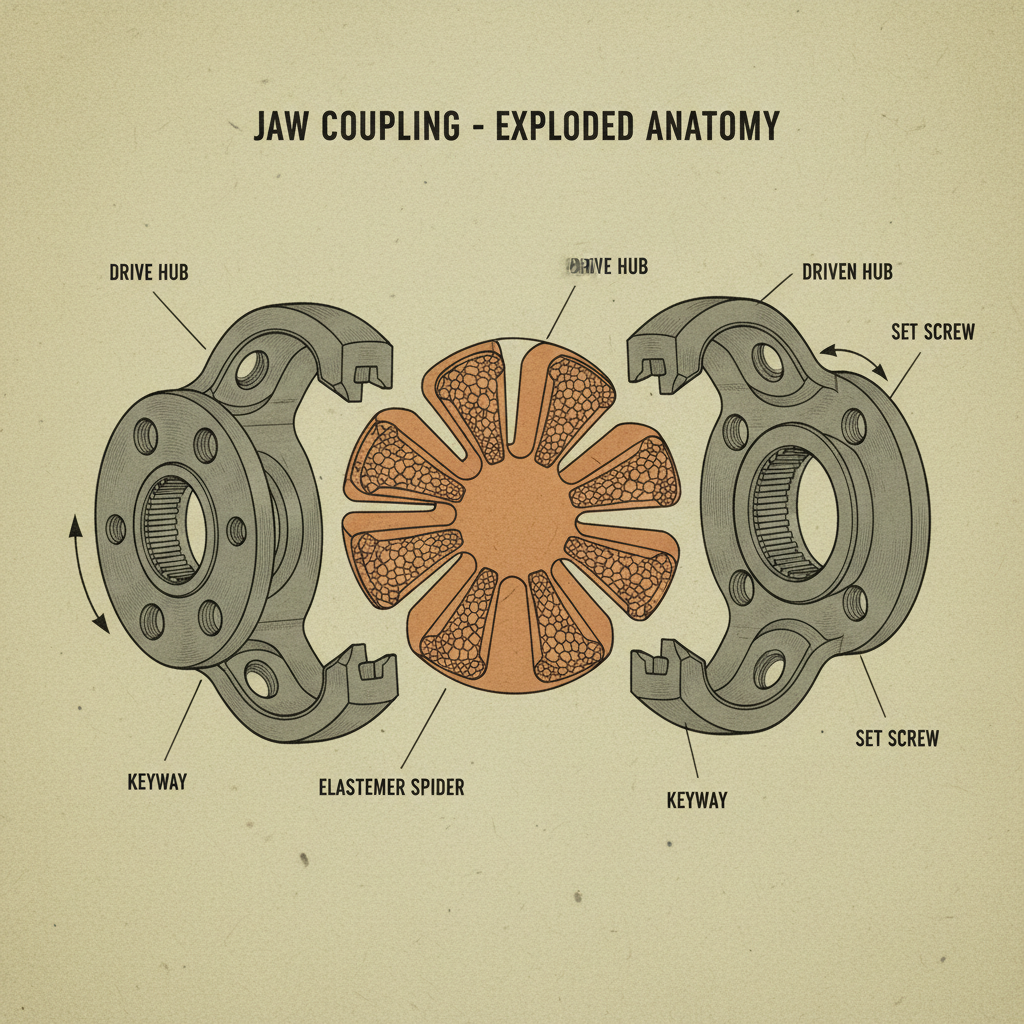
The Current Landscape of jaw coupling Manufacturer
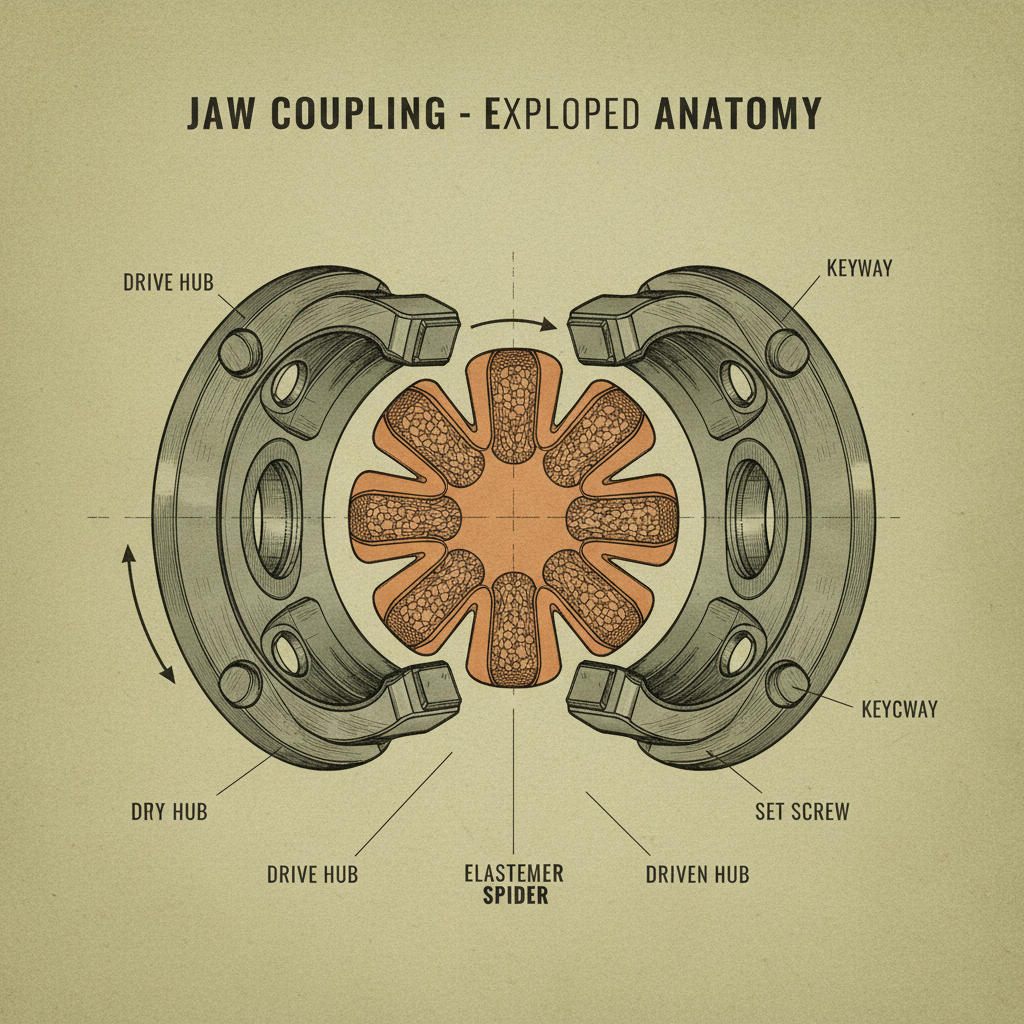
To be honest, everyone wants something smaller, stronger, and cheaper. That’s always the story. The push for miniaturization is huge right now, especially with robotics. But that means tighter tolerances, more precision in manufacturing, and a higher price tag, usually. We're also seeing a lot more demand for couplings in harsh environments – high temperatures, corrosive chemicals, underwater applications. That’s where the exotic materials come into play.
It's also weird how much the supply chain still impacts things. Aluminum prices fluctuate wildly. Polyurethane shortages happen unexpectedly. You really have to be agile and have backup suppliers lined up. I encountered this at a factory in Dongguan last time, they were scrambling for polyurethane because their usual supplier had a fire. It was a mess.
FAQS
That's a good question. It really depends on the application. Under normal conditions, a polyurethane spider should last anywhere from six months to two years. However, factors like operating temperature, torque load, and the presence of contaminants can significantly reduce its lifespan. Regular inspection is key - look for cracks, wear, or deformation. Replacing the spider proactively will save you headaches down the road.
Yes, that’s one of their main advantages. They’re designed to accommodate a certain amount of misalignment – angular, parallel, and axial. However, there’s a limit. Excessive misalignment will overload the spider element and lead to premature failure. It’s important to check the manufacturer's specifications for the maximum allowable misalignment. Always strive for proper alignment during installation, even if the coupling can tolerate some degree of error.
Stainless steel is the go-to for corrosion resistance. 316 stainless steel is particularly good in marine environments and applications involving chlorides. You can also consider couplings with special coatings, like epoxy or PTFE, to provide an additional barrier against corrosion. For extremely harsh environments, titanium is an excellent option, but it’s significantly more expensive. The polyurethane spider also needs to be chemical resistant.
You need to know the torque requirements of your application. Calculate the maximum torque the coupling will be subjected to, and then select a coupling with a torque capacity that’s at least 1.5 to 2 times higher. Also, consider the shaft diameters and the operating speed. It's better to oversize than undersize. And don't forget to factor in any potential shock loads or vibration.
Generally, jaw couplings don’t require regular lubrication. However, some manufacturers recommend applying a light grease to the jaw-to-spider interface during initial installation. This can help reduce wear and extend the lifespan of the spider element. If the coupling is operating in a dusty or dirty environment, periodic cleaning may be necessary.
Split jaw couplings are great for applications where you can't easily disconnect the shafts. Because they’re split in half, you can install them without having to move the connected equipment. This saves a lot of time and effort. They're also easier to maintain, as you can replace the spider element without removing the coupling from the shafts. However, they generally have a lower torque capacity than solid jaw couplings.
Conclusion
So, jaw couplings aren’t glamorous, but they're workhorses. They're simple, reliable, and relatively inexpensive. They handle misalignment, absorb shock, and transmit torque. They’re not perfect – they have limitations in terms of torsional stiffness and speed – but for a wide range of applications, they’re an excellent choice. They won’t solve all your problems, but they’ll keep things running smoothly.
Ultimately, whether this thing works or not, the worker will know the moment he tightens the screw. That's the bottom line. I've seen too many fancy designs fail because they didn't account for the realities of the shop floor. Good design isn't just about calculations; it's about understanding how things are actually used.